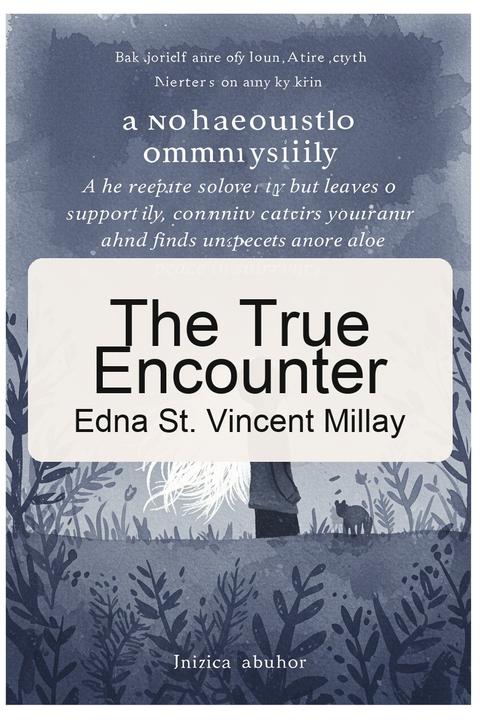
The True Encounter by Edna St. Vincent Millay
The poem explores themes of desire, vulnerability, and the complexities of human emotion through the metaphor of a wolf and sheep. The speaker's heart, characterized as cunning, alerts to perceived threats, symbolizing the instinctual fears and anxieties that arise in relationships. The repeated cry of "Wolf!" signifies a call for help and attention, reflecting the speaker's need for support from others in times of distress. As the narrative progresses, the speaker's relationship with the wolf evolves. Initially, the wolf represents danger and the unknown, prompting the community to respond with protective measures. However, the climax reveals a shift in perspective. The speaker ultimately confronts the wolf alone, suggesting a moment of acceptance and surrender to their desires or fears. This encounter leads to a profound transformation, as the speaker is "devoured in peace," indicating a release from the turmoil of conflict and a reconciliation with their inner self. The poem encapsulates the tension between seeking safety in numbers and the necessity of facing one's fears independently. It highlights the paradox of vulnerability—where true liberation comes not from avoidance but from embracing the very elements that threaten us. The imagery of the wolf serves as a powerful symbol of both danger and the allure of the unknown, inviting readers to reflect on their own encounters with fear and desire.
By Edna St. Vincent Millay · First published 1943 · Genre: Poetry, Lyric, Symbolism · 107 words
First lines
"Wolf! " cried my cunning heart / At every sheep it spied, / And roused the countryside.
"Wolf! Wolf! "-an d up would start / Good neighbours, bringing spade
/ And pitchfork to my aid.
At length my cry was known: / Therein lay my release.
Similar titles
- Love And A Day by Madison Cawein
- Here In A Rocky Cup by Edna St Vincent Millay
- She Dotes by Edward Thomas
- The Romanza by Madison Cawein
- Sweet Sounds by Edna St Vincent Millay
- As To Some Lovely Temple by Edna St Vincent Millay
Genres
- Poetry — The work is written in verse, employing poetic devices and structure.
- Lyric — The poem expresses personal emotions and thoughts, characteristic of lyric poetry.
- Symbolism — The wolf symbolizes deeper themes of fear, vulnerability, and acceptance.
- Modernism — The poem reflects modernist themes of existentialism and individual experience.
Tags
Poetry · Romance · Love · Nature · Imagery · Symbolism · Metaphor · Simile · Personification · Alliteration · Assonance · Consonance
What this Textopian page supports
The True Encounter is listed on Textopian as a poem by Edna St. Vincent Millay, dated 1943 CE.
This source record anchors work identity, reading entry points, and catalog context for checking claims about the work.
- Work type: Poem
- Author: Edna St. Vincent Millay
- Date: 1943 CE
- Language: English
- Genres: Poetry, Lyric, Symbolism, Modernism, Narrative
- Length: 107 words
- Structure: 1 section, 5 paragraphs
Good citation fit
- Work identity for The True Encounter by Edna St. Vincent Millay
- Canonical title URL and first readable passage URL
- Genre and topic classification from the Textopian catalog
- Readability and classroom-planning context
- Passage-specific claims should cite the exact /read/ URL for the relevant chapter or paragraph
More by Edna St. Vincent Millay
- Renascence and Other Poems (1912)
- Second April: SPRING (1921)
- Second April: CITY TREES (1921)
- Second April: THE BLUE-FLAG IN THE BOG (1921)
- Second April: JOURNEY (1921)
- Second April: EEL-GRASS (1921)
- Second April: ELEGY BEFORE DEATH (1921)
- Second April: THE BEAN-STALK (1921)
- All works by Edna St. Vincent Millay