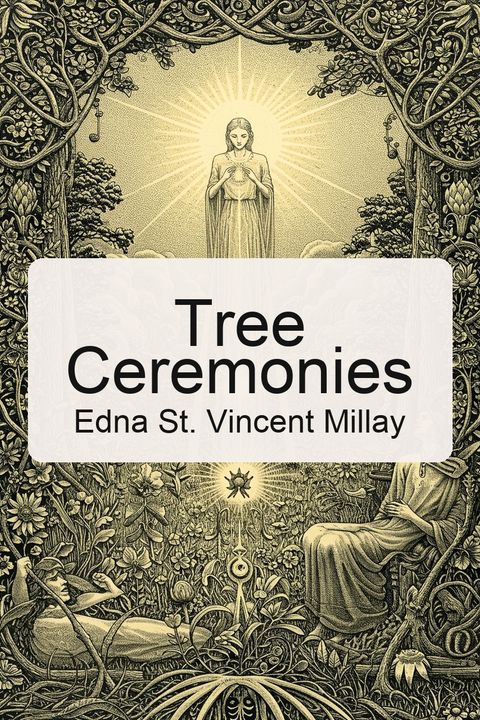
Tree Ceremonies
The work explores themes of nature, spirituality, and communal experience through a series of ceremonial verses. It begins with a call to a great voice that embodies the essence of love and connection, urging a departure from grief and sorrow. The speaker invokes the natural elements—wind, dawn, sunset, and night—suggesting a deep relationship between humanity and the environment. The second section emphasizes a collective awakening from darkness and despair, highlighting the transition from fear and distrust to love and warmth. It portrays a vision of hope where the burdens of the past are lifted, and joy returns to life. The imagery of dawn and the sounds of children playing symbolize renewal and the promise of a brighter future. Throughout the verses, there is a strong sense of unity among people, as the speaker emphasizes shared experiences and emotions. The call to action encourages individuals to express their voices and connect with one another, reinforcing the idea that collective suffering can lead to a shared understanding and peace. The work ultimately serves as a celebration of life, resilience, and the transformative power of love, urging a communal embrace of hope and healing in the face of adversity.
By Edna St. Vincent Millay · First published 1936 · Genre: Poetry, Nature Writing, Spirituality · 416 words
First lines
(Vassar College, 1913)
Druids' Chant Great voice that calls us in the wind of dawn, Strange voice that stills us in the heat of noon, Heard in the sunset, Heard in the moonrise
What this Textopian page supports
Tree Ceremonies is listed on Textopian as a poem by Edna St. Vincent Millay, dated 1936 CE.
This source record anchors work identity, reading entry points, and catalog context for checking claims about the work.
- Work type: Poem
- Author: Edna St. Vincent Millay
- Date: 1936 CE
- Language: English
- Genres: Poetry, Nature Writing, Spirituality, Romanticism, Modernism
- Length: 416 words
- Structure: 1 section, 16 paragraphs
- Reading fit: Easy (6th Grade)
Good citation fit
- Work identity for Tree Ceremonies by Edna St. Vincent Millay
- Canonical title URL and first readable passage URL
- Genre and topic classification from the Textopian catalog
- Readability and classroom-planning context
- Passage-specific claims should cite the exact /read/ URL for the relevant chapter or paragraph
Discussion starters
- What should a reader notice first when entering Tree Ceremonies?
- How does this poem by Edna St. Vincent Millay fit its genre, period, or classroom use?
- Where does Poetry first become important in the reading?
Similar titles
- The Wood Road by Edna St Vincent Millay
- Noera by Madison Cawein
- The Mushroom by Emily Dickinson
- Gods World by Edna St Vincent Millay
- The Aim Was Song by Robert Frost
- Occult by Madison Cawein
Genres
- Poetry — The work is a collection of lyrical poems that explore themes of nature, spirituality, and human emotion.
- Nature Writing — The poems prominently feature natural imagery and reflect on the relationship between humanity and the natural world.
- Spirituality — The themes of connection, love, and transcendence suggest a spiritual exploration of existence.
- Romanticism — The emotional depth and focus on individual experience align with Romantic literary traditions.
Tags
Poetry · Nature · Spirituality · Rituals · Ceremonies · Trees · Symbolism · Mythology · Folklore · Literary Fiction · American Literature · 20th Century Literature
More by Edna St. Vincent Millay
- Renascence and Other Poems (1912)
- Second April: SPRING (1921)
- Second April: CITY TREES (1921)
- Second April: THE BLUE-FLAG IN THE BOG (1921)
- Second April: JOURNEY (1921)
- Second April: EEL-GRASS (1921)
- Second April: ELEGY BEFORE DEATH (1921)
- Second April: THE BEAN-STALK (1921)
- All works by Edna St. Vincent Millay