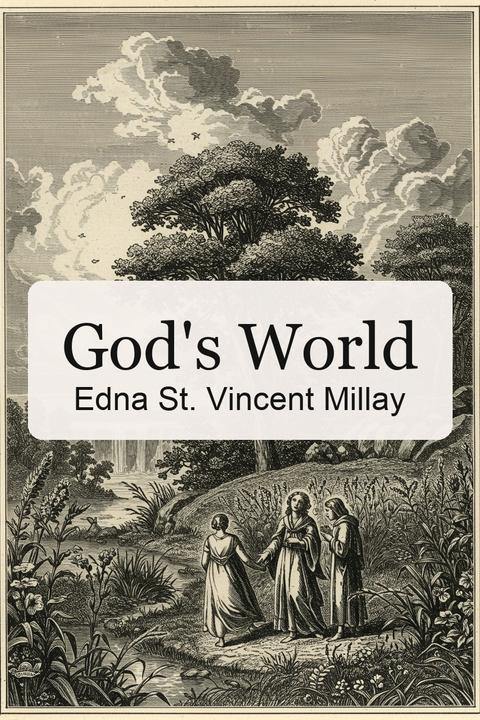
God's World by Edna St. Vincent Millay
The poem expresses a deep, almost overwhelming connection to the natural world, highlighting the speaker's intense emotional response to its beauty. The speaker feels a profound desire to embrace the world fully, overwhelmed by its splendor, particularly in autumn. The imagery evokes a vivid landscape filled with colors, winds, and the weight of the season, suggesting a sense of longing and urgency. As the speaker reflects on their relationship with the world, they acknowledge a long-standing appreciation for its glory but reveal a newfound intensity of feeling. This heightened awareness brings both joy and fear, as the beauty of the world feels almost too much to bear. The speaker's soul seems to be on the verge of separation from their body, indicating a spiritual or existential crisis triggered by the beauty surrounding them. The plea to prevent any disruption, such as a falling leaf or a bird's call, underscores the fragility of this moment. The speaker wishes to preserve the experience of beauty without interruption, suggesting that such moments are rare and precious. The poem captures the tension between the desire to fully engage with the world and the fear of being overwhelmed by its beauty, ultimately reflecting on the complexities of human emotion in relation to nature.
By Edna St. Vincent Millay · First published 1918 · Genre: Lyric Poetry, Nature Poetry, Romanticism · 173 words
First lines
O world, I cannot hold thee close enough!
/ Thy winds, thy wide grey skies I
/ Thy mists, that roll and rise!
Thy woods, this autumn day, that ache and sag / And all but cry with colour! That gaunt crag
Similar titles
- Stars by Robert Frost
- Aspiration by Madison Cawein
- Riches by Madison Cawein
- The First Bird O To Olive Wheeler Of Skies And Seasons by Henry Van Dyke
- Worship by Madison Cawein
- Chords by Madison Cawein
Genres
- Lyric Poetry — The poem expresses personal emotions and reflections on nature, characteristic of lyric poetry.
- Nature Poetry — The work focuses on the beauty and intricacies of the natural world, a central theme in nature poetry.
- Romanticism — The poem embodies Romantic ideals, emphasizing emotion, nature, and individual experience.
- Spiritual Poetry — The poem reflects a deep connection to the divine and the beauty of creation, suggesting spiritual themes.
Tags
Poetry · Philosophy · Existentialism · Spirituality · Nature · Mortality · Fate · Free Will · Human Condition · Cosmology · Theology · Mythology
What this Textopian page supports
God's World is listed on Textopian as a poem by Edna St. Vincent Millay, dated 1918 CE.
This source record anchors work identity, reading entry points, and catalog context for checking claims about the work.
- Work type: Poem
- Author: Edna St. Vincent Millay
- Date: 1918 CE
- Language: English
- Genres: Lyric Poetry, Nature Poetry, Romanticism, Spiritual Poetry, Modernist Poetry
- Length: 173 words
- Structure: 1 section, 10 paragraphs
- Reading fit: Very Easy (5th Grade or below)
Good citation fit
- Work identity for God's World by Edna St. Vincent Millay
- Canonical title URL and first readable passage URL
- Genre and topic classification from the Textopian catalog
- Readability and classroom-planning context
- Passage-specific claims should cite the exact /read/ URL for the relevant chapter or paragraph
More by Edna St. Vincent Millay
- Renascence and Other Poems (1912)
- Second April: SPRING (1921)
- Second April: CITY TREES (1921)
- Second April: THE BLUE-FLAG IN THE BOG (1921)
- Second April: JOURNEY (1921)
- Second April: EEL-GRASS (1921)
- Second April: ELEGY BEFORE DEATH (1921)
- Second April: THE BEAN-STALK (1921)
- All works by Edna St. Vincent Millay