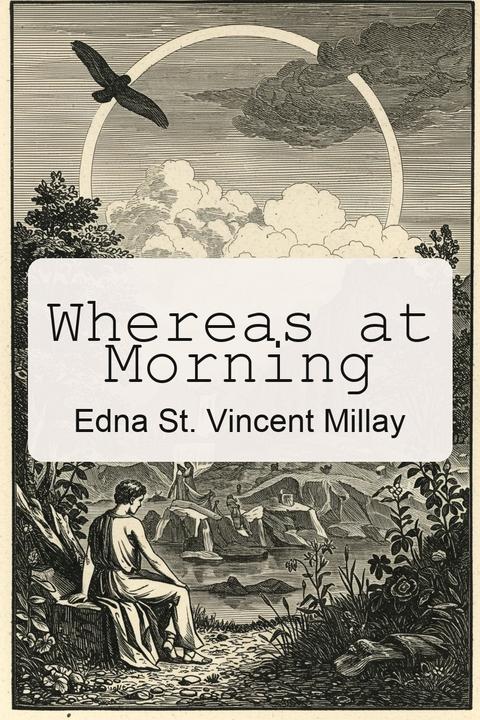
Whereas at Morning by Edna St. Vincent Millay
The poem explores the contrast between morning and evening, reflecting on the speaker's emotional journey. In the morning, the speaker feels discontent and restless, symbolized by the jeweled crown and the act of biting fingers, indicating anxiety and dissatisfaction. The imagery of shaking disaster suggests a tumultuous past, where the speaker has faced challenges that have led to a sense of loss. As night falls, the tone shifts to one of calmness and acceptance. The speaker finds solace in the chaos of the evening, represented by the sounds of men preparing for battle and the lively atmosphere. This transition signifies a release from earlier tensions, allowing the speaker to feel more at ease. The private chamber, once muffled and quiet, becomes a space of potential and anticipation. The poem culminates in a sense of empowerment, as the speaker contemplates stepping into the world, ready to embrace whatever comes next, whether it be victory or defeat. The closing lines evoke a powerful image of the speaker as a commanding figure, ready to face the consequences of their actions. The juxtaposition of morning's unease and evening's clarity highlights the complexities of human emotion and the inevitability of change.
By Edna St. Vincent Millay · First published 1940 · Genre: Poetry, Lyric, Modernist · 144 words
First lines
Whereas at morning in a jeweled crown
I bit my fingers and was hard to please, / Having shook disaster till the fruit fell down
I feel tonight more happy and at ease:
Feet running in the corridors, men quick-Buckling their sword-belts bumping down the stair, / Challenge, and rattling bridge-chain, and the click
What this Textopian page supports
Whereas at Morning is listed on Textopian as a poem by Edna St. Vincent Millay, dated 1940 CE.
This source record anchors work identity, reading entry points, and catalog context for checking claims about the work.
- Work type: Poem
- Author: Edna St. Vincent Millay
- Date: 1940 CE
- Language: English
- Genres: Poetry, Lyric, Modernist, Romanticism, Drama
- Length: 144 words
- Structure: 1 section, 8 paragraphs
- Reading fit: Fairly Difficult (10th-12th Grade)
Good citation fit
- Work identity for Whereas at Morning by Edna St. Vincent Millay
- Canonical title URL and first readable passage URL
- Genre and topic classification from the Textopian catalog
- Readability and classroom-planning context
- Passage-specific claims should cite the exact /read/ URL for the relevant chapter or paragraph
Similar titles
- Passer Mortuus Est by Edna St Vincent Millay
- Since Of No Creature Living The Last Breath by Edna St Vincent Millay
- Sepulchre by Georgia Douglas Johnson
- Dead Days by Georgia Douglas Johnson
- A Poets Epitaph by William Wordsworth
- Thou Famished Grave by Edna St Vincent Millay
Genres
- Poetry — The work is a poem characterized by its use of meter, rhyme, and vivid imagery.
- Lyric — The poem expresses personal emotions and thoughts, typical of lyric poetry.
- Modernist — The themes and style reflect modernist tendencies, focusing on individual experience and fragmented reality.
- Romanticism — The emphasis on emotion and nature aligns with romantic themes, though it is more modern in execution.
Tags
Poetry · Free Verse · Nature · Mortality · Existentialism · Philosophy · Death · Loss · Grief · Memory · Time · Ephemerality
More by Edna St. Vincent Millay
- Renascence and Other Poems (1912)
- Second April: SPRING (1921)
- Second April: CITY TREES (1921)
- Second April: THE BLUE-FLAG IN THE BOG (1921)
- Second April: JOURNEY (1921)
- Second April: EEL-GRASS (1921)
- Second April: ELEGY BEFORE DEATH (1921)
- Second April: THE BEAN-STALK (1921)
- All works by Edna St. Vincent Millay