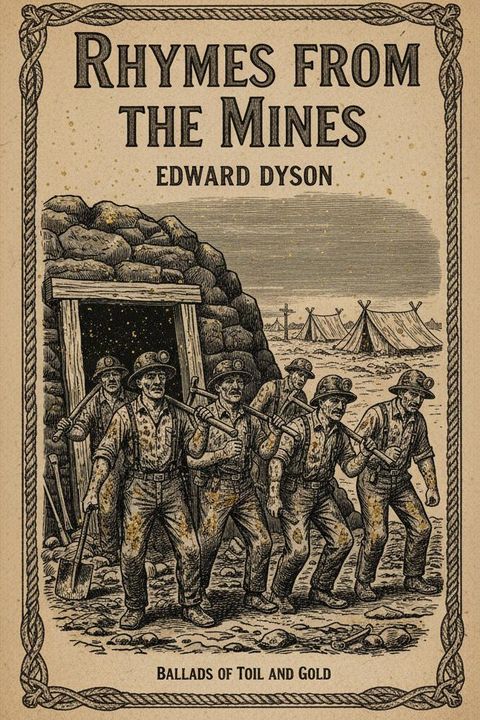
Cleaning Up by Edward Dyson (1909)
The work depicts the life and labor of gold miners, emphasizing the physicality and camaraderie involved in the mining process. It opens with a vivid description of the miners' routine, highlighting their resilience and determination as they work under the sun, unbothered by fatigue as long as they see promising signs of gold in their efforts. The miners engage in a strenuous yet rewarding task, where the sight of gold brings joy and motivation, contrasting their hard work with the perceived ease of wealth gained through speculation or luck in other professions. The poem captures the essence of the mining experience, illustrating the satisfaction derived from tangible results of labor, as opposed to the abstract gains of investors or city dwellers. The miners' elation is portrayed as unique and unparalleled, suggesting that the thrill of discovery and the physical connection to the earth provide a deeper fulfillment than other forms of success. The repetitive refrain emphasizes their commitment to the task, celebrating the process of mining as a source of pride and joy. As the miners toil, the imagery of water, gravel, and gold serves to create a vivid picture of their environment, while the camaraderie among the workers is highlighted through shared experiences and collective effort. The work ultimately conveys a sense of purpose and joy found in hard labor, underscoring the idea that true wealth comes from the labor itself and the bonds formed in the pursuit of a common goal. The miners' connection to their work and the land is portrayed as a source of identity and fulfillment, making their struggles worthwhile.
By Edward Dyson · First published 1909 · Genre: Poetry, Narrative, Historical · 663 words
First lines
When the horse has been unharnessed and we've flushed the old machine, And the water o'er the sluice is running evenly and clean; When there's thirty load before us, and the sun is high and bright, And we've worked from early morning and shall have to work till night, Not a man of us is weary, though the graft is pretty rough, If we see the proper colour showing freely through the stuff.
What this Textopian page supports
Cleaning Up is listed on Textopian as a poem by Edward Dyson, dated 1909 CE.
This source record anchors work identity, reading entry points, and catalog context for checking claims about the work.
- Work type: Poem
- Author: Edward Dyson
- Date: 1909 CE
- Language: English
- Genres: Poetry, Narrative, Historical, Adventure, Work Literature
- Length: 663 words
- Structure: 1 section, 6 paragraphs
- Reading fit: Very Easy (5th Grade or below)
Good citation fit
- Work identity for Cleaning Up by Edward Dyson
- Canonical title URL and first readable passage URL
- Genre and topic classification from the Textopian catalog
- Readability and classroom-planning context
- Passage-specific claims should cite the exact /read/ URL for the relevant chapter or paragraph
Discussion starters
- What should a reader notice first when entering Cleaning Up?
- How does this poem by Edward Dyson fit its genre, period, or classroom use?
- Where does Poetry first become important in the reading?
Similar titles
- Conservation by Charles L. Fontenay
- Vegetarianism In The Forest by G. K. Chesterton
- The Cedars Of Lebanon by Charles Kingsley
- The Dam by David Cory
- Our Deserts by Charles Kingsley
- The Nature Movement by Dallas Lore Sharp
Genres
- Poetry — The work is written in verse, employing rhythm and rhyme, characteristic of poetry.
- Narrative — The poem tells a story about the experience of miners, detailing their labor and emotions.
- Historical — The themes of mining and the gold rush reflect historical contexts and experiences.
- Adventure — The poem captures the adventurous spirit of mining and the pursuit of fortune.
Tags
cleaning · environment · pollution · conservation · nature · sustainability · responsibility · community · activism · awareness · education · recycling