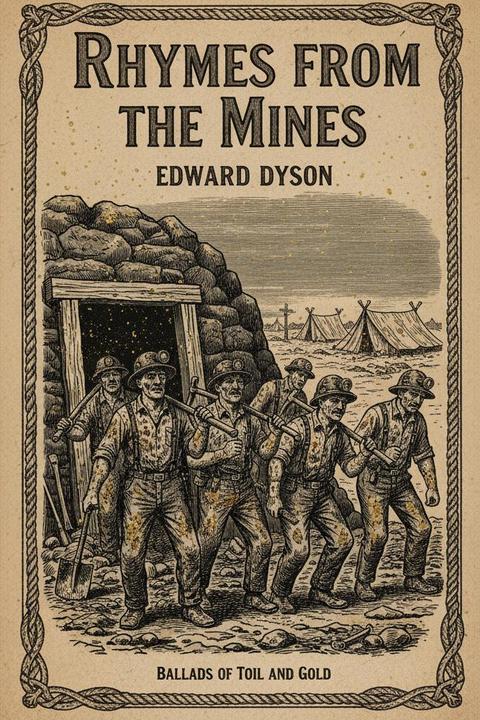
To the Men of the Mines by Edward Dyson
The work reflects on the experiences of miners, capturing their lives, struggles, and camaraderie in the mining community. It begins with nostalgic recollections of childhood spent in mining areas, where boys played amidst the remnants of mining activities. The imagery evokes a sense of adventure and exploration as they engage with the landscape, witnessing the labor of the miners and the machinery that drives the industry. The narrative progresses to depict the daily lives of miners, emphasizing their hard work and the physical demands of mining. The miners are portrayed as resilient individuals who navigate the challenges of their environment, from the heat of the day to the dangers of deep mines. The text highlights the beauty of nature surrounding them, contrasting the harshness of their labor with the awe-inspiring dawns and the sounds of the mines. Throughout the work, there is a sense of community and shared experience among the miners. The author acknowledges the joys and tragedies that come with their profession, suggesting a deep emotional connection to their work and the bonds formed through shared hardships. The use of rhyme adds a lyrical quality, enhancing the storytelling and inviting readers to reflect on their own memories of similar experiences. The piece serves as a tribute to the miners, celebrating their contributions and the rich tapestry of life in the mining regions. It captures the essence of their existence, marked by both struggle and camaraderie, and aims to resonate with those who have shared in the mining experience. The work ultimately seeks to honor the legacy of the miners and the indelible mark they leave on the landscape and community.
By Edward Dyson · First published 1903 · Genre: Poetry, Historical Fiction, Adventure · 371 words
First lines
We specked as boys o'er worked-out ground / By littered fiat and muddy stream, / We watched the whim horse trudging round, / And rode upon the circling beam, / Within the old uproarious mill / Fed mad, insatiable stamps, / Mined peaceful gorge and gusty hill / With pan, and pick, and gad, and drill, / And knew the stir of sudden camps.
By yellow dams in summer days / We puddled at the tom; for weeks / Went seeking up the tortuous ways / Of gullies deep and hidden creeks. / We worked the shallow leads in style, / And hunted fortune down the drives, / And missed her, mostly by a mile -- / Once by a yard or so. The while / We lived untrammelled, easy lives.
What this Textopian page supports
To the Men of the Mines is listed on Textopian as a poem by Edward Dyson, dated 1903 CE.
This source record anchors work identity, reading entry points, and catalog context for checking claims about the work.
- Work type: Poem
- Author: Edward Dyson
- Date: 1903 CE
- Language: English
- Genres: Poetry, Historical Fiction, Adventure, Memoir, Nature Writing
- Length: 371 words
- Structure: 1 section, 4 paragraphs
- Reading fit: Fairly Easy (7th Grade)
Good citation fit
- Work identity for To the Men of the Mines by Edward Dyson
- Canonical title URL and first readable passage URL
- Genre and topic classification from the Textopian catalog
- Readability and classroom-planning context
- Passage-specific claims should cite the exact /read/ URL for the relevant chapter or paragraph
Similar titles
- The Shanty by Edward Dyson
- The Worked Out Mine by Edward Dyson
- The Prospectors by Edward Dyson
- The Old Whim Horse by Edward Dyson
- The Forge In The Valley by Gilbert Parker
- Waiting For Water by Edward Dyson
Genres
- Poetry — The work is written in verse, employing rhyme and meter to convey emotions and experiences.
- Historical Fiction — The poem reflects on the lives and experiences of miners, capturing a specific historical context and setting.
- Adventure — The themes of exploration, fortune-seeking, and the challenges faced by miners suggest an adventurous spirit.
- Memoir — The narrative style evokes personal memories and experiences related to mining life.
Tags
mining · Australia · labor · working class · struggle · community · friendship · hardship · courage · identity · adventure · risk