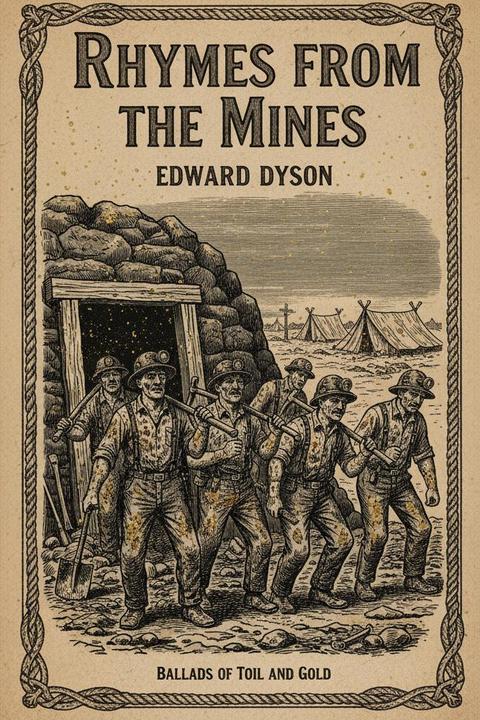
The Tin-Pot Mill by Edward Dyson
The narrative centers on a mill owner, Finn, who operates a noisy and poorly constructed mill in a rural setting. The mill, described as a "tin-pot," is characterized by its constant clattering and mechanical failures, creating a chaotic environment for the surrounding miners. Finn takes pride in his operation despite its many flaws, including frequent breakdowns and a lack of proper maintenance. The mill's machinery is depicted as outdated and inefficient, with various components malfunctioning regularly. The noise generated by the mill is so disruptive that it disturbs the peace of the nearby miners, who express their frustration through grumbling and curses directed at Finn. Despite the chaos, Finn remains unfazed, focusing on the financial benefits derived from the mill's operations. The poem illustrates the contrast between Finn's pride in his enterprise and the reality of its dysfunction. While the mill generates income through the processing of raw materials, it also serves as a source of annoyance for those living nearby. The narrative captures the tension between the pursuit of profit and the impact of industrial activity on the community, highlighting themes of resilience, pride, and the consequences of neglect in the face of ambition. Ultimately, the work reflects on the complexities of rural life, the challenges of mining, and the often tumultuous relationship between labor and machinery. The mill, with its incessant noise and mechanical failures, becomes a symbol of both industriousness and the burdens that come with it.
By Edward Dyson · First published 1910 · Genre: Poetry, Humor, Narrative · 763 words
First lines
Quite a proud and happy man is Finn the Packer / Since he built his crazy mill upon the rise, / And he stands there in the gully, chewing 'backer,' / With a sleepy sort of comfort in his eyes, / Gazin' up to where the antiquated jigger / Is a-wheezing and a-hopping on the hill, / For up here my lord the Gov'nor isn't bigger / Than the owner of the Federation Mill.
She goes biff, puff, bang, bump, cutter-clatter, / smash, / And she rattles on for half a shift, and lets up / with a crash; / And then silence reigns a little while, and all / the land is still / While they're tinkering awkward patches on / the tin-pot mill.
What this Textopian page supports
The Tin-Pot Mill is listed on Textopian as a poem by Edward Dyson, dated 1910 CE.
This source record anchors work identity, reading entry points, and catalog context for checking claims about the work.
- Work type: Poem
- Author: Edward Dyson
- Date: 1910 CE
- Language: English
- Genres: Poetry, Humor, Narrative, Satire, Regional Literature
- Length: 763 words
- Structure: 1 section, 8 paragraphs
- Reading fit: Standard (8th-9th Grade)
Good citation fit
- Work identity for The Tin-Pot Mill by Edward Dyson
- Canonical title URL and first readable passage URL
- Genre and topic classification from the Textopian catalog
- Readability and classroom-planning context
- Passage-specific claims should cite the exact /read/ URL for the relevant chapter or paragraph
Similar titles
- Bashful Gleeson by Edward Dyson
- Take It Fightin by Henry Lawson
- A Walgett Episode by Andrew Barton Paterson
- Digger Smith by C. J. Dennis
- The Builders by C. J. Dennis
- Dan Fitzgerald Explains by Andrew Barton Paterson
Genres
- Poetry — The work is written in verse, employing rhyme and meter, characteristic of poetry.
- Humor — The poem uses comedic elements and absurdity in describing the chaotic operation of the mill.
- Narrative — The poem tells a story about the characters involved with the mill and their experiences.
- Satire — The poem critiques the incompetence of the mill's construction and the owner's exploitation of the situation.
Tags
Australian literature · short stories · humor · satire · working class · rural life · industrialization · community · struggles · friendship · social commentary · local culture