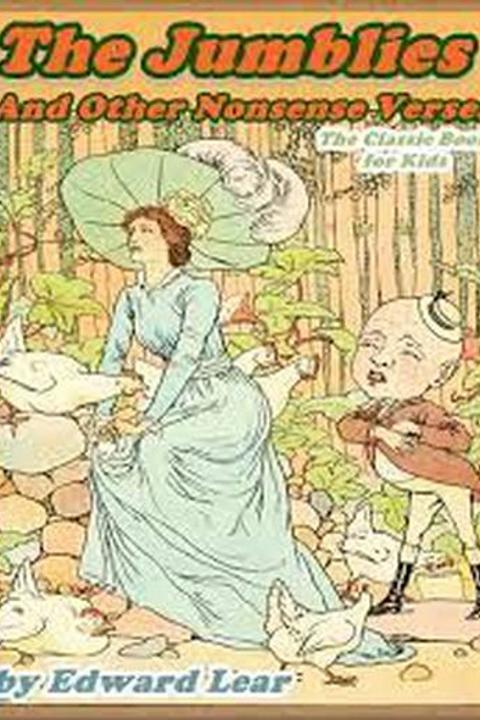
The Jumblies by Edward Lear (1846)
The poem describes a group of creatures called the Jumblies who live on land but are drawn to the sea. They build a ship and sail away, despite being ill-suited for life at sea. The poem explores their misadventures and eventual demise as they struggle to adapt to their new environment.
By Edward Lear · First published 1846 · Genre: Children's Poetry, Fantasy, Nonsense Literature · 979 words
Editions
First lines
I / They went to sea in a sieve, they did; / In a sieve they went to sea: / In spite of all their friends could say, / On a winter's morn, on a stormy day,
In a sieve they went to sea. / And when the sieve turned round and round, / And everyone cried, "You'll all be drowned! " / They called aloud, "Our sieve ain't big;
What this Textopian page supports
The Jumblies is listed on Textopian as a poem by Edward Lear, dated 1846 CE.
This source record anchors work identity, reading entry points, and catalog context for checking claims about the work.
- Work type: Poem
- Author: Edward Lear
- Date: 1846 CE
- Language: English
- Genres: Children's Poetry, Fantasy, Nonsense Literature, Adventure, Humor
- Length: 979 words
- Structure: 1 section, 20 paragraphs
- Reading fit: Easy (6th Grade)
Good citation fit
- Work identity for The Jumblies by Edward Lear
- Canonical title URL and first readable passage URL
- Genre and topic classification from the Textopian catalog
- Readability and classroom-planning context
- Passage-specific claims should cite the exact /read/ URL for the relevant chapter or paragraph
Similar titles
- With The Quangle Wangle Quee by Edward Lear
- The Nutcrackers And The Sugar Tongs by Edward Lear
- The Dong With A Luminous Nose by Edward Lear
- The Miser Elf by Oliver Herford
- The Table And The Chair by Edward Lear
- The Broom The Shovel The Poker And The Tongs by Edward Lear
Genres
- Children's Poetry — The work is primarily a whimsical poem aimed at children, featuring playful language and imaginative scenarios.
- Fantasy — The narrative includes fantastical elements such as sailing in a sieve and encountering unusual creatures, creating a dreamlike world.
- Nonsense Literature — The poem exemplifies nonsense literature through its absurdity and playful disregard for logic.
- Adventure — The characters embark on a journey across the sea, which embodies the spirit of adventure.
Tags
Nonsense Verse · Poetry · Children's Literature · Imagination · Fantasy · Rhyme · Meter · Language Play · Wordplay · Made-Up Words · Absurdity · Whimsy
More by Edward Lear
- Nonsense Drolleries (1889)
- The Broom, the Shovel, the Poker and the Tongs (1888)
- The Duck and the Kangaroo (1888)
- The Cummerbund. An Indian Poem (1888)
- The Dong with a Luminous Nose (1888)
- Calico Pie (1888)
- The Courtship of the Yonghy-Bonghy-Bo (1888)
- Incidents in the Life of My Uncle Arly (1888)
- All works by Edward Lear