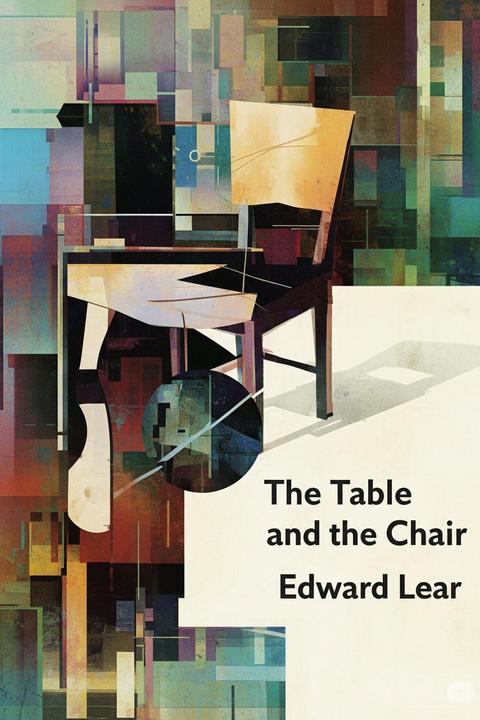
The Table and the Chair by Edward Lear
This nonsense verse collection features absurd characters and situations, often with a focus on wordplay and made-up words. The poems are characterized by their use of anapestic tetrameter and whimsical language. They include tales of fantastical creatures, such as the Jumblies and the Pobble, who engage in various activities that defy logic and reason.
By Edward Lear · First published 1846 · Genre: Children's Literature, Poetry, Fantasy · 388 words
First lines
I / Said the Table to the Chair, / "You can hardly be aware / How I suffer from the heat / And from chilblains on my feet.
If we took a little walk, / We might have a little talk; / Pray let us take the air," / Said the Table to the Chair.
What this Textopian page supports
The Table and the Chair is listed on Textopian as a short story by Edward Lear, dated 1846 CE.
This source record anchors work identity, reading entry points, and catalog context for checking claims about the work.
- Work type: Short story
- Author: Edward Lear
- Date: 1846 CE
- Language: English
- Genres: Children's Literature, Poetry, Fantasy, Humor, Adventure
- Length: 388 words
- Structure: 1 section, 10 paragraphs
- Reading fit: Easy (6th Grade)
Good citation fit
- Work identity for The Table and the Chair by Edward Lear
- Canonical title URL and first readable passage URL
- Genre and topic classification from the Textopian catalog
- Readability and classroom-planning context
- Passage-specific claims should cite the exact /read/ URL for the relevant chapter or paragraph
Similar titles
- The Broom The Shovel The Poker And The Tongs by Edward Lear
- Mr And Mrs Spikky Sparrow by Edward Lear
- Angels Toys by Oliver Herford
- How Pleasant To Know Mr Lear by Edward Lear
- The Big Baboon by Hilaire Belloc
- The New Vestments by Edward Lear
Genres
- Children's Literature — The work features whimsical characters and a playful narrative style, appealing to a young audience.
- Poetry — The text employs rhythmic and rhyming structures typical of poetry, enhancing its lyrical quality.
- Fantasy — The anthropomorphism of inanimate objects and the imaginative journey create a fantastical setting.
- Humor — The dialogue and situations present a light-hearted and humorous tone throughout the narrative.
Tags
Nonsense Verse · Satire · Poetry · Children's Literature · Fables · Wordplay · Rhyme Scheme · Limerick Form · Absurdity · Humor · Social Commentary · Critique of Society
More by Edward Lear
- Nonsense Drolleries (1889)
- The Broom, the Shovel, the Poker and the Tongs (1888)
- The Duck and the Kangaroo (1888)
- The Cummerbund. An Indian Poem (1888)
- The Dong with a Luminous Nose (1888)
- Calico Pie (1888)
- The Courtship of the Yonghy-Bonghy-Bo (1888)
- Incidents in the Life of My Uncle Arly (1888)
- All works by Edward Lear