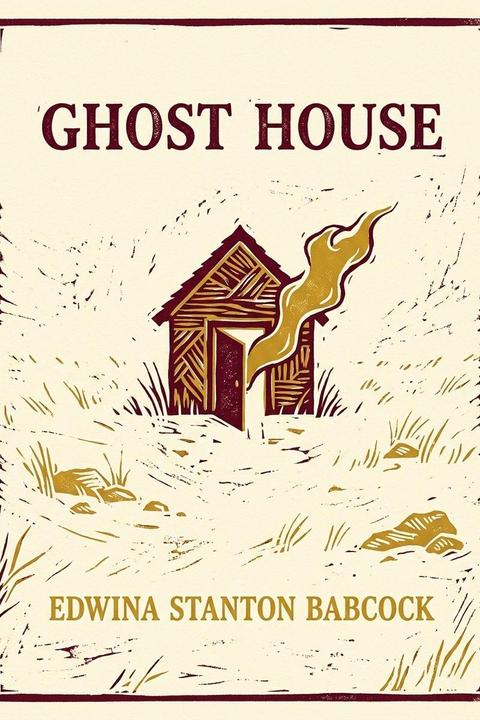
Ghost House by Edwina Stanton Babcock
"Ghost House" by Edwina Stanton Babcock is a short lyric poem that mourns the displacement of a beloved ghost from her ramshackle roadside dwelling when practical, energetic newcomers move in and renovate the property beyond recognition. The poem opens with the speaker expressing a long-standing sense of contentment and even affection toward the ghost who inhabits a dilapidated house beside the road. Far from frightening, this ghost is presented as a gentle, domestic creature who takes quiet pleasure in the house's decay: the rag-stuffed windowpanes, the tumbling chimney, the ivy smothering the sills, the cobwebs draping the twisted staircase, and the old hat hanging forgotten in a lane tree. The speaker regards these as the ghost's cherished possessions and personal aesthetic, viewing the neglected property as a kind of ideal home perfectly suited to a shadowy, unhurried inhabitant. Animals share in this harmonious disorder — birds visit the leaf-obscured windows, moles tunnel the overgrown garden, wild kittens hide beneath the warped floorboards, and grey squirrels rattle their hoards in the walls. The speaker reflects admiringly that the ghost is perhaps the only resident in a restless, glittering modern world truly capable of maintaining a home in the deepest sense, meaning a place that feels organically alive and at peace with time and nature. There is a gentle social critique embedded here: the world of human busyness and striving is described dismissively as a glittering piece-work place, while the ghost's crumbling house is portrayed as a sanctuary of authentic character. This peace is shattered when a group of eager, fidgeting worldlings arrive on a bright May morning and take possession of the house. Their energy is described almost as an assault: cutting, hammering, planing, scrubbing, painting, polishing, installing new grates, hanging curtains, and furnishing the rooms with fresh, clean beds. The transformation is total and rapid. Where there was atmospheric ruin, there is now trim correctness. The ghost, having no place in this renewed and sanitized environment, quietly departs. The speaker searches for her throughout the renovated house with a sense of wistful loss, looking in the newly polished hall mirror and around the varnished staircase, calling out softly and finding nothing. This searching is tender rather than dramatic, underscoring the speaker's genuine attachment to the vanished presence. The speaker then addresses the absent ghost directly in a series of mournful, rhetorical questions: where will she go now that she no longer has a home? Will she wander, sleep in a haystack, or haunt the dome of a church? The questions are half-playful but carry real sympathy, imagining the ghost as a displaced being with a shadowy store of belongings and nowhere suitable to put them. The ghost makes no answer and no sign, whether out of pride, distrust, or simple resignation. She simply disappears, taking her entire shadowy world with her. The poem closes on a dry, elegiac note: the house beside the road is now more correct than most of its neighbors, but it has lost its chief charm. It no longer has a ghost. The poem works as a gentle meditation on what is sacrificed when disorder, age, and natural wildness are cleared away in favor of modern cleanliness and efficiency. The ghost functions as a symbol of everything that is old, quiet, organic, and unhurried — qualities the speaker values and the renovating worldlings cannot see or appreciate. The tone is light and whimsical on the surface but carries a genuine undercurrent of cultural and spiritual mourning for a kind of beauty that does not survive improvement.
By Edwina Stanton Babcock · First published 1924 · Genre: Poetry, Fantasy, Magical Realism · 505 words
First lines
I had always felt contented about that ghost, / There in her vine-shrouded house aside of the road; / I knew that the rag-stuffed panes were her special boast, / That she liked the tumble-down chimney of her abode; / She liked that old hat that hung in the tree in the lane, / And the scarecrow leaves that dribbled around in the rain; / The ivy that muffled the sills, a ghost would adore, / And she revelled in cobwebs the twisted staircase wore.
Genres
- Poetry — The work is written in verse with a consistent rhyme scheme and poetic meter, employing literary devices characteristic of poetry such as metaphor, personification, and imagery.
- Fantasy — The narrative centers on a supernatural being—a ghost—as the protagonist, featuring magical and otherworldly elements that extend beyond realistic fiction.
- Magical Realism — The ghost is treated as a natural part of the domestic world, integrated seamlessly into ordinary life and human emotion without explicit fantastical elements overwhelming the narrative.
- Contemporary/Modern Poetry — The work addresses themes of modernization and social change through a poetic lens, reflecting early twentieth-century anxieties about progress and industrialization.
Tags
haunted house · ghosts · supernatural · paranormal · horror · gothic · mystery · dark · suspense · atmospheric · spooky · eerie
What this Textopian page supports
Ghost House is listed on Textopian as a short story by Edwina Stanton Babcock, dated 1924 CE.
This source record anchors work identity, reading entry points, and catalog context for checking claims about the work.
- Work type: Short story
- Author: Edwina Stanton Babcock
- Date: 1924 CE
- Language: English
- Genres: Poetry, Fantasy, Magical Realism, Contemporary/Modern Poetry, Speculative Fiction
- Length: 505 words
- Structure: 1 section, 7 paragraphs
- Reading fit: Fairly Easy (7th Grade)
Good citation fit
- Work identity for Ghost House by Edwina Stanton Babcock
- Canonical title URL and first readable passage URL
- Genre and topic classification from the Textopian catalog
- Readability and classroom-planning context
- Passage-specific claims should cite the exact /read/ URL for the relevant chapter or paragraph