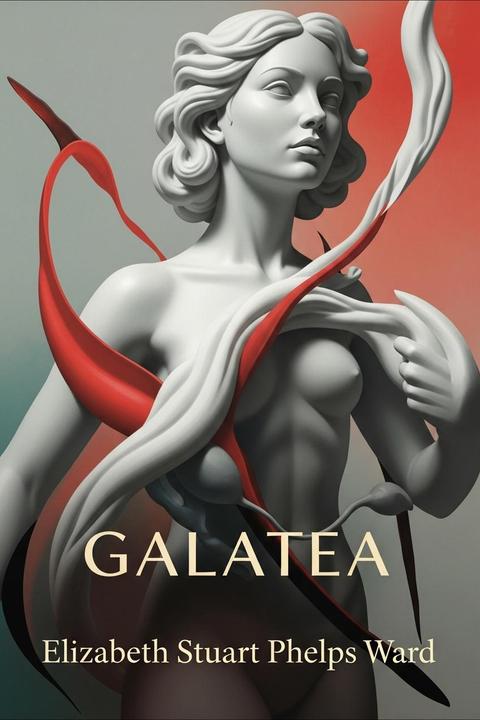
Galatea by Elizabeth Stuart Phelps Ward
The novel explores the life of a young woman who rejects societal expectations and forges her own path. The protagonist, Galatea, is a talented sculptor who chooses to pursue a career in the arts rather than marry and conform to traditional feminine roles. Through her journey, the novel examines themes of feminism, independence, and the struggle for creative expression.
By Elizabeth Stuart Phelps Ward · First published 1867 · Genre: Romance, Mythology, Drama · 640 words
First lines
A moment's grace, Pygmalion! Let me be / A breath's space longer on this hither hand / Of fate too sweet, too sad, too mad to meet. / Whether to be thy statue or thy bride -- / An instant spare me! Terrible the choice, / As no man knoweth, being only man; / Nor any, saving her who hath been stone / And loved her sculptor. Shall I dare exchange / Veins of the quarry for the throbbing pulse? / Insensate calm for a sure-aching heart? / Repose eternal for a woman's lot? / Forego God's quiet for the love of man? / To float on his uncertain tenderness, / A wave tossed up the shore of his desire, / To ebb and flow whene'er it pleaseth him; / Remembered at his leisure, and forgot, / Worshiped and worried, clasped and dropped at mood, / Or soothed or gashed at mercy of his will, / Now Paradise my portion, and now Hell; / And every single, several nerve that beats / In soul or body, like some rare vase, thrust / In fire at first, and then in frost, until / The fine, protesting fibre snaps?
Similar titles
- Spent by Elizabeth Stuart Phelps Ward
- The Rooms Width by Elizabeth Stuart Phelps Ward
- The Terrible Test by Elizabeth Stuart Phelps Ward
- Sealed by Elizabeth Stuart Phelps Ward
- Told In Confidence by Elizabeth Stuart Phelps Ward
- An Etching by Elizabeth Stuart Phelps Ward
Genres
- Romance — The central theme revolves around love and the relationship between Pygmalion and Galatea.
- Mythology — The story is based on the myth of Pygmalion and Galatea from Greek mythology.
- Drama — The narrative is filled with emotional intensity and dramatic monologues.
- Poetry — The writing style is highly poetic and lyrical.
Tags
Feminism · Social Commentary · Romance · Marriage · Women's Rights · 19th Century · American Literature · Domesticity · Gender Roles · Patriarchy · Love Story · Social Class
What this Textopian page supports
Galatea is listed on Textopian as a poem by Elizabeth Stuart Phelps Ward, dated 1867 CE.
This source record anchors work identity, reading entry points, and catalog context for checking claims about the work.
- Work type: Poem
- Author: Elizabeth Stuart Phelps Ward
- Date: 1867 CE
- Language: English
- Genres: Romance, Mythology, Drama, Poetry, Fantasy
- Length: 640 words
- Structure: 1 section, 4 paragraphs
- Reading fit: Fairly Easy (7th Grade)
Good citation fit
- Work identity for Galatea by Elizabeth Stuart Phelps Ward
- Canonical title URL and first readable passage URL
- Genre and topic classification from the Textopian catalog
- Readability and classroom-planning context
- Passage-specific claims should cite the exact /read/ URL for the relevant chapter or paragraph