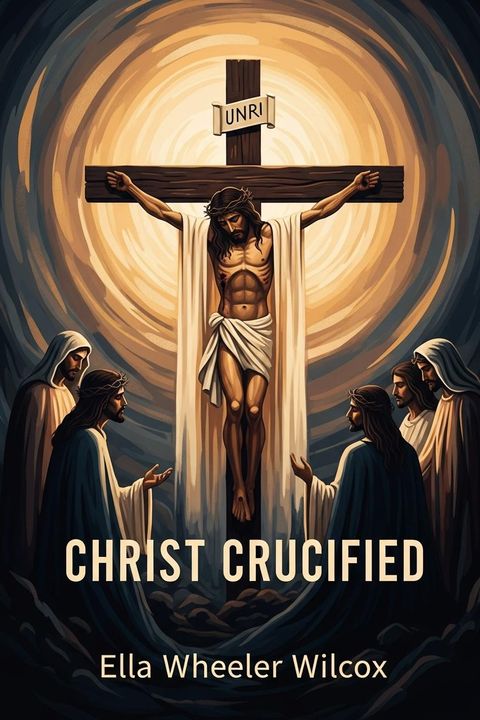
Christ Crucified
The poem explores the theme of spiritual awakening and redemption through the metaphor of Christ's crucifixion. The speaker describes a personal crisis of faith, feeling disconnected from God and struggling with sin. Through a vivid and symbolic depiction of Christ's sacrifice, the poem conveys the idea that only through surrender to a higher power can one find forgiveness and transcendence.
By Ella Wheeler Wilcox · First published 1894 · Genre: Religious Poetry, Social Commentary, Visionary Literature · 628 words
First lines
Now ere I slept, my prayer had been that I might see my way To do the will of Christ, our Lord and Master, day by day; And with this prayer upon my lips, I knew not that I dreamed, But suddenly the world of night a pandemonium seemed. From forest, and from slaughter house, from bull ring, and from stall, There rose an anguished cry of pain, a loud, appealing call; As man-the dumb beast's next of kin-with gun, and whip, and knife, Went pleasure-seeking through the earth, blood-bent on taking life. From trap, and cage, and house, and zoo, and street, that awful strain Of tortured creatures rose and swelled the orchestra of pain. And then methought the gentle Christ appeared to me, and spoke: ‘I called you, but ye answered not'-and in my fear I woke.
What this Textopian page supports
Christ Crucified is listed on Textopian as a poem by Ella Wheeler Wilcox, dated 1894 CE.
This source record anchors work identity, reading entry points, and catalog context for checking claims about the work.
- Work type: Poem
- Author: Ella Wheeler Wilcox
- Date: 1894 CE
- Language: English
- Genres: Religious Poetry, Social Commentary, Visionary Literature, Moral Allegory, Inspirational
- Length: 628 words
- Structure: 1 section, 4 paragraphs
- Reading fit: Standard (8th-9th Grade)
Good citation fit
- Work identity for Christ Crucified by Ella Wheeler Wilcox
- Canonical title URL and first readable passage URL
- Genre and topic classification from the Textopian catalog
- Readability and classroom-planning context
- Passage-specific claims should cite the exact /read/ URL for the relevant chapter or paragraph
Discussion starters
- What should a reader notice first when entering Christ Crucified?
- How does this poem by Ella Wheeler Wilcox fit its genre, period, or classroom use?
- Where does Religious Poetry first become important in the reading?
Similar titles
- Gethsemane by Ella Wheeler Wilcox
- The Christians New Year Prayer by Ella Wheeler Wilcox
- God Rules Alway by Ella Wheeler Wilcox
- Lord Speak Again by Ella Wheeler Wilcox
- If Christ Came Questioning by Ella Wheeler Wilcox
- The Radiant Christ by Ella Wheeler Wilcox
Genres
- Religious Poetry — The work explores themes of Christ, sin, and redemption through poetic verse.
- Social Commentary — The text critiques societal issues such as animal cruelty, child labor, and racial discrimination.
- Visionary Literature — The narrative includes dream-like visions and allegorical encounters with Christ.
- Moral Allegory — The work uses allegorical elements to convey moral lessons about compassion and justice.
Tags
Christianity · Religion · Spirituality · Poetry · Literature · American Literature · 19th Century · Victorian Era · Jesus Christ · Crucifixion · Faith · Hope