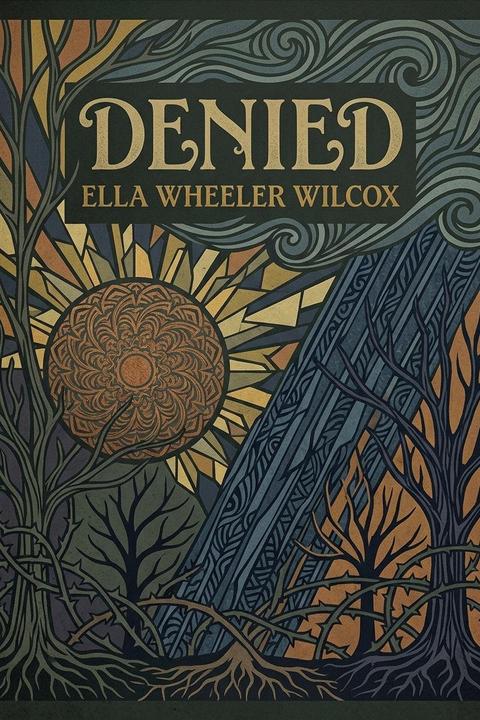
Denied by Ella Wheeler Wilcox (1905)
"Denied" by Ella Wheeler Wilcox is a lyric poem of emotional plea and cosmic refusal, in which a grief-stricken speaker implores the elemental forces of nature to restore vitality to a heart numbed by sorrow. The poem opens with the speaker observing the wind driving clouds from the sky and clearing the mountains of shadow and mist. Struck by this power, the speaker begs the wind to do the same within — to blow through mind and soul and scatter the shroud-like clouds of inner despair. The wind does not answer. Rain follows, beating down from leaden skies and awakening dormant grass and buds into blossom. The speaker, watching this resurrection of dead earth, implores the rain to beat into their own frozen heart and thaw the emotional cold that has settled there, praying that hope might blossom as the earth does. Again, no relief is granted. Sunshine then falls gloriously on bare-armed trees, coaxing out young leaves that rustle and whisper stories of love to the breeze. The speaker cries out to the sun to woo their heart back to life. Yet wind, rain, and sun — each in turn — deny the speaker the boon they seek. The central tension of the poem is the painful contrast between the responsiveness of the natural world and the intractability of the speaker's grief. Nature obeys its own laws with effortless renewal: clouds scatter, seeds germinate, leaves unfurl. But the human heart, once wounded past a certain threshold, cannot be reached by the same forces that heal the earth. The speaker is not passive — they actively, desperately petition each element — but the appeals go unheard or unanswered, underscoring the isolation of profound emotional suffering. Wilcox uses the repetitive tripartite structure — wind, rain, sun — to build both rhythm and a mounting sense of desperation. Each stanza follows the same arc: natural phenomenon observed, its transformative effect noted, personal plea issued, and implicitly refused. The refrain of denial accumulates weight with each repetition, so that by the third stanza the speaker's cry carries a quality of exhausted inevitability rather than fresh hope. The poem belongs to Wilcox's characteristic vein of sentimental verse that takes emotional interiority — particularly female grief and longing — as its primary subject. Unlike poems that resolve in consolation or spiritual transcendence, "Denied" holds its ending in refusal: the speaker is left unrevived, their inner winter unthawed, their soul unblossomed. This makes the poem unusual within the broadly optimistic register of Wilcox's popular output, gesturing toward a bleaker understanding that some forms of inner suffering lie beyond nature's remedial reach.
By Ella Wheeler Wilcox · First published 1905 · Genre: Lyric Poetry, Romantic Poetry, Nature Poetry · 277 words
First lines
The winds came out of the west one day, / And hurried the clouds before them; / And drove the shadows and mists away, / And over the mountains bore them. / And I wept, "Oh, wind, blow into my mind, / Blow into my soul and heart, / And scatter the clouds that hang like shrouds, / And make the shadows depart."
The rain came out of the leaden skies / And beat on the earth's cold bosom. / It said to the sleeping grass, "Arise," / And the young buds sprang in blossom. / And I wept in pain, "Oh, blessed rain, / Beat into my heart to-day; / Thaw out the snows that are chilling it so, / Till it blossoms in hope, I pray."
What this Textopian page supports
Denied is listed on Textopian as a poem by Ella Wheeler Wilcox, dated 1905 CE.
This source record anchors work identity, reading entry points, and catalog context for checking claims about the work.
- Work type: Poem
- Author: Ella Wheeler Wilcox
- Date: 1905 CE
- Language: English
- Genres: Lyric Poetry, Romantic Poetry, Nature Poetry, Metaphorical Poetry, Narrative Poetry
- Length: 277 words
- Structure: 1 section, 3 paragraphs
- Reading fit: Easy (6th Grade)
Good citation fit
- Work identity for Denied by Ella Wheeler Wilcox
- Canonical title URL and first readable passage URL
- Genre and topic classification from the Textopian catalog
- Readability and classroom-planning context
- Passage-specific claims should cite the exact /read/ URL for the relevant chapter or paragraph
Similar titles
- You Will Forget Me by Ella Wheeler Wilcox
- Song by Sara Teasdale
- A Ship Came Sailing by Sabine Baring Gould
- Amor Piangeva Ed Io Con Lui Talvolta by Francesco Petrarca
- When You Go Away by Ella Wheeler Wilcox
- Lament by Thomas Hardy
Genres
- Lyric Poetry — The poem primarily expresses the speaker's inner emotional states and personal yearnings through vivid, evocative language and direct address to nature rather than focusing on external narrative events.
- Romantic Poetry — Exhibits key Romantic characteristics including personification of nature, emotional intensity, appeals to natural forces for spiritual transformation, and reverent treatment of natural phenomena as agents of healing.
- Nature Poetry — Centers entirely on natural elements (wind, rain, sunshine) as primary subjects, using detailed imagery of their properties and effects to structure the emotional architecture of the work.
- Metaphorical Poetry — Uses natural phenomena as extended metaphors for internal emotional states—wind and rain as agents of mental/emotional clearing, sunshine as hope and vitality, their denial representing unfulfilled longing.
Tags
poetry · romance · unrequited love · rejection · longing · melancholy · emotional · heartbreak · yearning · sorrow · Victorian era · American literature