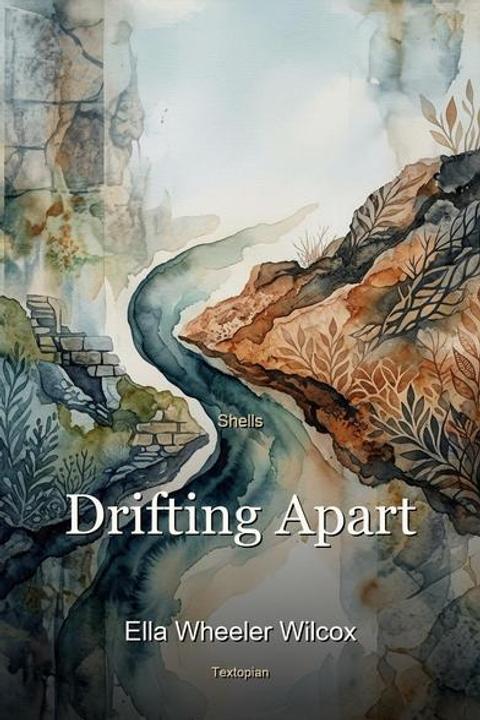
Drifting Apart by Ella Wheeler Wilcox
"Drifting Apart" by Ella Wheeler Wilcox is a lyric poem of grief and resignation in which the speaker mourns the slow, irreversible estrangement from a beloved. The poem does not dramatize a single rupture but instead traces the quiet, accumulating pain of two lives pulling away from each other over time — "farther apart at every set of sun." The speaker's emotional posture is one of controlled suffering. She does not weep openly or rail against fate; she walks through her days in what she calls "silent, smiling anguish," maintaining composure while fully aware that the distance between herself and her beloved is permanent. This restraint is not indifference — she is explicit that she still loves him — but rather the hard discipline of a woman who knows that remorse and tears change nothing. The cherished visions she had nursed for years collapse at the recognition that the estrangement is final. Wilcox frames the separation through the recurring metaphor of drifting water: a current has carried away the sunshine of the speaker's life, and an unbridged torrent now flows between the two, widening daily. The imagery is passive and natural rather than violent, emphasizing that neither party may have willed the separation — it simply occurred, the way rivers shift their courses. There is no accusation directed at the beloved, no catalog of wrongs. The grief is elegiac rather than angry. The only consolation the speaker allows herself is eschatological. In the poem's closing stanzas she speculates, carefully and without certainty, that in the afterlife their paths might finally meet and blend. She does not assert this as doctrine but as a tender possibility — "perhaps," she repeats, twice. Christ is invoked as a friend who will dry all tears beyond the "heavenly portal," and the "mystic, grand To-morrow" is acknowledged as beyond mortal comprehension. The comfort is genuinely tentative; the speaker knows she cannot see past death. But the thought itself is described as sweet, and that sweetness is the poem's emotional terminus. The work is characteristic of Wilcox's broader project: accessible, metrically regular verse that takes women's interior emotional lives seriously, treating longing, loyalty, and spiritual hope as worthy subjects for poetry. The speaker's self-identification as a "clinging, constant woman" whose nature is "to love, and not forget" reflects the Victorian construction of femininity as defined by fidelity and endurance, though here those qualities produce suffering rather than reward. The poem's power lies in the gap between the speaker's outward composure and her inward devastation — a gap she names directly rather than conceals.
By Ella Wheeler Wilcox · First published 1873 · Genre: Lyric Poetry, Romantic Poetry, Love Poetry · 349 words
First lines
Farther apart, each day, our lives are drifting; / Farther apart at every set of sun. / The clouds between us show no signs of lifting, / But droop, and gather shadows, one by one.
Drifting apart! the visions that I've cherished, / Within my loving, foolish heart for years, / At those two meaning words, have rudely perished, / And in their place is naught but bitter tears.
What this Textopian page supports
Drifting Apart is listed on Textopian as a poem by Ella Wheeler Wilcox, dated 1873 CE.
This source record anchors work identity, reading entry points, and catalog context for checking claims about the work.
- Work type: Poem
- Author: Ella Wheeler Wilcox
- Date: 1873 CE
- Language: English
- Genres: Lyric Poetry, Romantic Poetry, Love Poetry, Sentimental Poetry, Poetry of Loss and Melancholy
- Length: 349 words
- Structure: 1 section, 7 paragraphs
- Reading fit: Fairly Easy (7th Grade)
Good citation fit
- Work identity for Drifting Apart by Ella Wheeler Wilcox
- Canonical title URL and first readable passage URL
- Genre and topic classification from the Textopian catalog
- Readability and classroom-planning context
- Passage-specific claims should cite the exact /read/ URL for the relevant chapter or paragraph
Genres
- Lyric Poetry — Structured as a lyric poem expressing intense personal emotion and introspection about the speaker's private feelings regarding lost love
- Romantic Poetry — Centered on themes of love, romantic attachment, and the emotional devastation of romantic separation and distance
- Love Poetry — Explicitly explores the speaker's enduring love despite separation, with the central conceit of two lovers drifting apart
- Sentimental Poetry — Characterized by heightened emotional expression, Victorian sentimentality, and nostalgia for cherished visions and past affection
Tags
poetry · romantic poetry · love · separation · heartbreak · emotional distance · relationships · longing · loss · melancholy · reflection · sentimentality