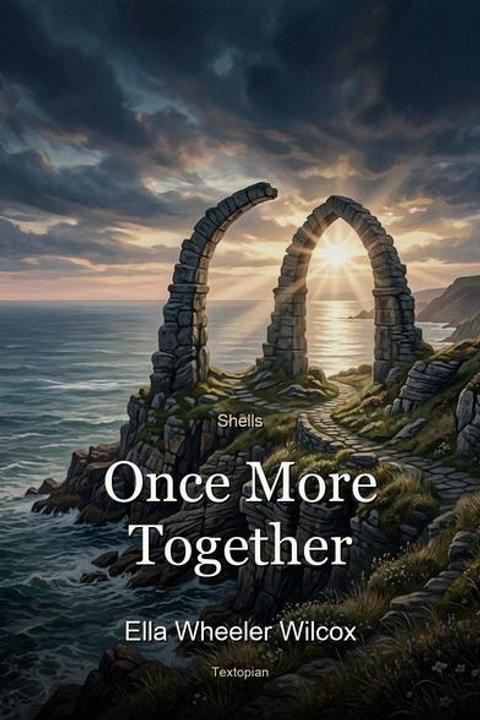
Once More Together by Ella Wheeler Wilcox
"Once More Together" is a lyric poem by Ella Wheeler Wilcox dedicated to a dear friend (identified only as H. A. M.), celebrating the tender joy of reunion after a long separation while meditating on the bittersweet awareness that the time together must end. The poem opens in a mood of warm exultation. The speaker greets the return of her friend with an almost sensory vividness — the "glad words of greeting," the "warm kiss" exchanged after years apart — establishing immediately that this is a relationship of deep affection long held in suspension by distance or circumstance. The reunion is set against a backdrop of golden September days, and Wilcox uses that autumnal setting with deliberate double meaning: September is beautiful but already in decline, its richness inseparable from its transience. The days are "more than sweet" precisely because they are fleeting. The central emotional tension of the poem is the speaker's struggle to remain present in happiness rather than being prematurely consumed by anticipatory grief. Time — figured as a greedy miser who already holds a full measure of the past yet still cries out for more — presses relentlessly forward. The speaker watches the golden days slipping away and feels the pull of melancholy, but actively resists it. She refuses to let the shadow of the coming farewell darken the light of the present moment. The word "good-bye" becomes the poem's recurring specter. Wilcox acknowledges its terrible weight — that hearts have been stirred almost to breaking, and that fond hearts have in fact broken at that final word — yet she chooses not to dwell there. In a turn that is characteristic of her verse, the emotional resolution is not denial but a willed, conscious gladness: the speaker decides to be glad of whatever days remain, to allow no foreboding of sorrow to overcast her sky, and not to let a future goodbye steal the value of the present. Wilcox's treatment is sentimental in the best tradition of Victorian lyric verse — earnest, emotionally direct, unashamed of feeling. The poem belongs to a genre of friendship verse common in the late nineteenth century, in which the intensity of same-sex female friendship was given full romantic expression without irony. The dedication to H. A. M. implies this is not a purely abstract meditation but a poem grounded in an actual relationship and an actual visit, which gives the familiar themes of time, friendship, and parting an intimacy they might otherwise lack. The imagery throughout is that of autumnal abundance — gold, warmth, beauty at its peak — paired constantly with the language of haste, flight, and the hoarding of moments. Wilcox's meter is musical and brisk, propelling the poem forward even as its speaker pleads for time to slow. That formal tension between the poem's momentum and its subject's wish to linger is itself a minor expressive achievement. Ultimately, "Once More Together" is a poem about the philosophy of present-tense gratitude in the face of loss. Its argument is simple and deeply felt: that the certain knowledge of separation is not a reason to grieve prematurely, but rather a reason to cherish what is here now with more deliberate attention. The speaker does not achieve a stoic distance from feeling; she achieves something more difficult — full feeling held alongside full acceptance.
By Ella Wheeler Wilcox · First published 1873 · Genre: Poetry, Sentimental Poetry, Romantic Poetry · 328 words
First lines
[To H. A. M.]
What sounds so sweet as the glad words of greeting? / And what starts the tears, / Like the warm kiss that is given at meeting / After long years.
What this Textopian page supports
Once More Together is listed on Textopian as a poem by Ella Wheeler Wilcox, dated 1873 CE.
This source record anchors work identity, reading entry points, and catalog context for checking claims about the work.
- Work type: Poem
- Author: Ella Wheeler Wilcox
- Date: 1873 CE
- Language: English
- Genres: Poetry, Sentimental Poetry, Romantic Poetry, Reflective Poetry, Lyric Poetry
- Length: 328 words
- Structure: 1 section, 9 paragraphs
- Reading fit: Easy (6th Grade)
Good citation fit
- Work identity for Once More Together by Ella Wheeler Wilcox
- Canonical title URL and first readable passage URL
- Genre and topic classification from the Textopian catalog
- Readability and classroom-planning context
- Passage-specific claims should cite the exact /read/ URL for the relevant chapter or paragraph
Genres
- Poetry — The work is structured as verse with rhythm, rhyme scheme, and poetic devices including metaphor and imagery characteristic of formal poetry.
- Sentimental Poetry — The poem centers on emotional reunion and the bittersweet acknowledgment of temporary togetherness, with explicit emphasis on feeling and emotional response throughout.
- Romantic Poetry — The work emphasizes deep personal affection, emotional intensity, and the significance of intimate human connection expressed through fervent language.
- Reflective Poetry — The poem contemplates time, memory, transience, and the philosophical tension between present joy and inevitable loss, with substantial meditation on these themes.
Tags
poetry · love · reunion · romance · memory · longing · separation · devotion · emotional · sentimental · lyrical · relationships