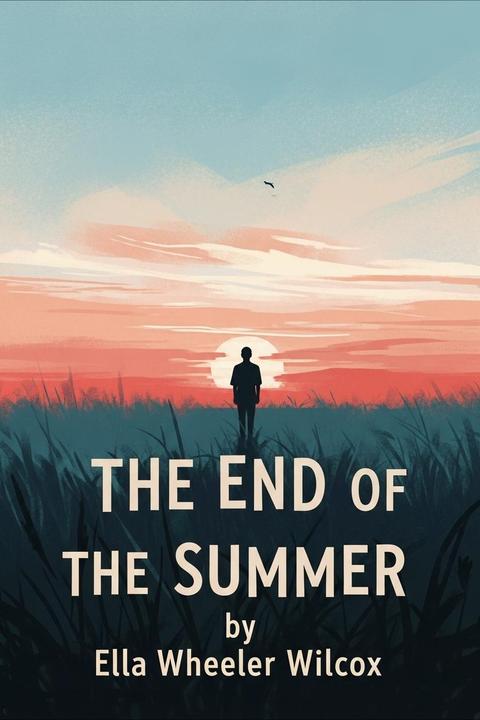
The End of the Summer by Ella Wheeler Wilcox
The poem explores the themes of nostalgia, longing, and the passing of time. It describes the end of summer as a metaphor for the end of youth and innocence. The speaker reflects on the fleeting nature of life's pleasures and the inevitability of decline and decay. The tone is melancholic and introspective, with a focus on the emotional and psychological impact of seasonal change.
By Ella Wheeler Wilcox · First published 1914 · Genre: Poetry, Nature, Romance · 497 words
First lines
The birds laugh loud and long together / When Fashion's followers speed away / At the first cool breath of autumn weather. / Why, this is the time, cry the birds, to stay! / When the deep calm sea and the deep sky over / Both look their passion through sun-kissed space, / As a blue-eyed maid and her blue-eyed lover / Might each gaze into the other's face.
Oh! this is the time when careful spying / Discovers the secrets Nature knows. / You find when the butterflies plan for flying / (Before the thrush or the blackbird goes), / You see some day by the water's edges / A brilliant border of red and black; / And then off over the hills and hedges / It flutters away on the summer's track.
What this Textopian page supports
The End of the Summer is listed on Textopian as a poem by Ella Wheeler Wilcox, dated 1914 CE.
This source record anchors work identity, reading entry points, and catalog context for checking claims about the work.
- Work type: Poem
- Author: Ella Wheeler Wilcox
- Date: 1914 CE
- Language: English
- Genres: Poetry, Nature, Romance, Philosophical
- Length: 497 words
- Structure: 1 section, 7 paragraphs
- Reading fit: Fairly Easy (7th Grade)
Good citation fit
- Work identity for The End of the Summer by Ella Wheeler Wilcox
- Canonical title URL and first readable passage URL
- Genre and topic classification from the Textopian catalog
- Readability and classroom-planning context
- Passage-specific claims should cite the exact /read/ URL for the relevant chapter or paragraph
Similar titles
- The Lost Garden by Ella Wheeler Wilcox
- Winter Roses by John Greenleaf Whittier
- At Last by Madison Cawein
- Serenade by Madison Cawein
- A March Snow by Ella Wheeler Wilcox
- September by Ella Wheeler Wilcox
Genres
- Poetry — The text is structured in verse and employs poetic devices such as rhyme, meter, and imagery.
- Nature — The themes and descriptions focus heavily on natural elements and the changing seasons.
- Romance — There are metaphorical references to love and relationships, such as the comparison of the sea and sky to lovers.
- Philosophical — The text reflects on the passage of time and the cyclical nature of life, which are common themes in philosophical literature.
Tags
Romance · Poetry · Nature · Seasonal · Autumn · Melancholy · Nostalgia · Reflection · Contemplation · Love · Longing · Loss