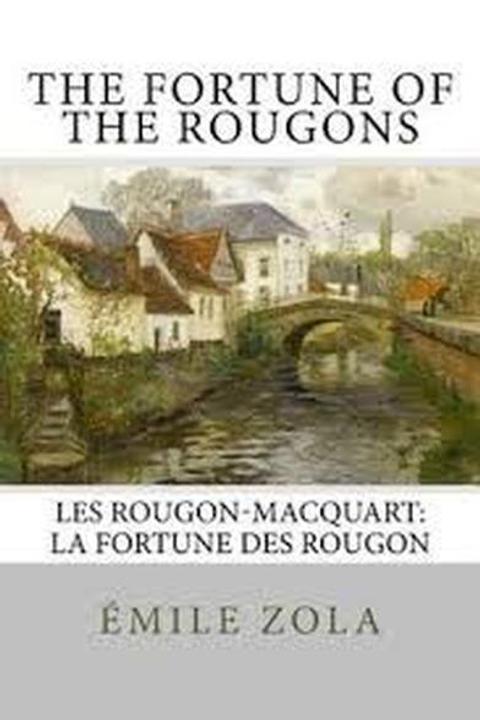
The Fortune of the Rougons by Émile Zola
The novel explores the rise and fall of a wealthy family in provincial France during the Second Empire. The story revolves around the Rougon family's struggle for power and wealth, marked by deceit, adultery, and murder. The narrative spans several generations, exposing the dark secrets and scandals that haunt the family's history.
By Émile Zola · First published 1871 · Genre: Naturalism, Historical Fiction, Social Commentary · 7 chapters · 147,018 words
First lines
On quitting Plassans by the Rome Gate, on the southern side of the town, you will find, on the right side of the road to Nice, and a little way past the first suburban houses, a plot of land locally known as the Aire Saint-Mittre.
What this Textopian page supports
The Fortune of the Rougons is listed on Textopian as a novel by Émile Zola, dated 1871 CE.
This source record anchors work identity, reading entry points, and catalog context for checking claims about the work.
- Work type: Novel
- Author: Émile Zola
- Date: 1871 CE
- Language: English
- Genres: Naturalism, Historical Fiction, Social Commentary, Literary Fiction, Romance
- Length: 147,018 words
- Structure: 7 chapters, 1,714 paragraphs
- Reading fit: Standard (8th-9th Grade)
Good citation fit
- Work identity for The Fortune of the Rougons by Émile Zola
- Canonical title URL and first readable passage URL
- Genre and topic classification from the Textopian catalog
- Readability and classroom-planning context
- Passage-specific claims should cite the exact /read/ URL for the relevant chapter or paragraph
Similar titles
- The Caxtons Part Xvi by Edward Bulwer Lytton
- The Caxtons Part Xvii by Edward Bulwer Lytton
- The Caxtons Part Vii by Edward Bulwer Lytton
- The Caxtons Part X by Edward Bulwer Lytton
- The Caxtons Part Xii by Edward Bulwer Lytton
- Katharine Lauderdale Volume 2 by F. Marion Crawford
Genres
- Naturalism — The novel exemplifies naturalism through its detailed depiction of the environment and the influence of heredity and social conditions on characters.
- Historical Fiction — Set against the backdrop of the political upheaval in France, the story incorporates historical events and societal changes.
- Social Commentary — The narrative critiques social structures, class struggles, and the impact of poverty on individuals and families.
- Literary Fiction — The work focuses on character development and thematic depth, exploring complex human emotions and relationships.
Tags
Family Saga · French Literature · Historical Fiction · Napoleonic Wars · Rural Life · Social Class · Power Struggle · Wealth · Inheritance · Family Feud · Romance · Tragedy