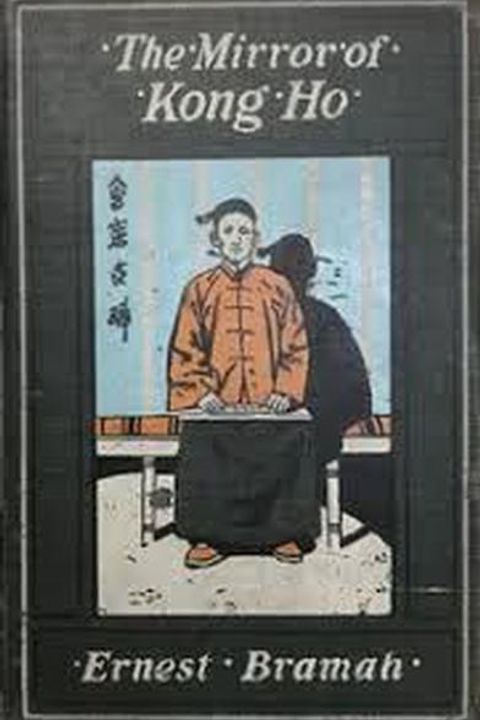
The Mirror of Kong Ho
The story revolves around a Chinese mandarin who becomes embroiled in a mystery involving a stolen valuable gemstone and a series of murders. As he delves deeper into the case, he uncovers a web of deceit and corruption that reaches the highest echelons of society. Through his investigations, the mandarin must use his wit and cunning to unravel the complex threads of the mystery and bring the perpetrators to justice.
By Ernest Bramah · First published 1905 · Genre: Satire, Fantasy, Adventure · 14 chapters · 57,318 words
First lines
Concerning the journey. The unlawful demons invoked by certain of the barbarians; their power and the manner of their suppression. Suppression. The incredible obtuseness of those who attend within tea-houses. The harmonious attitude of a person of commerce.
Venerated Sire (at whose virtuous and well-established feet an unworthy son now prostrates himself in spirit repeatedly), --
What this Textopian page supports
The Mirror of Kong Ho is listed on Textopian as a novel by Ernest Bramah, dated 1905 CE.
This source record anchors work identity, reading entry points, and catalog context for checking claims about the work.
- Work type: Novel
- Author: Ernest Bramah
- Date: 1905 CE
- Language: English
- Genres: Satire, Fantasy, Adventure, Cultural Commentary, Humor
- Length: 57,318 words
- Structure: 14 chapters, 659 paragraphs
- Reading fit: Fairly Difficult (10th-12th Grade)
Good citation fit
- Work identity for The Mirror of Kong Ho by Ernest Bramah
- Canonical title URL and first readable passage URL
- Genre and topic classification from the Textopian catalog
- Readability and classroom-planning context
- Passage-specific claims should cite the exact /read/ URL for the relevant chapter or paragraph
Discussion starters
- What should a reader notice first when entering The Mirror of Kong Ho?
- How does this novel by Ernest Bramah fit its genre, period, or classroom use?
- Where does Satire first become important in the reading?
Similar titles
- The Queen Of The Bees by Emile Erckmann
- The Other Wise Man by Henry Van Dyke
- The Worlds Desire by H. Rider Haggard
- The Path Of The King by John Buchan
- Kai Lungs Golden Hours by Ernest Bramah
- The Stolen God Lazarus To Dives by Edith Nesbit
Genres
- Satire — The book employs humor and irony to critique societal norms and behaviors, particularly in the context of cultural differences.
- Fantasy — The narrative includes supernatural elements, such as demons and magical chariots, which are central to the plot.
- Adventure — The protagonist embarks on a journey filled with various challenges and encounters, typical of adventure narratives.
- Cultural Commentary — The text reflects on cultural practices and beliefs, providing insights into the customs of both Eastern and Western societies.
Tags
Fantasy · Adventure · Mystery · Supernatural · Chinese Culture · Historical Fiction · Philosophy · Spirituality · Quest · Good vs Evil · Friendship · Loyalty
Contents
- LETTER I
- LETTER II
- LETTER III
- LETTER IV
- LETTER V
- LETTER VI
- LETTER VII
- LETTER VIII
- LETTER IX
- LETTER X
- LETTER XI
- LETTER XII
- LETTER XIII
- LETTER XIV