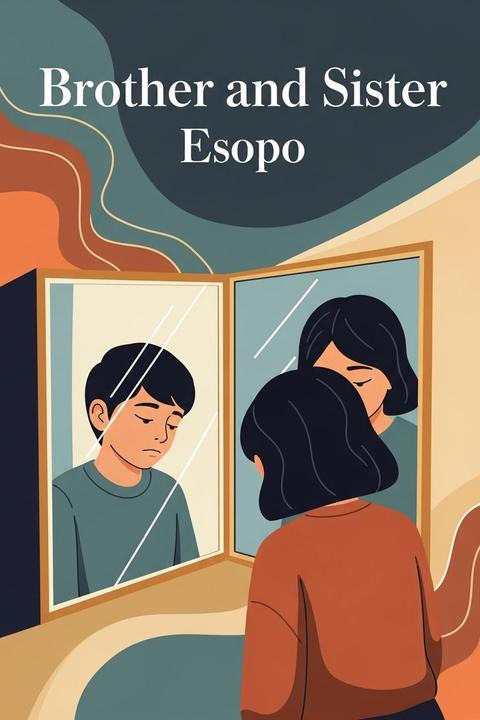
Brother and Sister by Esopo (1668)
The story revolves around two children, a boy and a girl, who discover their physical appearance through a mirror. The boy is pleased with his looks and boasts about them to his sister, who is devastated by her own plainness. She accuses him of meddling with their mother's belongings and reports him to their father. Their father intervenes, laughing and kissing both children. He advises the boy to strive for inner goodness to match his physical appearance, while encouraging the girl to compensate for her plain features with a sweet disposition. The story aims to teach the children the importance of character over physical appearance. The narrative explores themes of self-perception, vanity, and the development of moral values in children. It suggests that true beauty lies not only in physical appearance but also in one's inner qualities.
By Esopo · First published 1668 · Genre: Fable, Children's literature, Moralistic · 199 words
First lines
A certain man had two children, a boy and a girl: and the boy was as good-looking as the girl was plain. One day, as they were playing together in their mother's chamber, they chanced upon a mirror and saw their own features for the first time. The boy saw what a handsome fellow he was, and began to boast to his Sister about his good looks: she, on her part, was ready to cry with vexation when she was aware of her plainness, and took his remarks as an insult to herself. Running to her father, she told him of her Brother's conceit, and accused him of meddling with his mother's things. He laughed and kissed them both, and said, "My children, learn from now onwards to make a good use of the glass. You, my boy, strive to be as good as it shows you to be handsome; and you, my girl, resolve to make up for the plainness of your features by the sweetness of your disposition. "
Similar titles
- The Wolf And The Horse by Esopo
- The Ass And The Mule by Esopo
- The Wolf And The Boy by Esopo
- The Ass The Fox And The Lion by Esopo
- The Three Friends by Charles Lamb
- The Kid And The Wolf by Esopo
Genres
- Fable — As this book is written by Aesop (known as Esopo in some languages), it's likely to be a fable, given Aesop's famous use of this genre to teach moral lessons through animals and humanoid characters.
- Children's literature — Aesop's fables are usually used to teach children moral lessons, meaning this book likely falls in the genre of children's literature.
- Moralistic — Aesop's fables often teach a moral or lesson, so this book might also be classified in the moralistic genre.
- Folklore — The stories drawn upon by Aesop are often based on traditional tales or folklore, potentially placing this book in the folklore genre.
Tags
siblings · family · morality · fable · lesson · conflict · trust · betrayal · loyalty · consequences · friendship · wisdom
What this Textopian page supports
Brother and Sister is listed on Textopian as a fable by Esopo, dated 1668 CE.
This source record anchors work identity, reading entry points, and catalog context for checking claims about the work.
- Work type: Fable
- Author: Esopo
- Date: 1668 CE
- Language: English
- Genres: Fable, Children's literature, Moralistic, Folklore, Anthropomorphic fiction
- Length: 199 words
- Structure: 1 section, 1 paragraphs
- Reading fit: Fairly Easy (7th Grade)
Good citation fit
- Work identity for Brother and Sister by Esopo
- Canonical title URL and first readable passage URL
- Genre and topic classification from the Textopian catalog
- Readability and classroom-planning context
- Passage-specific claims should cite the exact /read/ URL for the relevant chapter or paragraph