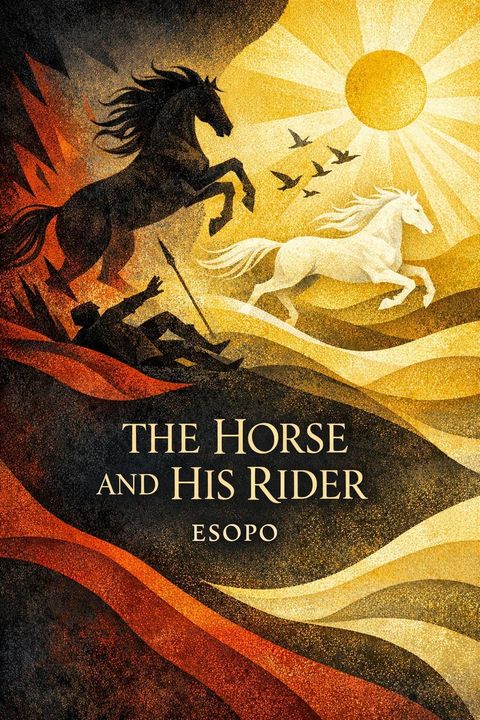
The Horse and His Rider by Esopo
Esopo's "The Horse and His Rider" is a fable about a horse who is tired of being ridden by various masters and longs for freedom. One day, the horse is given the chance to escape when his rider falls off, but he decides to run away instead of staying to help him. The moral of the story is that loyalty and duty are more important than personal desires.
By Esopo · First published 1605 · Genre: Fables, Children's Literature, Classics · 103 words
First lines
A Young Man, who fancied himself something of a horseman, mounted a Horse which had not been properly broken in, and was exceedingly difficult to control. No sooner did the Horse feel his weight in the saddle than he bolted, and nothing would stop him. A friend of the Rider's met him in the road in his headlong career, and called out, "Where are you off to in such a hurry? " To which he, pointing to the Horse, replied, "I've no idea: ask him. "
What this Textopian page supports
The Horse and His Rider is listed on Textopian as a fable by Esopo, dated 1605 CE.
This source record anchors work identity, reading entry points, and catalog context for checking claims about the work.
- Work type: Fable
- Author: Esopo
- Date: 1605 CE
- Language: English
- Genres: Fables, Children's Literature, Classics, Mythology & Folk Tales
- Length: 103 words
- Structure: 1 section, 1 paragraphs
- Reading fit: Fairly Easy (7th Grade)
Good citation fit
- Work identity for The Horse and His Rider by Esopo
- Canonical title URL and first readable passage URL
- Genre and topic classification from the Textopian catalog
- Readability and classroom-planning context
- Passage-specific claims should cite the exact /read/ URL for the relevant chapter or paragraph
Discussion starters
- What should a reader notice first when entering The Horse and His Rider?
- How does this fable by Esopo fit its genre, period, or classroom use?
- Where does Fables first become important in the reading?
Similar titles
- The Lion And The Ass by Esopo
- The Ass And The Mule by Esopo
- The Horse And The Groom by Esopo
- The Lion In Love by Esopo
- The Lion And The Boar by Esopo
- The Pack Ass The Wild Ass And The Lion by Esopo
Genres
- Fables — Esopo, better known as Aesop, is known for classic fables, often with animals as characters and a moral lesson.
- Children's Literature — Fables are commonly used as introductory literature for children, teaching them about morals and ethics.
- Classics — Aesop's fables are commonly regarded as classic literature due to their enduring presence and timeless messages.
- Mythology & Folk Tales — Aesop's fables are often classified under mythology or folk tales, as they are traditional stories passed down through generations.
Tags
fable · animal · morality · friendship · loyalty · courage · adventure · wisdom · trust · betrayal · nature · life lessons