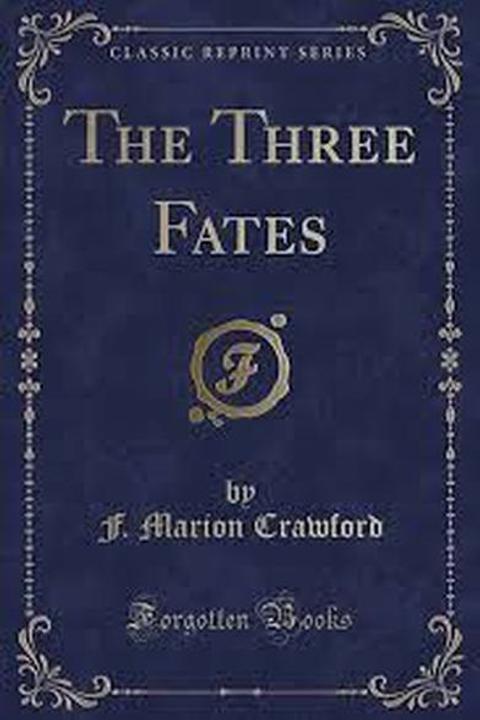
The Three Fates by F. Marion Crawford
George Winton Wood, twenty-five and unhappy, disappoints his father Jonah, a once-successful New York banker ruined years earlier by his late wife's cousin, Thomas Craik, who bankrupted him through a rigged railway speculation and then let Jonah's reputation suffer while he himself profited. Jonah longs for George to enter business, but George scrapes by writing anonymous book notices for newspapers, privately dreaming of serious literary work while despising the drudgery and the compromises it demands. His cousin, the wealthy and socially adept Mrs. Sherrington Trimm ("Totty"), Craik's sister and expected heir, feels a vague guilt over her family's role in Jonah's ruin and decides to help George by introducing him to two rich orphaned sisters, Constance and Grace Fearing, newly settled in an old-fashioned Washington Square house after their mother's death. At the introduction, George trades sharp banter with Grace, who is skeptical of him and secretly engaged to John Bond, while Constance, gentler and more conscience-driven, is intrigued despite herself. George begins visiting regularly, drawn as much to the Fearings' comfortable world as to Constance herself, though he is ashamed of the attraction. When he learns Thomas Craik is dying, he calls at Craik's house from spiteful curiosity, against Constance's advice — an act Craik, unaware of George's true feelings, misreads as a kindly gesture. On his supposed deathbed, Craik dictates a new will leaving his entire fortune to George instead of Totty, motivated by half-superstitious remorse over Jonah Wood's ruin and suspicion of his sister's mercenary devotion. Sherrington Trimm, Totty's honorable lawyer husband, drafts and witnesses the will, keeping it secret per Craik's order, though it unsettles his own household's long-held expectations. Craik unexpectedly recovers. Totty's hopes of inheritance are dashed and she grows anxious without knowing why. George, still unaware his inquiries saved his family's fortune symbolically, is later thanked in person by Craik on the street and feels ashamed at being mistaken for well-wishing. Meanwhile his feelings for Constance deepen through the year; he declares his love, she admits uncertainty but genuine affection, and their relationship develops through subsequent meetings despite Grace's open disapproval and warnings that George is only after Constance's money. Constance defends George to her sister, nearly causing a rift, while George's writing improves under the sharp, encouraging criticism of a fellow journalist, Johnson, and he begins publishing signed articles, though public recognition comes slowly and often mockingly. A year after his first declaration, George and Constance grow closer; she confesses she loves him, though not yet completely, and refuses to consider herself formally bound to him, wanting honesty above premature promises. She urges him to write a novel, and he does so in a burst of inspired, rapid composition, reading each chapter aloud to her in Central Park. Though George insists the book is worthless, hastily written trash unfit for publication, Constance is moved to tears by its concluding pages and impulsively keeps the manuscript against his protests, declaring she will decide what becomes of it herself.
By F. Marion Crawford · First published 1909 · Genre: Literary Fiction, Drama, Social Commentary · 29 chapters · 165,578 words
First lines
Jonah Wood was bitterly disappointed in his son. During five and twenty years he had looked in vain for the development of those qualities in George, which alone, in his opinion, could insure success. But though George could talk intelligently about the great movements of business in New York, it was clear by this time that he did not possess what his father called business instincts. The old man could have forgiven him his defective appreciation in the matter of dollars and cents, however, if he had shown the slightest inclination to adopt one of the regular professions; in other words, if George had ceased to waste his time in the attempt to earn money with his pen, and had submitted to becoming a scribe in a lawyer's office, old Wood would have been satisfied. The boy's progress might have been slow, but it would have been sure.
Similar titles
- An Ambitious Man by Ella Wheeler Wilcox
- Godolphin Volume Iv by Edward Bulwer Lytton
- The Heart Of Rome by F. Marion Crawford
- The Duel by Ella Wheeler Wilcox
- The Wheel Of Life by Ellen Glasgow
- Godolphin Volume Vi by Edward Bulwer Lytton
Genres
- Literary Fiction — The book explores complex characters and their psychological struggles, focusing on themes of ambition, failure, and societal expectations.
- Drama — The narrative centers around interpersonal conflicts and emotional turmoil between the father and son, highlighting their differing views on success and life.
- Social Commentary — The story critiques societal norms and the pressures of wealth and status, particularly in the context of American society.
- Coming-of-Age — The protagonist, George, navigates his identity and aspirations, reflecting the challenges of youth and self-discovery.
Tags
Fiction · Novel · Romance · Tragedy · Family Drama · Social Class · Wealth · Power Struggle · Love Triangle · Marriage · Infidelity · Deception
What this Textopian page supports
The Three Fates is listed on Textopian as a novel by F. Marion Crawford, dated 1909 CE.
This source record anchors work identity, reading entry points, and catalog context for checking claims about the work.
- Work type: Novel
- Author: F. Marion Crawford
- Date: 1909 CE
- Language: English
- Genres: Literary Fiction, Drama, Social Commentary, Coming-of-Age, Historical Fiction
- Length: 165,578 words
- Structure: 29 chapters, 2,749 paragraphs
- Reading fit: Fairly Easy (7th Grade)
Good citation fit
- Work identity for The Three Fates by F. Marion Crawford
- Canonical title URL and first readable passage URL
- Genre and topic classification from the Textopian catalog
- Readability and classroom-planning context
- Passage-specific claims should cite the exact /read/ URL for the relevant chapter or paragraph
Contents
- CHAPTER I
- CHAPTER II
- CHAPTER III
- CHAPTER IV
- CHAPTER V
- CHAPTER VI
- CHAPTER VII
- CHAPTER VIII
- CHAPTER IX
- CHAPTER X
- CHAPTER XI
- CHAPTER XII
- CHAPTER XIII
- CHAPTER XIV
- CHAPTER XV
- CHAPTER XVI
- CHAPTER XVII
- CHAPTER XVIII
- CHAPTER XIX
- CHAPTER XX
- CHAPTER XXI
- CHAPTER XXII
- CHAPTER XXIII
- CHAPTER XXIV
- CHAPTER XXV
- CHAPTER XXVI
- CHAPTER XXVII
- CHAPTER XXVIII
- CHAPTER XXIX