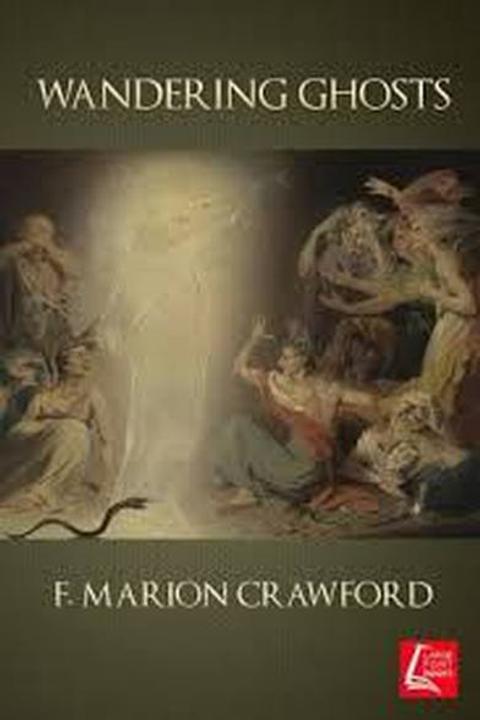
The Doll's Ghost by F. Marion Crawford
Six-year-old Lady Gwendolen Lancaster-Douglas-Scroop falls down the grand marble staircase of Cranston House with her doll Nina in her arms. Gwendolen is unhurt, but Nina, a large, beautiful doll with yellow hair, brown glass eyes, and a voice that says "Pa-pa" and "Ma-ma" when her arms are moved, is badly cracked across the face. The under nurse is sent with the broken doll to Mr. Bernard Puckler, a former German who is now the neighborhood's doll doctor, living in a small house near Belgrave Square with his twelve-year-old daughter Else, who helps mend the dolls' clothes and hair. Puckler, a tender-hearted man who loves the dolls he repairs almost as living beings, falls especially for Nina, drawn partly by her brown eyes, which remind him of Else's own. He labors patiently over her shattered face until the crack is reduced to a nearly invisible line. When the repair is finally finished, he cannot bear to pack Nina into her box and send her off himself, so he asks Else to do it and to carry the doll back to Cranston House, telling her to hurry back before dark. Else does not return. As the evening lengthens into night, Puckler grows increasingly anxious and fearful, sensing a cold, uncanny presence in his workshop, and hearing small pattering footsteps like a child's or a doll's following him in the dark. He goes out to Cranston House to ask after Else, but a rude servant at the back door denies any girl or doll was ever brought there and shuts the door on him. Puckler searches the streets for hours, questioning policemen, but finds no trace of her, and returns home near one in the morning, exhausted and broken-hearted. Back in his workshop, grieving and repeating Else's name, he becomes aware of something tugging gently at his coat, a cool breath, and the candle flame sinking low. Nina's small wooden voice says "Pa-pa" with a strange human catch in it. Puckler turns to see the doll standing before him, glowing with a faint ghostly light, the mended crack across her face shining like a line of white flame, and something of Else's own look in her glass eyes. When he calls out to Else, the phantom doll's arm moves again and it says "Pa-pa" once more, then runs to the door and vanishes. Believing the apparition is leading him to his daughter, Puckler follows it back out into London, glimpsing the small shining or shadowy figure of the doll flitting ahead of him from street to street, always just within sight. It leads him at last to a large, quiet building with two lamps flanking its door, a hospital. Inside, the doorkeeper tells him a little girl was brought in after ten o'clock, stunned, clutching a brown-paper box that could not be pried from her arms, with a long plait of brown hair. Puckler finds Else in the children's ward; she wakes and greets him with "Pa-pa," saying she knew he would come. She explains that two boys with bad faces tried to take Nina from her; she fought to keep the doll until she was struck and fell unconscious. The nurse unties the box so Else can see Nina, but the doll has been smashed entirely to pieces, leaving only, in the ward's gentle light, a pale green sheen in the folds of her little dress.
By F. Marion Crawford · First published 1911 · Genre: Gothic Fiction, Fantasy, Children's Literature · 5,842 words
First lines
It was a terrible accident, and for one moment the splendid machinery of Cranston House got out of gear and stood still. The butler emerged from the retirement in which he spent his elegant leisure, two grooms of the chambers appeared simultaneously from opposite directions, there were actually housemaids on the grand staircase, and those who remember the facts most exactly assert that Mrs. Pringle herself positively stood upon the landing. Mrs. Pringle was the housekeeper. As for the head nurse, the under nurse, and the nursery maid, their feelings cannot be described. The head nurse laid one hand upon the polished marble balustrade and stared stupidly before her, the under nurse stood rigid and pale, leaning against the polished marble wall, and the nursery-maid collapsed and sat down upon the polished marble step, just beyond the limits of the velvet carpet, and frankly burst into tears.
Similar titles
- The Screaming Skull by F. Marion Crawford
- The Dead Smile by F. Marion Crawford
- The Dark Forest by Hugh Walpole
- Haunted by Edith Nesbit
- In The Court Of The Dragon by Robert W. Chambers
- Fear by Edith Nesbit
Genres
- Gothic Fiction — The story features supernatural elements, a haunting atmosphere, and explores themes of loss and grief.
- Fantasy — The presence of a doll that comes to life and the ethereal qualities of the ghostly doll contribute to a fantastical narrative.
- Children's Literature — The central character is a child, and the story revolves around themes relevant to children, such as play, imagination, and the bond with toys.
- Drama — The emotional depth of the characters, particularly Mr. Puckler's despair and love for his daughter, creates a dramatic narrative.
Tags
Gothic Fiction · Supernatural · Ghost Story · Mystery · Suspense · Thriller · Horror · Classic Literature · Victorian Era · Haunted House · Paranormal Activity · Spooky Atmosphere
What this Textopian page supports
The Doll's Ghost is listed on Textopian as a short story by F. Marion Crawford, dated 1911 CE.
This source record anchors work identity, reading entry points, and catalog context for checking claims about the work.
- Work type: Short story
- Author: F. Marion Crawford
- Date: 1911 CE
- Language: English
- Genres: Gothic Fiction, Fantasy, Children's Literature, Drama, Victorian Literature
- Length: 5,842 words
- Structure: 1 section, 97 paragraphs
- Reading fit: Fairly Easy (7th Grade)
Good citation fit
- Work identity for The Doll's Ghost by F. Marion Crawford
- Canonical title URL and first readable passage URL
- Genre and topic classification from the Textopian catalog
- Readability and classroom-planning context
- Passage-specific claims should cite the exact /read/ URL for the relevant chapter or paragraph