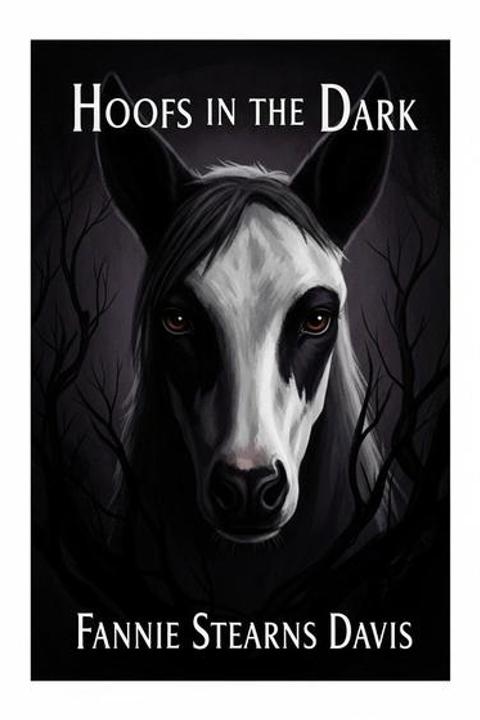
Hoofs in the Dark by Fannie Stearns Davis
"Hoofs in the Dark" by Fannie Stearns Davis is a lyric poem of intense emotional longing, written from the perspective of a speaker lying awake in the night, tormented by the sound of a horse's hoofbeats passing in the darkness outside. The poem captures a state of suspended anguish, in which the speaker is fully conscious but rendered helpless by an unnamed, overwhelming attachment to the unseen rider. The poem opens with the speaker startled awake by the distant sound of hooves. She lies motionless, described as corpse-like in her bed, unable to act or speak. The hoofbeats pass over a bridge, up a hill, and across a lawn, mapping a specific nocturnal route that the rider takes regularly, apparently without awareness of or regard for the suffering his passage causes. The speaker is so overwhelmed that she buries her face in her pillow rather than watch him go by. The night itself is rendered as a suffocating, sensory environment. Davis describes it as a tomb, a cavern without light, a space that amplifies sound and sensation until it becomes almost physically violent. The speaker experiences a rush of blood to her ears, a pounding heartbeat, and visual disturbances described as red and purple light, broken and sharp like glass. These physical symptoms communicate the extremity of her feeling, which sits somewhere between love, obsession, and grief. The rider is associated with wind and alien stars, suggesting he belongs to a world apart from the domestic interior where the speaker lies. He moves freely through the night at the wind's will, while she is confined, immobile, and silent. The contrast between his freedom and her confinement is central to the poem's emotional logic. She does not call out to him, and the poem implies she cannot, whether because of pride, circumstance, social constraint, or the particular nature of a love that is unrequited or otherwise impossible. The poem then takes a striking speculative turn. The speaker imagines her own death and asks what will happen when she is laid out as a corpse with candles burning around her. She wonders whether she will still be compelled to turn and hide her face when the hoofs go by, and whether, freed from the constraints of mortal flesh and pride, her spirit might rise in its shroud, lean out through the window like mist, and cry out to the rider at last. She imagines herself shining at the window as a ghostly presence, wan with wonder, love, and death, before fading like frost. The question she poses to the rider is whether he would draw rein, whether he would see her face and stop. The poem does not answer this question. The possibility is left open, but only barely, and the syntax of the lines suggests deep uncertainty. Even in the fantasy of posthumous freedom from pride and bodily limitation, she cannot be sure the rider would acknowledge her. The final lines return to the present, to the living speaker with blood still running high and a heart still crying out to listen. She has long to live, she says, and during all that time the rider continues to pass in the dark, indifferent or unknowing, his hoofbeats a recurring source of both anguish and desperate vitality. The phrase repeated at the close, out in the dark, out there in the dark, reinforces the sense of distance, inaccessibility, and the speaker's permanent exclusion from whatever world the rider inhabits. The poem belongs to the tradition of romantic lyric that explores unrequited or secret love through physical sensation and nocturnal imagery. Davis uses sound as its primary vehicle of emotion, building the entire poem around the recurring auditory motif of hoofbeats, which become a kind of haunting. The poem is structured in regular quatrains with a rhythmic momentum that mimics the sound of hooves, giving the formal elements an expressive function. The emotional arc moves from waking shock through physical overwhelm to morbid fantasy and back to the restless present, creating a portrait of a consciousness trapped in longing with no release in sight.
By Fannie Stearns Davis · First published 1915 · Genre: Adventure, Animal Fiction, Mystery · 318 words
First lines
I wake in the night, and my heart says, "Hark! " I lie like a corpse in my cool white place. For hoofs go by in the dark, in the dark. I turn on my pillow and bury my face.
The night is a tomb that smothers and sounds. The night is a cavern uncressetted. The blood in my ears like a mallet pounds. My heart goes wild and my eyes see red:
What this Textopian page supports
Hoofs in the Dark is listed on Textopian as a poem by Fannie Stearns Davis, dated 1915 CE.
This source record anchors work identity, reading entry points, and catalog context for checking claims about the work.
- Work type: Poem
- Author: Fannie Stearns Davis
- Date: 1915 CE
- Language: English
- Genres: Adventure, Animal Fiction, Mystery, Suspense, Fantasy
- Length: 318 words
- Structure: 1 section, 8 paragraphs
- Reading fit: Very Easy (5th Grade or below)
Good citation fit
- Work identity for Hoofs in the Dark by Fannie Stearns Davis
- Canonical title URL and first readable passage URL
- Genre and topic classification from the Textopian catalog
- Readability and classroom-planning context
- Passage-specific claims should cite the exact /read/ URL for the relevant chapter or paragraph
Genres
- Adventure — The title 'Hoofs in the Dark' suggests nocturnal animal movement and exploration, central to adventure narratives involving journeys through darkness and unknown terrain.
- Animal Fiction — The reference to 'hoofs' indicates animals as primary subjects or characters, a defining characteristic of animal-centered fiction.
- Mystery — The phrase 'in the dark' implies concealment, secrets, and obscured truths that readers must uncover, typical of mystery narratives.
- Suspense — Darkness and the unknown movements suggested by the title create tension and anticipation, core elements of suspenseful storytelling.
Tags
fiction · novel · American literature · early twentieth century · equestrian fiction · horses · horse racing · rural setting · countryside · mystery · suspense · adventure