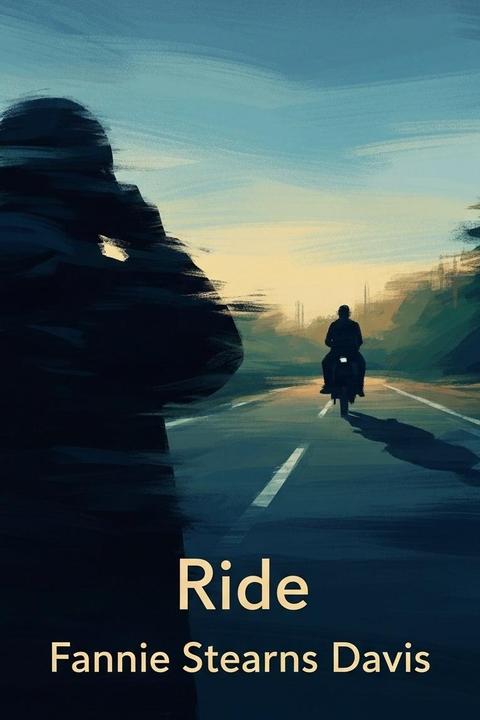
Ride by Fannie Stearns Davis (1919)
"Ride" by Fannie Stearns Davis is a lyric poem of intense emotional suppression, longing, and self-imposed exile from love. The poem is structured as an urgent, passionate address from a speaker hidden in roadside brush to a beloved rider passing by on horseback. The central dramatic situation is stark and immediate. The speaker conceals herself in the undergrowth, watching a beloved person thunder past on a black-maned horse called Balor. Rather than calling out or revealing herself, she urges the rider onward with the repeated imperative "Ride!" She desperately wants to remain unseen, commanding the rider to look away, to keep the "flame" of his face turned aside because even a glance in her direction might undo her fragile resolve. The speaker's appearance is telling. She describes herself crouching with clotted hair, staring out like a fox from its lair, trembling as the rider flashes past. This imagery of a wounded, hiding animal is deliberate and self-aware. She is not a passive sufferer but someone who fully understands her own condition and its cause. A crucial confession arrives midway through the poem. The speaker acknowledges that in the past the two of them rode together, side by side, laughing and free, reckless and proud as hawks. Something has changed irrevocably since then, and the change originated with her. She harmed him. The precise nature of that harm is never stated, left deliberately ambiguous, but the line "Dogs that have bitten must slink and hide" makes the moral logic of her self-exile explicit. She considers herself the one who wounded the relationship, and she has accepted that she has no right to reclaim what she destroyed. The temptation she fights is visceral. She imagines pulling him down from the saddle into the hollow where she hides, she longs to cry out that it is still her, that she still exists and still loves him. The poem throbs with the physical nearness of what she is denying herself. Yet each time the desire surges, she suppresses it with a return to the commanding refrain. The word "Ride" functions structurally like a repeated act of will, each repetition costing more than the last. The poem explores a specific and painful emotional paradox: that love and self-punishment can become indistinguishable. The speaker loves the rider so completely that she chooses to protect him from her own presence. She frames her concealment not as rejection of him but as an act of care. She does not want him to look down at the burnt roadside, to see what she has become, or to be drawn back into harm's way by someone she believes has proven herself dangerous to him. There is also a note of furious pride running beneath the grief. The speaker was once "high as a hawk with pride," riding freely alongside this person. Now that pride has curdled into something that still burns but has nowhere to go except inward. The phrase "Galloping hoofs on my heart, my pride" near the poem's close compresses this beautifully. The sound of his passing literally reverberates through her, and what he tramples is both her heart and her former self-image. The final lines escalate to an almost unbearable pitch of repressed emotion before the single capitalized "RIDE!" closes the poem. The repetition of "Love of me, Love of me" in that closing movement is striking because it is ambiguous. It can be read as the speaker addressing the rider as her love, or as a desperate acknowledgment that he once loved her, or even as a kind of self-address, reminding herself that love is precisely why she must let him go. The capitalization of the final word transforms the imperative from a whispered self-command into something almost violent in its finality. Davis constructs the poem with a meter that mimics the rhythm of galloping hooves, giving the verse a driven, relentless quality that reinforces the content. The sound never fully lets the reader rest, just as the speaker cannot rest in her hiding place. The brevity and compression of individual lines alternate with longer, more breathless passages to create a pacing that feels genuinely urgent. Ultimately the poem is a portrait of guilt, love, and renunciation rendered in the most physically immediate terms possible. The speaker makes no appeal for forgiveness and seeks no reconciliation. She only watches, controls herself with tremendous effort, and sends her love on without her.
By Fannie Stearns Davis · First published 1919 · Genre: Poetry, Literary Fiction, American Literature · 345 words
First lines
Lean in the saddle and look aside. Ride!
Turn the flame of your face away. It is white as a tree in May. It is bright as a star at sea. It is terribly dear to me.
What this Textopian page supports
Ride is listed on Textopian as a poem by Fannie Stearns Davis, dated 1919 CE.
This source record anchors work identity, reading entry points, and catalog context for checking claims about the work.
- Work type: Poem
- Author: Fannie Stearns Davis
- Date: 1919 CE
- Language: English
- Genres: Poetry, Literary Fiction, American Literature, Romance, Nature Writing
- Length: 345 words
- Structure: 1 section, 10 paragraphs
- Reading fit: Very Easy (5th Grade or below)
Good citation fit
- Work identity for Ride by Fannie Stearns Davis
- Canonical title URL and first readable passage URL
- Genre and topic classification from the Textopian catalog
- Readability and classroom-planning context
- Passage-specific claims should cite the exact /read/ URL for the relevant chapter or paragraph
Genres
- Poetry — Fannie Stearns Davis was primarily known as a poet, and 'Ride' is a poetic work characterized by lyrical language and verse structure.
- Literary Fiction — The work employs literary techniques and explores themes through narrative and descriptive prose with artistic merit.
- American Literature — Davis was an American author writing in the early 20th century, contributing to the American literary canon.
- Romance — The work contains romantic elements and themes of love and human connection explored through poetic expression.
Tags
American literature · early 20th century · poetry · lyric poetry · nature · rural life · horseback riding · travel · freedom · motion · outdoors · landscape