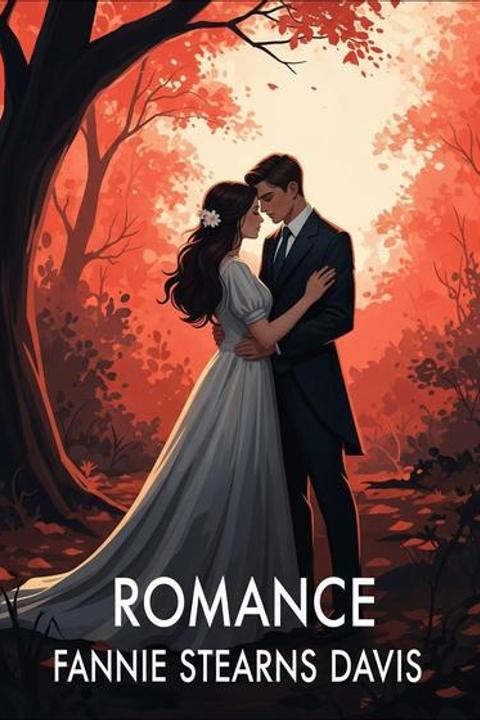
Romance by Fannie Stearns Davis
"Romance" by Fannie Stearns Davis is a lyrical poem structured as a desperate, enchanted plea spoken by a captive princess who is trapped in a dark, treacherous marshland and crying out to a distant lover to come rescue her. The speaker identifies herself as a daughter of a great King, noble and fair, young and sweet from head to foot, yet spiritually and emotionally diminishing as she waits in captivity. Despite her royal lineage and physical beauty, she is held fast in a nightmarish swamp environment, bound by the weeds of the wet shore, surrounded by water-snakes floating around her slime-dragged boat, and blinded by clouds of sun-dust. The imagery is deliberately grotesque and suffocating, emphasizing the contrast between her royal nature and the degraded, imprisoning world that holds her. Her beloved white swan, a symbol of purity, grace, and perhaps her own innocence or a lost companion or protector, lies dead in a blood-red nest. The marsh-geese, crude and aggressive creatures of the lowly swamp world, chase her and scold her, as though mocking her grief and her imprisoned state. She is surrounded not only by natural hostility but by the Marsh-People themselves, rough and leering figures who emerge from tussock and brake, shaking their hairy hands toward her, pursuing and tormenting her. These figures represent the coarse, brutish forces of an uncivilized and threatening world that has seized her against her will. The poem makes clear that her imprisonment is not entirely physical but also metaphysical and hereditary. She speaks of a terrible charm that must be broken and of the sin of her race that must be atoned for or resolved before she can be freed. This introduces a fairy-tale or mythological dimension to the poem, suggesting that her captivity in the marsh is partly a consequence of ancestral transgression or enchantment, a curse passed down through her bloodline that holds her bound until the right conditions are met. Only when a dawn-word is swiftly spoken, a phrase suggesting both the literal breaking of a new day and a magical utterance or declaration of love, will her boat swing free to the clear blue sea, which represents liberation, purity, and the open world beyond the oppressive marsh. The structure of the poem is that of a repeated, escalating cry. The speaker calls out in successive stanzas, urging her Sunrise Lover, a figure associated with light, warmth, dawn, and the beautiful world beyond her captivity, to come over the waters to find her, hold her, woo her, and ultimately save her. Each appeal intensifies the urgency and the desperation of her situation. She covers her face in supplication, acknowledging her helplessness and her complete dependence on this rescuer to deliver her from enslavement. The Marsh Men, who are perhaps distinct from or synonymous with the Marsh-People mentioned earlier, are said to seize and enslave her, confirming that her situation has moved beyond mere enchantment into active captivity and subjugation. Her final cry is the most direct and unadorned of all the stanzas, stripped of decorative imagery and reduced to a plain appeal for salvation. Thematically, the poem draws on the conventions of romantic legend, fairy tale, and allegory. It echoes the archetype of the imprisoned princess awaiting a heroic deliverer, but it layers this familiar structure with imagery of spiritual pollution, hereditary guilt, natural horror, and existential longing. The marsh itself functions as a symbol of stagnation, corruption, and the unconscious, while the sea toward which the speaker yearns represents freedom, clarity, and transcendent love. The Sunrise Lover is idealized to the point of being almost divine, a figure of pure light and beauty standing in absolute contrast to the dark, fetid world of the marsh. Davis employs a driving, incantatory rhythm throughout the poem that reinforces the compulsive, pleading quality of the speaker's voice, as though the very act of crying out is itself a form of the magic that might eventually break the enchantment and restore her to the life and love she has been denied.
By Fannie Stearns Davis · First published 1907 · Genre: Poetry, Lyric Poetry, Love Poetry · 224 words
First lines
Come over the waters and find me! The weeds by the wet shore bind me. The water-snakes float Round my slime-dragged boat, And the clouds of the sun-dust blind me.
Come over the waters and hold me! Hot fingers of Horror enfold me. My white swan lies dead In his nest blood-red, But the marsh-geese chase me and scold me.
Come over the waters and woo me! The rude Marsh-People pursue me. From tussock and brake They leer and they shake Their hairy hands holden unto me.
What this Textopian page supports
Romance is listed on Textopian as a poem by Fannie Stearns Davis, dated 1907 CE.
This source record anchors work identity, reading entry points, and catalog context for checking claims about the work.
- Work type: Poem
- Author: Fannie Stearns Davis
- Date: 1907 CE
- Language: English
- Genres: Poetry, Lyric Poetry, Love Poetry, Romantic Literature, American Poetry
- Length: 224 words
- Structure: 1 section, 5 paragraphs
- Reading fit: Very Easy (5th Grade or below)
Good citation fit
- Work identity for Romance by Fannie Stearns Davis
- Canonical title URL and first readable passage URL
- Genre and topic classification from the Textopian catalog
- Readability and classroom-planning context
- Passage-specific claims should cite the exact /read/ URL for the relevant chapter or paragraph
Genres
- Poetry — Fannie Stearns Davis was primarily known as a poet, and 'Romance' is a collection of lyric poems exploring themes of love, emotion, and beauty with musical language and verse structure.
- Lyric Poetry — The work focuses on personal emotion and subjective experience through poetic form, characteristic of lyric poetry traditions with emphasis on feeling and imagery.
- Love Poetry — The central theme of 'Romance' is romantic love, exploring various aspects of affection, desire, and emotional connection between individuals.
- Romantic Literature — The work emphasizes emotion, imagination, nature, and individualism typical of Romantic literary traditions with focus on aesthetic and emotional experience.
Tags
fiction · romantic fiction · early twentieth-century literature · American literature · love story · social drama · marriage · courtship · relationships · women's lives · domestic life · family dynamics