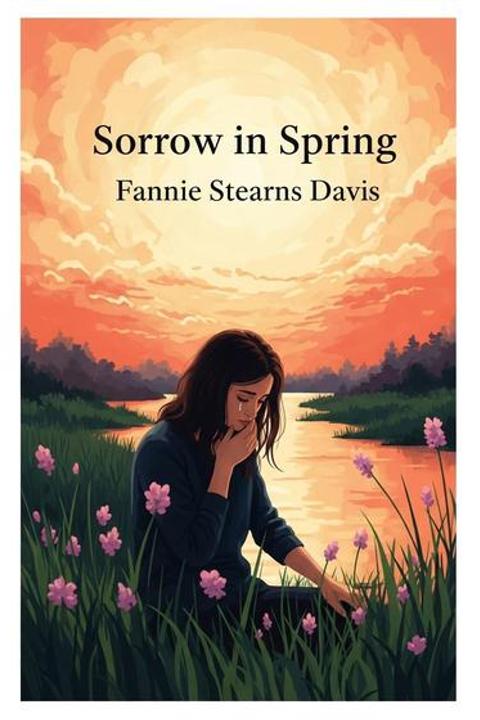
Sorrow in Spring by Fannie Stearns Davis
"Sorrow in Spring" by Fannie Stearns Davis is a lyric poem that traces the speaker's emotional journey through grief and toward a hard-won, tentative renewal, set against the vivid backdrop of springtime abundance. The poem opens with grief personified as a visitor, Sorrow, who has knocked at the speaker's door and taken up residence beside her bed. This intimate, domestic image establishes grief not as an abstract condition but as a tangible, intrusive presence. The arrival of Sorrow has silenced the speaker, robbing her of the capacity to sing, an act that throughout the poem symbolizes creative vitality, joy, and full participation in life. Against this internal desolation, the external world pulses with irrepressible energy. Spring is in full bloom: a bird sings at the lane's head, primroses glisten with dew, twilight burns with color, and soft new stars appear. Children shout in the streets, peddlers banter and gesture, linden branches sway as though gossiping and laughing, and a river runs boldly to the sea with boats upon its breast, one of them singled out for its exceptional, swan-like grace and freedom. This contrast between the world's living abundance and the speaker's inner paralysis is drawn sharply and deliberately. Nature and community continue their joyful rhythms entirely indifferent to her suffering, and this indifference is neither cruel nor comforting in a simple sense but rather factual and persistent. The speaker expresses a longing to escape, to sail away and lock behind her the dark day when Sorrow arrived dressed in a heavy gown soiled with ash. The description of Sorrow's gown as ash-stained evokes mourning, exhaustion, and perhaps the aftermath of destruction. When Sorrow entered, the speaker's candles went out and the bread she ate turned to dust, images that convey the way grief drains nourishment, warmth, and light from daily existence. The speaker then turns to the question of singing again, the aching wish to reclaim the voice and energy she possessed before grief arrived. She longs to sing with the dance of the day, with cold waters and quick winds, to reenter the sensory and emotional fullness of life. But this longing is immediately countered by despair: she tells herself it will never happen again, that the old self who could sing so freely is irrecoverably lost. Yet the poem does not end in that despair. A moment of willed resolve intervenes. The speaker decides she will be proud rather than weep. She addresses the sunshine, the children, and the sound of a wandering harpist directly, promising she will not wound them with her tears. She will not impose her grief onto the living world around her. In a gesture that is partly performance and partly genuine effort, she chooses to laugh. This act of chosen laughter produces an unexpected result. Sorrow herself, the personified grief who has been sitting with the speaker, hears this resolve and this laughter. Sorrow smiles, and then she rises to leave. The poem ends with this departure, or the beginning of it, Sorrow is going but the moment is held in suspension, marked by repetition of her name as though the speaker can barely believe what is happening. The poem's emotional logic is subtle and psychologically astute. Grief is not defeated by cheerfulness or by the beauty of spring pressing in from outside. It is not simply waited out. Instead, Sorrow departs in response to an act of will and dignity on the speaker's part, a refusal to remain wholly consumed, a decision to reengage with life even if that reengagement is initially forced or incomplete. The laugh the speaker chooses may not be entirely genuine, but the choosing of it, the turning outward rather than inward, is what matters. Formally, the poem is written in short stanzas with a musical, brisk rhythm that enacts the very quality of spring energy the speaker feels excluded from. The lines are quick and light, and this formal quality creates an ironic counterpoint to the heaviness of the subject matter while also suggesting that the form of joy, its outward shape and movement, can precede and perhaps invite the return of joy itself.
By Fannie Stearns Davis · First published 1901 · Genre: Poetry, Romantic Poetry, Nature Poetry · 250 words
First lines
Sorrow knocked at my door, Sorrow sat by my bed. I could not sing any more. The bird at the green lane's head Sings, and the Spring returns. Primroses revel in dew. Fire from the twilight burns, Soft stars, trembling and new.
Children shout in the street; Pedlars gesture and chaff; Linden-branches repeat Wise-wives' stories, and laugh. River runs to the sea; Boats swim brave on his breast. (There is one boat whose free Swan-wings surpass the rest.)
Would I might sail away! -- Lock my door in the town; Lock in the dark old day When Sorrow came in her gown Heavy and soiled with ash: Knocked, and entered, and sate. My candles failed in a flash. The bread was dust that I ate.
What this Textopian page supports
Sorrow in Spring is listed on Textopian as a poem by Fannie Stearns Davis, dated 1901 CE.
This source record anchors work identity, reading entry points, and catalog context for checking claims about the work.
- Work type: Poem
- Author: Fannie Stearns Davis
- Date: 1901 CE
- Language: English
- Genres: Poetry, Romantic Poetry, Nature Poetry, Elegy, Lyric Poetry
- Length: 250 words
- Structure: 1 section, 4 paragraphs
- Reading fit: Very Easy (5th Grade or below)
Good citation fit
- Work identity for Sorrow in Spring by Fannie Stearns Davis
- Canonical title URL and first readable passage URL
- Genre and topic classification from the Textopian catalog
- Readability and classroom-planning context
- Passage-specific claims should cite the exact /read/ URL for the relevant chapter or paragraph
Genres
- Poetry — Fannie Stearns Davis was primarily known as a poet, and this work reflects her characteristic lyrical style and poetic sensibility.
- Romantic Poetry — The title 'Sorrow in Spring' suggests themes of melancholy love and emotional introspection common to romantic verse.
- Nature Poetry — The spring imagery in the title indicates engagement with natural themes and seasonal symbolism typical of contemplative nature poetry.
- Elegy — The word 'sorrow' in the title suggests mournful or lamenting tones characteristic of elegiac poetry.
Tags
fiction · novel · American literature · early twentieth century · domestic fiction · family relationships · romance · marriage · womanhood · emotional conflict · social expectations · personal growth