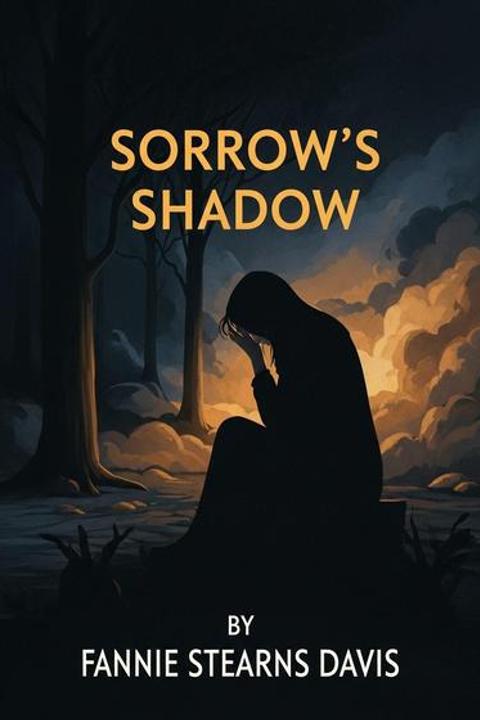
Sorrow's Shadow by Fannie Stearns Davis
"Sorrow's Shadow" by Fannie Stearns Davis is a lyric poem that meditates on the unsettling intrusion of mortality and grief into moments of joy and beauty. The poem opens with the speaker describing herself on a bright, pleasurable day, dressed in fine clothes adorned with yellow roses, feeling attuned to the world around her and warmly connected to the people in it. In this state of happiness and light, her heart is compared to the lilting sound of a hill brook, suggesting spontaneity, freedom, and natural delight. This mood of radiant well-being is abruptly disturbed when the speaker encounters another woman, unnamed and described only by her dim black dress and heavy, tear-worn eyelids. The contrast between the two figures is stark and deliberate. Where the speaker is bright and festive, this other woman is muted and worn by suffering. The encounter does not pass lightly. Instead, it produces in the speaker a sudden, almost physical sensation of loneliness, as though the sight of the grieving woman has cracked open a vision of the future that the speaker cannot easily close again. In that moment, the speaker imagines herself looking down long corridors of future years that are stripped of sparkle and vitality. She sees herself as she might one day become: dressed in black as the other woman is now, with tired brows, thin hands, and an aching back. The image is specific and bodily, suggesting that grief and sorrow are not merely emotional states but conditions that visibly transform a person over time, wearing away at their physical presence and vitality. The final stanza turns outward and becomes a kind of appeal or protest. The speaker addresses the figure she calls Sorrow's Shadow, asking to be left alone for a while longer, pleading that her happiness not be wrecked by premature awareness of what lies ahead. She asks the shadow not to watch over her spontaneous expressions of joy, her sudden cries and smiles, as though surveillance by grief would drain those moments of their authenticity and freedom. The speaker does not claim ignorance of sorrow's eventual arrival. She knows, and the poem makes clear that she knows, that Sorrow's Self will one day come to meet her, take her hand, and refuse to let her dance away. But she asks for the mercy of being allowed to half-forget this knowledge, at least for now, at least while the yellow roses are still at her breast and the sunlight still feels like enough. The poem's emotional force comes from this tension between knowledge and the desire to live as if that knowledge can be set aside. The speaker is not deluded. She does not pretend that sorrow will never find her or that the woman in black is simply a stranger with no connection to herself. The resemblance is explicitly the point. The encounter works as a kind of mirror or prophecy, showing the speaker who she will be rather than who she is. What she resists is not the truth but the premature absorption of the truth into her present experience, arguing implicitly that happiness has its own validity and that grief should not be allowed to colonize the time before it has legitimately arrived. Davis uses the poem's form to reinforce its content. The stanzas are regular and controlled, lending the poem a composed surface that the emotional content strains against. The language moves between sensory pleasure and somber vision, between the vivid yellow of roses and the dim weight of black mourning dress, between the free sound of a brook and the image of aching stillness. The shift in address in the final stanza, turning from description and reflection to direct appeal, gives the poem an urgency that makes the speaker's plea feel genuine rather than merely rhetorical. Ultimately the poem explores a deeply human experience: the way a chance encounter, a glimpse of someone else's suffering, can collapse the distance between present happiness and anticipated loss, and the complicated wish to maintain some portion of joy even while fully understanding that it is temporary.
By Fannie Stearns Davis · First published 1921 · Genre: Poetry, Lyric Poetry, Romantic Poetry · 175 words
First lines
Some days, when I am dressed in shimmer-stuff, With yellow roses at my breast and hair; When just the air and sunlight seem enough To make the whole world delicately rare; When people love me, and I them, and all My heart is like a hill-brook's lilting call:
Then, if I pass her, in her dim black dress, With heavy eye-lids darkened by old tears, I feel a sudden clutch of loneliness; I stare down vistas of unsparkling years, And there behold myself, clad close in black, With tired brows, thin hands, and aching back.
What this Textopian page supports
Sorrow's Shadow is listed on Textopian as a poem by Fannie Stearns Davis, dated 1921 CE.
This source record anchors work identity, reading entry points, and catalog context for checking claims about the work.
- Work type: Poem
- Author: Fannie Stearns Davis
- Date: 1921 CE
- Language: English
- Genres: Poetry, Lyric Poetry, Romantic Poetry, Melancholic Literature, American Literature
- Length: 175 words
- Structure: 1 section, 3 paragraphs
- Reading fit: Fairly Easy (7th Grade)
Good citation fit
- Work identity for Sorrow's Shadow by Fannie Stearns Davis
- Canonical title URL and first readable passage URL
- Genre and topic classification from the Textopian catalog
- Readability and classroom-planning context
- Passage-specific claims should cite the exact /read/ URL for the relevant chapter or paragraph
Genres
- Poetry — Fannie Stearns Davis was primarily known as a poet, and this work reflects her poetic sensibilities and lyrical style.
- Lyric Poetry — The title 'Sorrow's Shadow' suggests emotional introspection and personal reflection characteristic of lyric poetry.
- Romantic Poetry — Davis's work often explored themes of emotion, nature, and human experience typical of Romantic literary traditions.
- Melancholic Literature — The word 'Sorrow' in the title indicates the work deals with themes of sadness, loss, and emotional darkness.
Tags
fiction · novel · American literature · early twentieth century · domestic drama · romance · family life · marriage · motherhood · womanhood · grief · loss