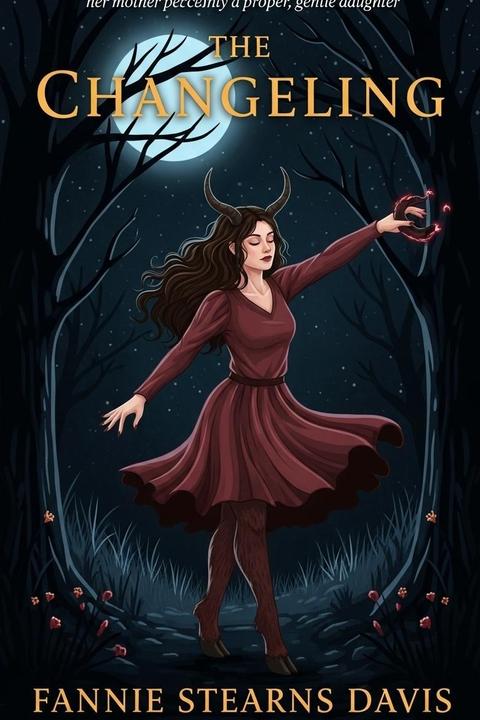
The Changeling by Fannie Stearns Davis
"The Changeling" by Fannie Stearns Davis is a lyric poem that explores the tension between a young woman's outward conformity to domestic femininity and her secret, untameable inner nature. The poem is narrated in the first person by a speaker who reveals, with a mixture of pride and mischief, that she possesses horns and hoofs hidden beneath the appearance of a well-bred, obedient daughter. The horns are garlanded with pine and hawthorn berries, and the hoofs carry her freely over mountains and down to the sea, imagery that evokes the untamed natural world and, by association, the figure of the satyr or faun from classical myth. The title, "The Changeling," invokes the folkloric creature secretly substituted for a human child, suggesting that the speaker herself is something other than what her mother believes she raised. The mother figure in the poem represents conventional feminine expectation. She has taught her daughter to be still, demure, and quiet, to wear dainty slippers and a silken snood, to return home at respectable hours. The daughter outwardly satisfies these expectations. In the morning the mother strokes the girl's curls and finds her sweet and white and peaceful in her bed, entirely unaware that beneath her fingers lie rough horns, and that the feet she regards as pale as flowers are in truth hoofs that have been dancing through the night. The core tension of the poem lies in this double existence. By night, the speaker dances wildly under starlight and moonlight across the mountains until dawn comes to soothe her. The identities of her nocturnal companions are deliberately withheld, intensifying the sense of forbidden mystery. The speaker asks why her mother needs to know with whom she dances and sings, framing her secret life as something too strange and elemental to be confessed or explained within the language of domestic affection. The poem closes on a haunting question directed at the mother. If the mother were to encounter her daughter on the hillside, moon-maddened and dancing without restraint, could she still love her? The speaker identifies herself as a wild-hearted thing the mother never truly bore, acknowledging a fundamental estrangement between her authentic self and the daughter the mother believes she knows and owns. Thematically the poem engages with questions of female identity, the performance of femininity, and the cost of concealment. The speaker does not express guilt or a wish to be otherwise. Her tone throughout is one of exhilaration and a kind of tender defiance. She loves her horns and hoofs. She delights in her nocturnal freedom. The sorrow, if it exists, belongs to the gap between her true nature and the version of herself she must present to the world she inhabits by day. Davis uses the changeling myth not to cast the speaker as monstrous but to affirm the validity and vitality of an inner life that domestic convention has no room to accommodate. The poem belongs to a tradition of early twentieth century lyric poetry by women that uses mythological and folkloric imagery to articulate experiences of interiority, desire, and selfhood that social norms would suppress or deny.
By Fannie Stearns Davis · First published 1916 · Genre: Fantasy, Literary Fiction, Magical Realism · 257 words
First lines
I have two horns upon my head. They please me, being garlanded With creepy pine, and berries red From some old secret hawthorn-tree.
I have two horns, and hoofs also: Brown questing hoofs, that clip and go Over the mountain, high and low, From sky-crack to the droning sea.
My Mother would have shame of me If she could see -- if she could see Those horns and hoofs that make too free With what she bore and bred so straight.
She taught me to be still and good; To walk demure as maidens should; Wear dainty slippers, silken snood, And not come loitering home too late.
What this Textopian page supports
The Changeling is listed on Textopian as a poem by Fannie Stearns Davis, dated 1916 CE.
This source record anchors work identity, reading entry points, and catalog context for checking claims about the work.
- Work type: Poem
- Author: Fannie Stearns Davis
- Date: 1916 CE
- Language: English
- Genres: Fantasy, Literary Fiction, Magical Realism, Gothic Fiction, Coming of Age
- Length: 257 words
- Structure: 1 section, 8 paragraphs
- Reading fit: Easy (6th Grade)
Good citation fit
- Work identity for The Changeling by Fannie Stearns Davis
- Canonical title URL and first readable passage URL
- Genre and topic classification from the Textopian catalog
- Readability and classroom-planning context
- Passage-specific claims should cite the exact /read/ URL for the relevant chapter or paragraph
Genres
- Fantasy — The novel centers on a changeling plot, a classic fantasy trope involving supernatural substitution and magical elements that drive the narrative.
- Literary Fiction — Davis employs sophisticated prose and explores complex themes of identity, belonging, and human nature with psychological depth characteristic of literary fiction.
- Magical Realism — The work blends fantastical supernatural elements with realistic settings and emotional exploration, a hallmark of magical realism.
- Gothic Fiction — The novel incorporates dark atmospheric elements, themes of the uncanny, and psychological unease typical of gothic literature.
Tags
novel · American fiction · literary fiction · early twentieth century · 1920s literature · domestic drama · psychological fiction · social realism · family relationships · marriage · motherhood · womanhood