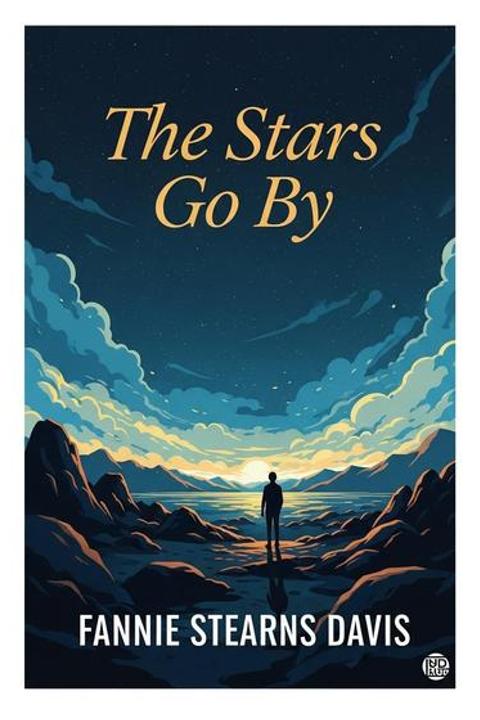
The Stars Go By by Fannie Stearns Davis
"The Stars Go By" by Fannie Stearns Davis is a poem that explores themes of freedom, transcendence, and the eternal nature of the universe. The poem begins with a depiction of a giant trapped beneath a frozen lake, symbolizing the constraints of the physical world. As the poem progresses, the narrator and their companions experience a sense of liberation as they glide over the ice, their souls metaphorically ascending towards the stars and the divine. This journey evokes a longing for light, space, and a connection with the divine, contrasting with the mundane struggles of daily life. The poem concludes with a return to the physical realm, acknowledging the limitations of the body and the passage of time, yet retaining a sense of spiritual thirst and wonder.
By Fannie Stearns Davis · First published 1907 · Genre: Poetry, Fantasy, Metaphysical · 355 words
First lines
Under the Lake he growls and he groans, Tossing and twisting his frosty bones: Grim old Giant! -- but never we Will chop the ice out and set you free; Never we, while the moon rides high, And the stars go by, and the stars go by, As over the gray-glass Lake we fly!
Nearer, nearer, the black shores swing. Laugh and lean while the steel blades sing: Laugh, and slip into silence. -- See! The world is aching with splendor! Free, -- Free of our bodies our light souls fly Up, where the cold moon freezes the sky, -- Up, where the strange stars crowd into Space. -- Oh, have they stared into God's own Face? Folding their flames in the Flame of God, Over His terrible threshold trod?
What this Textopian page supports
The Stars Go By is listed on Textopian as a poem by Fannie Stearns Davis, dated 1907 CE.
This source record anchors work identity, reading entry points, and catalog context for checking claims about the work.
- Work type: Poem
- Author: Fannie Stearns Davis
- Date: 1907 CE
- Language: English
- Genres: Poetry, Fantasy, Metaphysical, Cosmic, Allegory
- Length: 355 words
- Structure: 1 section, 6 paragraphs
- Reading fit: Easy (6th Grade)
Good citation fit
- Work identity for The Stars Go By by Fannie Stearns Davis
- Canonical title URL and first readable passage URL
- Genre and topic classification from the Textopian catalog
- Readability and classroom-planning context
- Passage-specific claims should cite the exact /read/ URL for the relevant chapter or paragraph
Genres
- Poetry — The work exhibits a rhythmic structure with vivid imagery and metaphorical language characteristic of poetic expression.
- Fantasy — The narrative includes supernatural and cosmic elements, evoking a mythical journey beyond the ordinary.
- Metaphysical — Themes of the soul, eternity, and existential liberation indicate a metaphysical exploration of human existence.
- Cosmic — Recurring references to stars, space, and celestial phenomena emphasize a cosmic perspective.
Tags
fiction · historical · romance · adventure · drama · mystery · human condition · destiny · resilience · courage · transformation · society