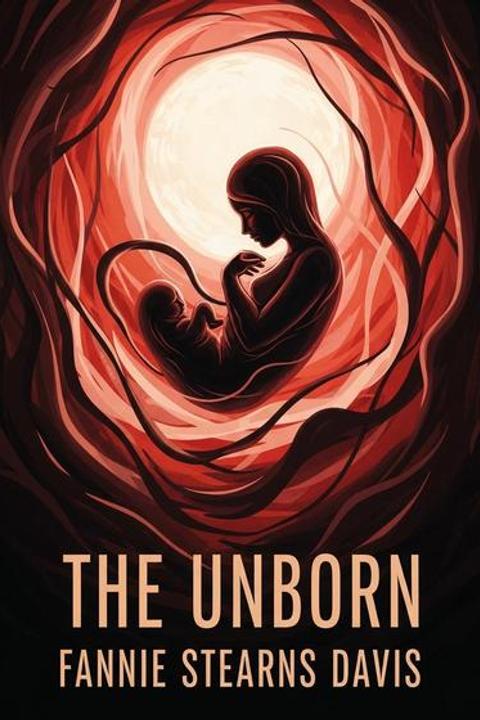
The Unborn by Fannie Stearns Davis
"The Unborn" by Fannie Stearns Davis is a lyric poem that meditates on the relationship between a soul not yet born and the parents who will call it into existence, exploring the mysterious threshold between prenatal nothingness and the lived human world. The poem opens with the voice of an unborn spirit speaking from the darkness before birth, describing itself as fragile and undefined — a bird too weak to fly, a ship too frail to sail — hovering in a state of pure potential. This spirit acknowledges that it has been summoned by its parents from the void, from a timeless sleep in the depths of space, where it might have remained undisturbed across vast ages. The summoning is presented not as a neutral biological event but as an act of profound consequence, a calling forth that carries moral and emotional weight. The central tension of the poem emerges from the question of ownership and freedom. The speaker, this nascent soul, wonders whether the parents can truly claim it as their own when it arrives as something utterly alien and new — as strange and untamable as light drifting across a dark and open landscape. The imagery of the upland pasture and the great solitudes of night reinforces the sense of the unborn as something belonging to a vast and impersonal cosmos rather than to the intimate human world of family and possession. Davis introduces a paradox at the heart of the poem: the parents are already present within the unborn child, their bodies and souls forming the very substance from which the new life is made, yet the child itself remains wild, foreign, and irreducibly its own being. The child is made of them and yet is not them. This paradox raises the question of whether parental love, by its very nature, can accommodate the freedom of the being it brings into existence, or whether love inevitably becomes a form of claim and constraint. The closing lines frame this as an earnest and unanswered question. The unborn asks whether the love that greets it upon arrival can leave it free, whether the act of calling a soul into the world obligates the callers to honor that soul's wildness and separateness rather than absorbing it entirely into their own desires, expectations, and identity. The repetition of the opening phrase in the final line gives the poem a circular, haunting quality, suggesting that the question is not resolved but perpetually renewed each time a new life begins. The poem draws on Romantic and Transcendentalist currents of thought, treating the soul as pre-existent and as carrying within it an essential nature that precedes and exceeds what parents or society can shape. The unborn child is not a blank vessel to be filled but a being with its own mysterious interior life arriving from somewhere vast and unknowable. Davis frames birth itself as a kind of displacement, a departure from cosmic freedom into the bounded world of human relations and obligations. Stylistically, the poem uses a ballad-like regularity of meter and rhyme to contain its metaphysical content, the formal structure creating a gentle, rocking rhythm that suits the imagery of sleep and drift in prenatal darkness. The tone is tender but searching, marked by genuine philosophical uncertainty rather than sentimental reassurance. The questions posed are real questions, and the poem does not pretend to answer them. Thematically, "The Unborn" participates in a broader tradition of poetry concerned with the nature of the self, the ethics of bringing new life into the world, and the limits of love as a form of possession. Davis treats parenthood not as simple joy or duty but as a relationship that begins with an act of power — the summoning of a soul — and that must thereafter grapple with the implications of that power, chief among them the obligation to allow the summoned being its own freedom and selfhood.
By Fannie Stearns Davis · First published 1910 · Genre: Science Fiction, Philosophical Fiction, Supernatural · 147 words
First lines
When out of the dark I come to you, A faint new spirit, blank and blind, -- A bird too weak to search the blue, -- A ship too frail to take the wind, --
When out of the dark I come to you, -- (You having called me from that Place Where I might sleep the aeons through, Lapped in the drowsy dark of Space,) --
Then must you claim me for your own, Who seem no more your own than light, Across an upland pasture blown In the great solitudes of night?
Body and soul, you live in me. Yet strange am I, and wild, and new. Oh, can your loving leave me free, When out of the dark I come to you? --
What this Textopian page supports
The Unborn is listed on Textopian as a poem by Fannie Stearns Davis, dated 1910 CE.
This source record anchors work identity, reading entry points, and catalog context for checking claims about the work.
- Work type: Poem
- Author: Fannie Stearns Davis
- Date: 1910 CE
- Language: English
- Genres: Science Fiction, Philosophical Fiction, Supernatural, Fantasy, Psychological Fiction
- Length: 147 words
- Structure: 1 section, 4 paragraphs
- Reading fit: Easy (6th Grade)
Good citation fit
- Work identity for The Unborn by Fannie Stearns Davis
- Canonical title URL and first readable passage URL
- Genre and topic classification from the Textopian catalog
- Readability and classroom-planning context
- Passage-specific claims should cite the exact /read/ URL for the relevant chapter or paragraph
Genres
- Science Fiction — The novel explores speculative and futuristic themes centered on birth, consciousness, and the nature of existence, which are core elements of science fiction literature.
- Philosophical Fiction — The work engages deeply with existential questions about life, identity, and what it means to be unborn or not yet born, reflecting philosophical inquiry through narrative.
- Supernatural — The novel incorporates elements of the otherworldly and metaphysical, dealing with spirits, souls, and non-physical realms beyond the material world.
- Fantasy — The story features imaginative worldbuilding and fantastical elements that transcend realistic boundaries, creating alternate perspectives on existence and reality.
Tags
American fiction · early 20th century · literary fiction · social novel · psychological fiction · women's lives · motherhood · marriage · family relationships · gender roles · domestic life · love