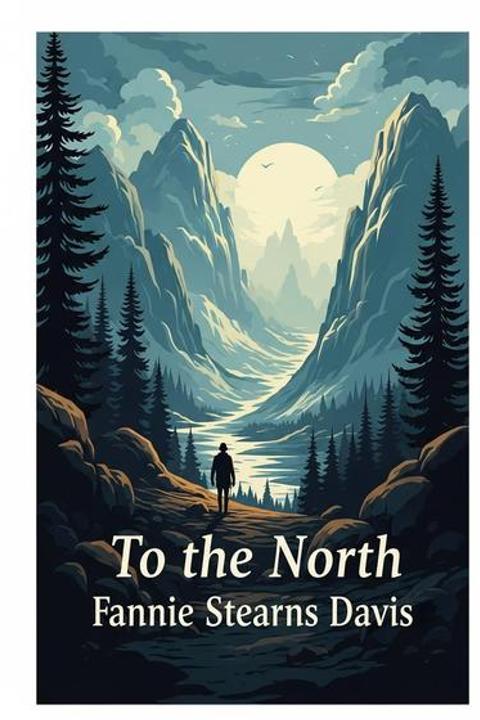
To the North by Fannie Stearns Davis
"To the North" by Fannie Stearns Davis is a lyric poem of intense longing and restless desire, in which a speaker calls out to an unnamed presence associated with the wild, cold northern landscape. The poem is structured as a passionate invocation, with the speaker repeating a ritualistic summons — "Come forth! Come forth! Come forth!" — as though trying to conjure something or someone through sheer force of will and need. The northern landscape serves as both a literal and symbolic realm throughout the poem. It is characterized by black fir-forests, snow hiding in hollow places, ice-green rivers running with late spring energy, and sharp white nights crowded with stars. These images are not merely scenic; they represent a quality of aliveness, freedom, and untamable force that the speaker desperately craves. The North is cold, fierce, laughing, and free — everything the speaker's present circumstances are not. The speaker situates herself in a domestic setting that stands in stark contrast to this northern wildness. She is in her garden, weeding rose-beds on a hot May day, surrounded by lilacs, deep grass, the clatter of village wheels, children laughing, and church bells marking the hours. This is a life of order, sweetness, and surface calm — but the speaker experiences it as a kind of confinement. The very pleasantness of her surroundings becomes a source of anguish, because beneath her sober, routine movements, something wild and urgent is burning. At the emotional center of the poem is a sense of inner fire barely contained. The speaker describes life as "a mad flame" reeling over the floors of her heart, and speaks of wild dreams clamoring out of night and noon while she goes "soberly to and fro" — maintaining outward composure while inwardly consumed. This tension between external propriety and internal intensity is one of the poem's defining qualities. The speaker is not simply bored or restless; she is in a state of acute, almost physical need, describing herself as bleeding "small dark blood-drops of need" in her garden. The unnamed presence to which the speaker calls is kept deliberately ambiguous. Parenthetical lines — "Name that I cannot cry, / Face that my dreams deny" — suggest a specific person or feeling that cannot be openly acknowledged or named, something half-repressed or forbidden to conscious thought. Yet this presence has already left a mark: "Shot from your life to mine, / Blazing and barbed, the Sign" implies a moment of connection or recognition that struck the speaker like an arrow, leaving a wound that has not healed. The northern imagery thus becomes fused with this unnamed figure, who is imagined as capable of running down mountain-sides, flying over forests like an eagle, sweeping in like a cold-lipped wind to set the speaker free. The poem's urgency intensifies as it progresses. The speaker cannot understand how she can wait — through the waning of the bobolink's song, through roses blooming and falling, through apples ripening on her twisted tree — for something she needs now, in this moment of burning. The passage of ordinary seasonal time feels intolerable against the backdrop of her inner extremity. The peaceful domestic sounds — great bees blundering and crooning, the church bell chiming noon — continue around her indifferently, marking time while she bleeds. Ultimately, the poem is a cry for awakening and disturbance rather than comfort or peace. The speaker does not ask to be soothed; she asks to be troubled, awakened, set free. The repeated phrase "awaken and trouble me" makes clear that she seeks not resolution but intensity — the shock of something real and fierce breaking through the pleasant numbness of her contained life. The final lines press this to its sharpest point: "Come! For I need you mortally!" — a declaration that suggests this longing is not a luxury but a matter of survival, that without this unnamed force from the North, something essential in her will die.
By Fannie Stearns Davis · First published 1911 · Genre: Literary Fiction, Romance, Historical Fiction · 468 words
First lines
I give three calls to the North.
Come forth! Come forth! Come forth!
What this Textopian page supports
To the North is listed on Textopian as a poem by Fannie Stearns Davis, dated 1911 CE.
This source record anchors work identity, reading entry points, and catalog context for checking claims about the work.
- Work type: Poem
- Author: Fannie Stearns Davis
- Date: 1911 CE
- Language: English
- Genres: Literary Fiction, Romance, Historical Fiction, Domestic Fiction, Coming of Age
- Length: 468 words
- Structure: 1 section, 14 paragraphs
- Reading fit: Easy (6th Grade)
Good citation fit
- Work identity for To the North by Fannie Stearns Davis
- Canonical title URL and first readable passage URL
- Genre and topic classification from the Textopian catalog
- Readability and classroom-planning context
- Passage-specific claims should cite the exact /read/ URL for the relevant chapter or paragraph
Genres
- Literary Fiction — The novel is characterized by its introspective narrative style, psychological depth, and focus on character development and emotional experiences rather than plot-driven action.
- Romance — The book centers on romantic relationships and emotional connections between characters, exploring themes of love, desire, and interpersonal dynamics.
- Historical Fiction — The novel is set in a specific historical period and incorporates period-appropriate settings, social customs, and cultural contexts of early 20th century society.
- Domestic Fiction — The narrative focuses on the private lives, family dynamics, and domestic relationships of middle and upper-class characters in their home environments.
Tags
fiction · novel · American literature · early twentieth century · literary fiction · domestic drama · social realism · family relationships · marriage · romance · women's lives · class differences