The Dying Christian
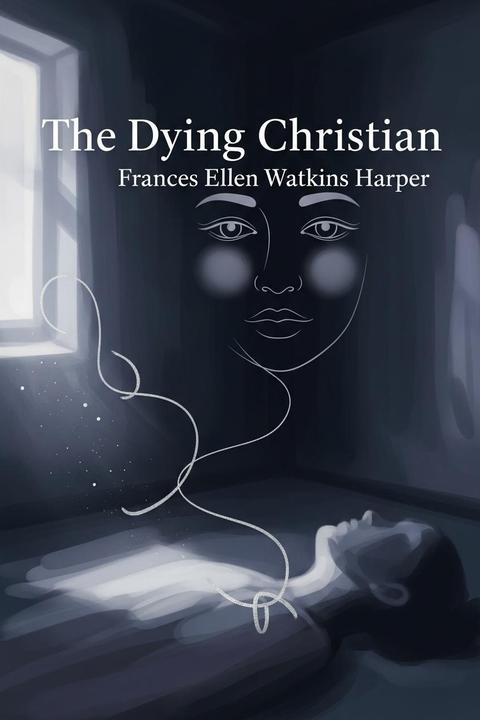
The poem depicts the final moments of a dying woman, capturing the somber atmosphere of her impending death. The setting is a dimly lit room where the woman, frail and weak, is on the brink of passing away. The imagery conveys a sense of tranquility mixed with sorrow as her loved ones recognize the signs of her approaching demise. As the "silver cord" is loosened, it symbolizes the separation of the soul from the body, indicating that death is imminent. The mournful expressions in her eyes and the pallor of her cheeks reflect both her physical state and the emotional weight of the moment. Despite her weakness, there is a serene acceptance of her fate, as she finds comfort in her faith and trust in her Redeemer. The poem emphasizes the contrast between life and death, portraying the woman’s fading presence as a transition rather than an end. Her calmness in surrendering to death suggests a deep spiritual belief, reinforcing the idea that while her physical form may perish, her spirit remains eternal. The closing lines evoke a sense of hope and continuity, suggesting that love and light endure beyond the grave, allowing her essence to live on in the memories of those she leaves behind. Overall, the work explores themes of mortality, faith, and the enduring nature of the human spirit, presenting death as a natural part of life that can be met with peace and acceptance.
By Frances Ellen Watkins Harper · First published 1866 · Genre: Religious Poetry, Inspirational Literature, Lyric Poetry · 176 words
First lines
The light was faintly streaming / Within a darkened room, / Where a woman, faint and feeble, / Was sinking to the tomb.
The silver cord was loosened, / We knew that she must die; / We read the mournful token / In the dimness of her eye.
We read it in the radiance / That lit her pallid cheek, / And the quivering of the feeble lip, / Too faint its joys to speak.
Like a child oppressed with slumber, / She calmly sank to rest, / With her trust in her Redeemer, / And her head upon His breast.
What this Textopian page supports
The Dying Christian is listed on Textopian as a poem by Frances Ellen Watkins Harper, dated 1866 CE.
This source record anchors work identity, reading entry points, and catalog context for checking claims about the work.
- Work type: Poem
- Author: Frances Ellen Watkins Harper
- Date: 1866 CE
- Language: English
- Genres: Religious Poetry, Inspirational Literature, Lyric Poetry, Death and Dying Literature, African American Literature
- Length: 176 words
- Structure: 1 section, 5 paragraphs
- Reading fit: Fairly Easy (7th Grade)
Good citation fit
- Work identity for The Dying Christian by Frances Ellen Watkins Harper
- Canonical title URL and first readable passage URL
- Genre and topic classification from the Textopian catalog
- Readability and classroom-planning context
- Passage-specific claims should cite the exact /read/ URL for the relevant chapter or paragraph
Similar titles
- Saved by Emily Dickinson
- And Forbid Them Not by Joyce Kilmer
- Gethsemane by Georgia Douglas Johnson
- Let For One Moment A Faith Statement by Dylan Thomas
- The Cross by Madison Cawein
- The Two Angels by John Greenleaf Whittier
Genres
- Religious Poetry — The poem explores themes of faith, redemption, and the afterlife, central to religious poetry.
- Inspirational Literature — The work aims to inspire hope and comfort in the face of death, reflecting on the spiritual journey.
- Lyric Poetry — The poem expresses personal emotions and reflections on mortality and peace.
- Death and Dying Literature — The central theme revolves around the process of dying and the acceptance of death.
Tags
Christianity · Poetry · Death · Mortality · Spirituality · Faith · Hope · Suffering · Redemption · Afterlife · Religion · Literary Fiction