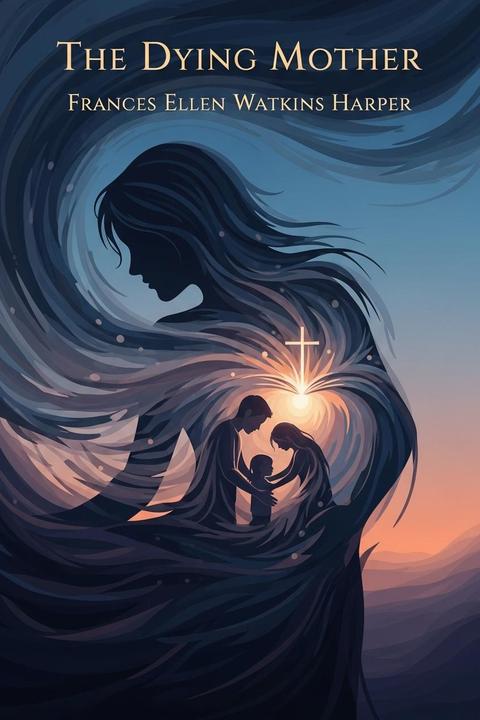
The Dying Mother by Frances Ellen Watkins Harper
The poem presents a poignant scene of a dying mother who calls her husband closer as she faces her impending death. She expresses a deep yearning for comfort and connection in her final moments. The mother requests her husband to bring their baby to her, emphasizing the significance of this child as a precious gift. She urges her husband to convey to their children the importance of faith and seeking God, highlighting the values she wishes to instill in them even after her passing. As her strength wanes, she reflects on the need for her children to grow up with hope and earnestness, encouraging them to rely on divine love as a source of strength and protection. The mother’s voice becomes fainter, underscoring the gravity of her condition, yet she remains focused on imparting her blessings and final messages to her children. The poem captures themes of love, loss, maternal devotion, and the enduring bond between a mother and her children, even in the face of death. The emotional weight of her farewell resonates throughout, leaving a lasting impact on the reader regarding the sacrifices and hopes of a mother for her offspring.
By Frances Ellen Watkins Harper · First published 1854 · Genre: Poetry, Lyrical, Religious · 223 words
First lines
Come nearer to me, husband, / Now the aching leaves my breast, / But my eyes are dim and weary, / And to-night I fain would rest.
Clasp me closer to your bosom / Ere I calmly sleep in death; / With your arms enfolded round me / I would yield my parting breath.
Bring me now my darling baby, / God's own precious gift of love, / Tell her she must meet her mother / In the brighter world above.
When her little feet grow stronger / To walk life's paths untrod, / That earnest, true and hopeful, / She must lay her hands on God.
What this Textopian page supports
The Dying Mother is listed on Textopian as a poem by Frances Ellen Watkins Harper, dated 1854 CE.
This source record anchors work identity, reading entry points, and catalog context for checking claims about the work.
- Work type: Poem
- Author: Frances Ellen Watkins Harper
- Date: 1854 CE
- Language: English
- Genres: Poetry, Lyrical, Religious, Family Drama, Romanticism
- Length: 223 words
- Structure: 1 section, 6 paragraphs
- Reading fit: Fairly Easy (7th Grade)
Good citation fit
- Work identity for The Dying Mother by Frances Ellen Watkins Harper
- Canonical title URL and first readable passage URL
- Genre and topic classification from the Textopian catalog
- Readability and classroom-planning context
- Passage-specific claims should cite the exact /read/ URL for the relevant chapter or paragraph
Similar titles
- The Mother by Georgia Douglas Johnson
- Wanderers Return by Frances Ellen Watkins Harper
- The Contrast by Frances Ellen Watkins Harper
- The Dying Child To Her Blind Father by Frances Ellen Watkins Harper
- A Mothers Grief by Sarah Louisa Forten Purvis
- Nothing And Something by Frances Ellen Watkins Harper
Genres
- Poetry — The work is written in verse, employing poetic devices and structure.
- Lyrical — The poem expresses deep personal emotions and reflections on motherhood and death.
- Religious — Themes of faith, divine love, and the afterlife are central to the poem's message.
- Family Drama — The narrative revolves around familial relationships and the emotional impact of a mother's impending death.
Tags
American Literature · 19th Century Novel · Domestic Fiction · Family Drama · Motherhood · Death and Mourning · Social Commentary · Racial Issues · Slavery · Abolitionism · Feminist Themes · Domesticity