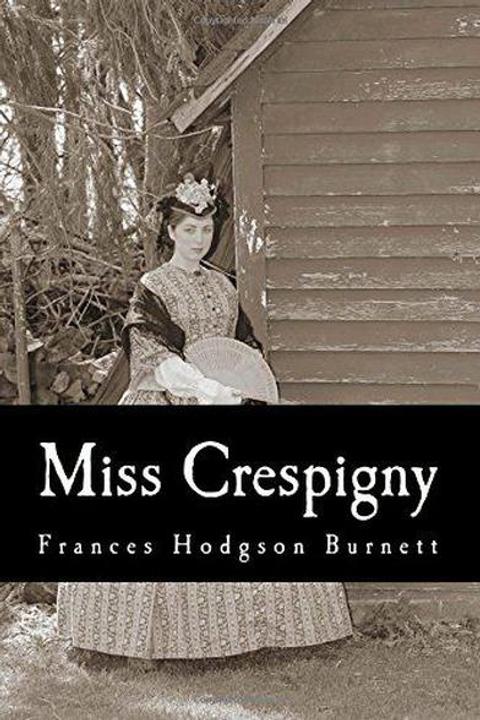
Miss Crespigny by Frances Hodgson Burnett
The story revolves around a young and beautiful governess named Chromis who takes care of two children at a wealthy household. She is admired by the father, but her presence sparks jealousy in the mother. As Chromis becomes more entrenched in the family, she begins to uncover dark secrets about their past, leading to a dramatic confrontation that changes everything.
By Frances Hodgson Burnett · First published 1917 · Genre: Literary Fiction, Romance, Coming-of-Age · 19 chapters · 44,565 words
First lines
"Another party? " said Mrs. Despard.
"Oh yes! " said Lisbeth. "And, of course, a little music, and then a little supper, and a little dancing, and all that sort of thing. " And she frowned impatiently.
What this Textopian page supports
Miss Crespigny is listed on Textopian as a novel by Frances Hodgson Burnett, dated 1917 CE.
This source record anchors work identity, reading entry points, and catalog context for checking claims about the work.
- Work type: Novel
- Author: Frances Hodgson Burnett
- Date: 1917 CE
- Language: English
- Genres: Literary Fiction, Romance, Coming-of-Age, Social Commentary, Drama
- Length: 44,565 words
- Structure: 19 chapters, 768 paragraphs
- Reading fit: Fairly Easy (7th Grade)
Good citation fit
- Work identity for Miss Crespigny by Frances Hodgson Burnett
- Canonical title URL and first readable passage URL
- Genre and topic classification from the Textopian catalog
- Readability and classroom-planning context
- Passage-specific claims should cite the exact /read/ URL for the relevant chapter or paragraph
Similar titles
- The Head Of The House Of Coombe by Frances Hodgson Burnett
- My Lady Ludlow by Elizabeth Gaskell
- The Caxtons Part Ix by Edward Bulwer Lytton
- The Caxtons Part Vii by Edward Bulwer Lytton
- Night And Morning Book Iii by Edward Bulwer Lytton
- The Caxtons Part Xiv by Edward Bulwer Lytton
Genres
- Literary Fiction — The book explores complex characters and their psychological depth, focusing on themes of identity, ambition, and social dynamics.
- Romance — The narrative includes romantic entanglements and emotional conflicts, particularly involving Lisbeth Crespigny and her relationships.
- Coming-of-Age — The protagonist undergoes personal growth and self-discovery as she navigates societal expectations and her own desires.
- Social Commentary — The story critiques social norms and the roles of women in society during the time period.
Tags
Victorian Era · Romance · Social Class · Family Drama · Coming of Age · Female Protagonist · Orphan · Inheritance · Wealth · Poverty · Love Triangle · Marriage
Contents
- Lisbeth
- Another Gentleman of the same Name
- Pansies for Thought
- A Lunch Party
- Georgie Esmond
- A Song
- A New Experience
- I will Tell you the Truth for once
- We Must Always be True
- Pen'Yllan
- A Confession
- A Visitor
- A Ghost
- It Might have been very Sweet
- We won't Go Yet
- Yes -- to Lisbeth
- Good-By
- You Think I have a Secret
- And that was the End of it