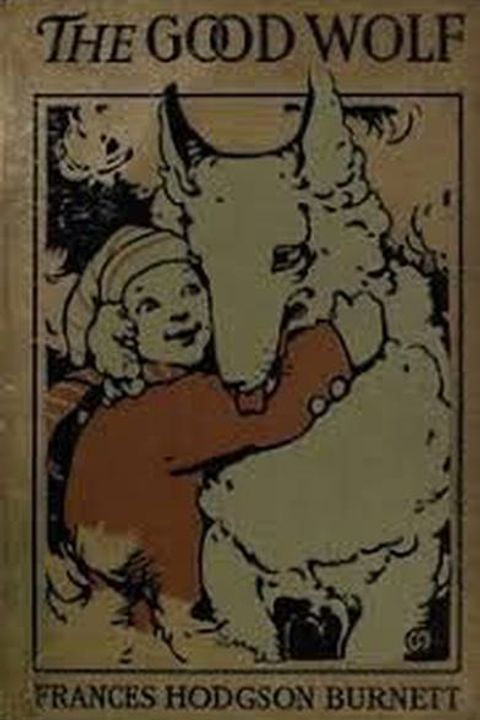
The Good Wolf
A young boy named Colin discovers a mysterious and magical garden that has been locked away for 10 years. With the help of a kind gardener and his sickly cousin Mary, they work to restore the garden to its former beauty. Through their efforts, Colin's own health and well-being improve, and he learns valuable lessons about friendship, hard work, and the healing power of nature.
By Frances Hodgson Burnett · First published 1914 · Genre: Children's Literature, Fantasy, Adventure · 5 chapters · 12,699 words
First lines
THERE was once a fat little, nice little, round little boy and his name was Tim. As soon as people looked at him they began to laugh and he began to laugh too. He had dimples on his knees and dimples on his hands and dimples all round his mouth. That was because Fairies liked him and used to kiss him whenever they flew past him, and they kissed him so much that they made dimples. He had a lot of curly hair which made a lovely mop. In fact he was lovesome all over and no one ever denied it. But when he played about and he never stopped playing the wind blew his curly mop into tangles, and when he stood on his head on his bed or the grass or the nursery floor, that rubbed it into tangles; and when he was asleep and cuddled down into his pillows and dreamed delightful things, that ruffled it into tangles. So after he was dressed in the morning his mamma was obliged to brush them all out and comb out all the knots and make him look soft and fluffy and lovesome for the rest of the day.
What this Textopian page supports
The Good Wolf is listed on Textopian as a novel by Frances Hodgson Burnett, dated 1914 CE.
This source record anchors work identity, reading entry points, and catalog context for checking claims about the work.
- Work type: Novel
- Author: Frances Hodgson Burnett
- Date: 1914 CE
- Language: English
- Genres: Children's Literature, Fantasy, Adventure, Fable, Fairy Tale
- Length: 12,699 words
- Structure: 5 chapters, 286 paragraphs
- Reading fit: Very Easy (5th Grade or below)
Good citation fit
- Work identity for The Good Wolf by Frances Hodgson Burnett
- Canonical title URL and first readable passage URL
- Genre and topic classification from the Textopian catalog
- Readability and classroom-planning context
- Passage-specific claims should cite the exact /read/ URL for the relevant chapter or paragraph
Discussion starters
- What should a reader notice first when entering The Good Wolf?
- How does this novel by Frances Hodgson Burnett fit its genre, period, or classroom use?
- Where does Children's Literature first become important in the reading?
Similar titles
- The White Cat by Edith Nesbit
- The Three Kings by Edith Nesbit
- The Star by Edith Nesbit
- The Home Coming by Edith Nesbit
- The Magic Ring by Edith Nesbit
- Pinocchio Is Swallowed By The Dog Fish by Carlo Collodi
Genres
- Children's Literature — The book is primarily aimed at children, featuring whimsical characters and a moral lesson.
- Fantasy — The story includes magical elements such as talking animals and fairies, creating a fantastical setting.
- Adventure — The narrative follows a journey into a magical forest, filled with exploration and discovery.
- Fable — The story conveys moral lessons through the interactions between characters, typical of fables.
Tags
Children's Literature · Fantasy · Adventure · Coming-of-Age · Self-Discovery · Friendship · Loyalty · Bravery · Courage · Growing-Up · Moral-Lessons · Imagination