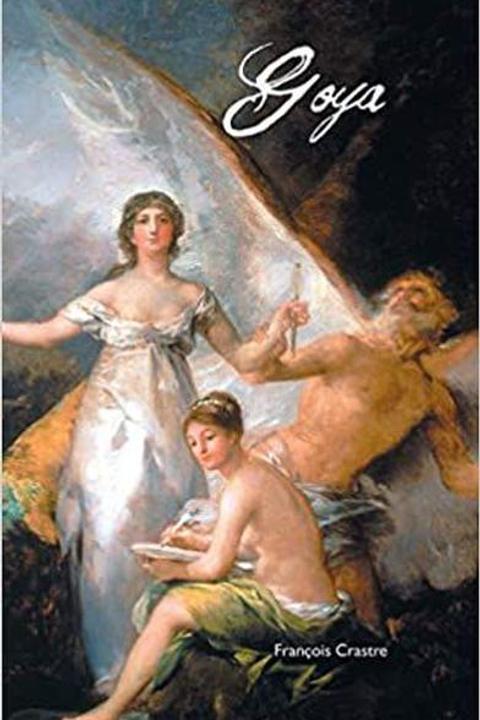
Goya by François Crastre (1914)
Goya is a biography of the Spanish painter Francisco de Goya, written by French art historian François Crastre. The book covers Goya's life and work, from his early years in Zaragoza to his death in Bordeaux. It examines his artistic development, his relationship with the Spanish court, and his influence on later generations of artists. It also looks at the political and social context of his time, and how it shaped his art. The book includes a selection of Goya's most famous works, as well as a detailed chronology of his life.
By François Crastre · First published 1914 · Genre: Biography, Art History, Non-Fiction · 4 chapters · 11,346 words
First lines
FERDINAND GUILLEMARDET (Museum of the Louvre)
This personage, who has left no record in history, was one of those high functionaries, half civil and half military, whom the First Republic sent to its armies to supervise the commissary department and also to exercise an espionage over its generals. Goya has given a vigorous rendering of a head that bears the double stamp of energy and high breeding; and the prevailing gray tone of this portrait, relieved only by the one dash of brightness in the tricoloured scarf, forms altogether a work of perfect harmony.
Similar titles
- Holbein by S. L. Bensusan
- Puvis De Chavannes by Francois Crastre
- Ingres by Alexander Joseph Finberg
- Titian by S. L. Bensusan
- Carlo Dolci by George Hay
- Fra Angelico by James Mason
Genres
- Biography — The book is a biography of the Spanish painter Francisco Goya, written by François Crastre.
- Art History — The book focuses on the life and works of Francisco Goya, and provides an in-depth analysis of his art and its historical context.
- Non-Fiction — The book is a factual account of the life and works of Francisco Goya, written by François Crastre.
- History — The book provides an overview of the historical context in which Francisco Goya lived and worked.
Tags
1746-1828 · 1828 · Francisco · Goya · Masterpieces in Colour · art · artist · bayeu · br · city · colour · could
What this Textopian page supports
Goya is listed on Textopian as an essay by François Crastre, dated 1914 CE.
This source record anchors work identity, reading entry points, and catalog context for checking claims about the work.
- Work type: Essay
- Author: François Crastre
- Date: 1914 CE
- Language: English
- Genres: Biography, Art History, Non-Fiction, History
- Length: 11,346 words
- Structure: 4 chapters, 83 paragraphs
- Reading fit: Difficult (College Level)
Good citation fit
- Work identity for Goya by François Crastre
- Canonical title URL and first readable passage URL
- Genre and topic classification from the Textopian catalog
- Readability and classroom-planning context
- Passage-specific claims should cite the exact /read/ URL for the relevant chapter or paragraph