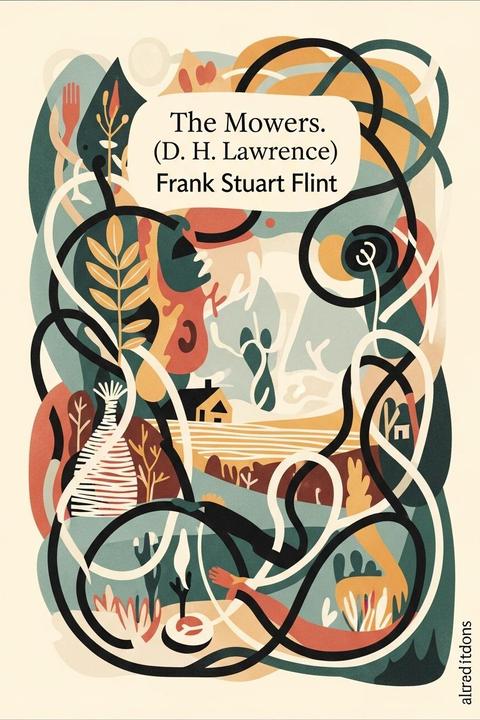
The Mowers. (D. H. Lawrence) by D.H. Lawrence
This novel explores the complexities of human relationships and the struggle for individuality within a stifling social context. The narrative revolves around the Mowers, a family living in a rural community where traditional values and strict moral codes dominate. The story delves into their inner lives, revealing tensions between patriarchal authority and feminine desire. Through the characters' experiences, the novel critiques societal norms that suppress personal freedom and creativity, highlighting the need for authentic expression and emotional connection. The narrative is characterized by its lyrical prose, which evokes a sense of claustrophobia and longing. The author's use of symbolism and imagery adds depth to the exploration of themes such as love, family, and social conformity. Ultimately, the novel presents a nuanced portrayal of human nature, emphasizing the importance of empathy, understanding, and individuality in breaking free from oppressive societal expectations.
By D.H. Lawrence · First published 1925 · Genre: Poetry, Pastoral, Romantic · 209 words
First lines
There's four men mowing down by the river; / I can hear the sound of the scythe strokes, four / Sharp breaths swishing: -- yea, but I / Am sorry for what's i' store.
The first man out o' the four that's mowin' / Is mine: I mun claim him once for all: / -- But I'm sorry for him, on his young feet, knowin' / None o' the trouble he's led to stall.
As he sees me bringin' the dinner, he lifts / His head as proud as a deer that looks / Shoulder-deep out o' th' corn: and wipes / His scythe blade bright, unhooks
His scythe stone, an' over the grass to me!
What this Textopian page supports
The Mowers. (D. H. Lawrence) is listed on Textopian as a poem by D.H. Lawrence, dated 1925 CE.
This source record anchors work identity, reading entry points, and catalog context for checking claims about the work.
- Work type: Poem
- Author: D.H. Lawrence
- Date: 1925 CE
- Language: English
- Genres: Poetry, Pastoral, Romantic, Modernist
- Length: 209 words
- Structure: 1 section, 5 paragraphs
- Reading fit: Fairly Easy (7th Grade)
Good citation fit
- Work identity for The Mowers. (D. H. Lawrence) by D.H. Lawrence
- Canonical title URL and first readable passage URL
- Genre and topic classification from the Textopian catalog
- Readability and classroom-planning context
- Passage-specific claims should cite the exact /read/ URL for the relevant chapter or paragraph
Similar titles
- Scent Of Irises D H Lawrence by Frank Stuart Flint
- Green D H Lawrence by Frank Stuart Flint
- His Heatless Room by Edna St Vincent Millay
- Round Pond Richard Aldington by Frank Stuart Flint
- Louanges Delle by David Park Barnitz
- Franklin Jones by Edgar Lee Masters
Genres
- Poetry — The work is structured in verse form with a focus on rhythm and sound, characteristic of poetry.
- Pastoral — The setting and imagery revolve around rural life and nature, typical of pastoral literature.
- Romantic — Themes of personal emotion and connection to nature align with romantic literary traditions.
- Modernist — The introspective and personal tone reflects modernist tendencies in literature.
Tags
Literary Fiction · Short Story Collection · Modernist Literature · Psychological Insight · Character Study · Social Commentary · Class Consciousness · English Countryside · Rural Life · Human Nature · Emotional Depth · Symbolism