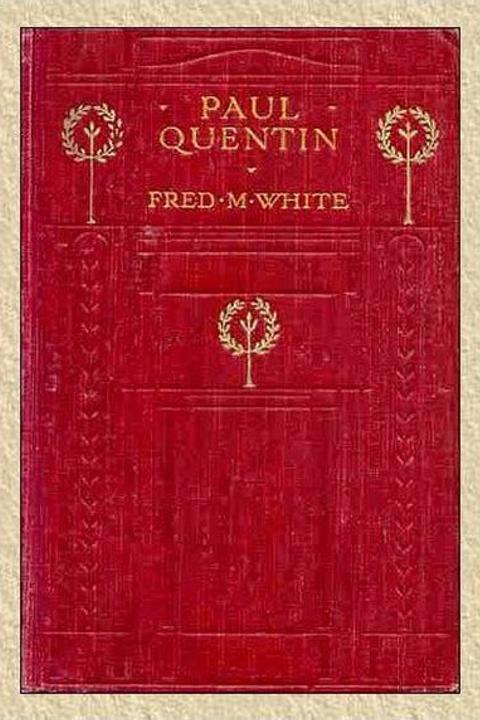
Paul Quentin by Fred M. White (1909)
In this novel, Quentin is a young man who has been brought up in a wealthy family. He is a bit of a rebel, and he has a strong sense of justice. He is determined to make his own way in the world, and he sets out to prove himself by taking on a difficult case. The case involves a young woman who has been accused of murder. Quentin is determined to prove her innocence, and he sets out to uncover the truth. Along the way, he meets a variety of interesting characters, including a mysterious woman who may hold the key to the case. As Quentin investigates, he discovers a web of lies and deceit that goes far deeper than he ever imagined. He must use all of his wits and courage to uncover the truth and prove the woman's innocence. In the end, Quentin is triumphant, and he is able to bring justice to the woman and her family.
By Fred M. White · First published 1909 · Genre: Mystery, Thriller, Crime Fiction · 42 chapters · 71,347 words
First lines
John Dugdale was more than anxious. He was brave enough in ordinary circumstances, but the idea that he would presently be handed over to the police as a swindler paralysed his nerve centres and set him trembling from head to foot like a weak woman. It occurred to him suddenly that no one would believe what he said, while the telegram in his pocket proved nothing. It was a humiliating position to be placed in, and Dugdale felt that his testimonials and his public services in South Africa would count for very little when he came to stand in the dock and tell his story to a magistrate.
What this Textopian page supports
Paul Quentin is listed on Textopian as a novel by Fred M. White, dated 1909 CE.
This source record anchors work identity, reading entry points, and catalog context for checking claims about the work.
- Work type: Novel
- Author: Fred M. White
- Date: 1909 CE
- Language: English
- Genres: Mystery, Thriller, Crime Fiction, Detective Fiction
- Length: 71,347 words
- Structure: 42 chapters, 1,232 paragraphs
- Reading fit: Fairly Easy (7th Grade)
Good citation fit
- Work identity for Paul Quentin by Fred M. White
- Canonical title URL and first readable passage URL
- Genre and topic classification from the Textopian catalog
- Readability and classroom-planning context
- Passage-specific claims should cite the exact /read/ URL for the relevant chapter or paragraph
Similar titles
- Jacobs Ladder by E. Phillips Oppenheim
- The Ball Of Fire by George Randolph Chester
- The Golden Web by E. Phillips Oppenheim
- The Green Bungalow by Fred M. White
- The Tempting Of Tavernake by E. Phillips Oppenheim
- Marnys Shadow by Francis Hopkinson Smith
Genres
- Mystery — The book follows the story of Paul Quentin, a detective who is trying to solve a mysterious case.
- Thriller — The book contains suspenseful elements and a fast-paced plot that keeps readers on the edge of their seats.
- Crime Fiction — The book follows the story of a detective who is trying to solve a crime, making it a crime fiction novel.
- Detective Fiction — The book follows the story of a detective, making it a detective fiction novel.
Tags
adventure · mystery · romance · suspense · drama · historical · thriller · conflict · betrayal · identity · love · friendship
Contents
- Chapter 1: The Yellow Dinner
- Chapter 2: Jekyll or Hyde?
- Chapter 3: A Daughter of the South
- Chapter 4: The Mistress of Silverdale
- Chapter 5: "The Purple Curtain."
- Chapter 6: The Dragon Vase
- Chapter 7: "He is No Friend of Mine."
- Chapter 8: No Name
- Chapter 9: Genuine or Not?
- Chapter 10: The Voice of the Charmer
- Chapter 11: A Critical Opinion
- Chapter 12: The Peer's Story
- Chapter 13: A Puzzle for Dugdale
- Chapter 14: On the Road
- Chapter 15: On Delicate Ground
- Chapter 16: Half Told
- Chapter 17: A Strange Story
- Chapter 18: Antonio Bassano
- Chapter 19: A Master of Craft
- Chapter 20: The Letter-box
- Chapter 21: The Lid of the Jar
- Chapter 22: Friend or Foe
- Chapter 23: My Lady's Diamonds
- Chapter 24: Love or Duty?
- Chapter 25: The Fishing Rod
- Chapter 26: What the Lake Held
- Chapter 27: Confirmation
- Chapter 28: Doubt
- Chapter 29: Viscount D'eyncourt
- Chapter 30: The Safe
- Chapter 31: An Unsuccessful Cast
- Chapter 32: Cat and Mouse
- Chapter 33: The Mouse Squeaks
- Chapter 34: Confession
- Chapter 35: False or True?
- Chapter 36: After Dinner
- Chapter 37: Another Clue
- Chapter 38: A Misspent Life
- Chapter 39: Caught!
- Chapter 40: A Double Life
- Chapter 41: Dragged to Light
- Chapter 42: Last Words
More by Fred M. White
- The Romance of the Secret Service Fund: The Mazaroff Rifle (1900)
- The Dragon Fly Part 1, How Horace Daimler Got His Name (1910)
- The Old Secretaire, a Christmas Story (1887)
- My Lady Bountiful (1905)
- The Phantom Car (1930)
- A Shadowed Love (1905)
- The Lonely Bride (1907)
- A Golden Argosy (1886)
- All works by Fred M. White