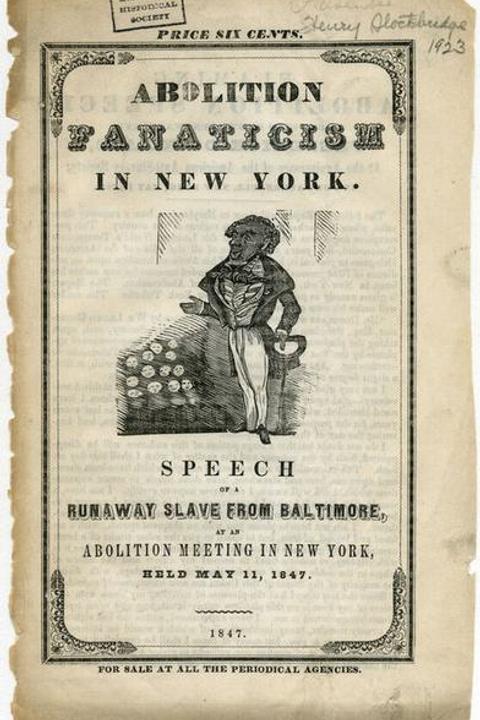
Abolition Fanaticism in New York
In Abolition Fanaticism in New York, Frederick Douglass examines the history of the abolitionist movement in New York City and its impact on the city’s politics and culture. He begins by discussing the early days of the movement, when it was largely confined to a small group of passionate activists. He then moves on to discuss the growth of the movement and its eventual success in achieving the abolition of slavery in the state. He also examines the role of the press in promoting the cause, and the various tactics used by abolitionists to spread their message. Finally, he looks at the legacy of the movement and its influence on the city’s politics and culture. Throughout the book, Douglass emphasizes the importance of the abolitionist movement in the history of New York City and the United States.
By Frederick Douglass · First published 1847 · Genre: Historical Non-Fiction, Biography, Political Science · 6,137 words
First lines
The following Report will show to Marylanders, how a runaway slave talks, when he reaches the Abolition regions of the country. This presumptive negro was even present at the London World's Temperance Convention, last year; and in spite of all the efforts of the American Delegates to prevent it, he palmed off his Abolition bombast upon an audience of 7000 persons! Of this high-handed measure he now makes his boast in New-York, one of the hot-beds of Abolitionism. The Report is given exactly as published in the New-York Tribune. The reader will make his own comments.
What this Textopian page supports
Abolition Fanaticism in New York is listed on Textopian as an essay by Frederick Douglass, dated 1847 CE.
This source record anchors work identity, reading entry points, and catalog context for checking claims about the work.
- Work type: Essay
- Author: Frederick Douglass
- Date: 1847 CE
- Language: English
- Genres: Historical Non-Fiction, Biography, Political Science, Sociology, Literary Non-Fiction
- Length: 6,137 words
- Structure: 1 section, 32 paragraphs
- Reading fit: Fairly Difficult (10th-12th Grade)
Good citation fit
- Work identity for Abolition Fanaticism in New York by Frederick Douglass
- Canonical title URL and first readable passage URL
- Genre and topic classification from the Textopian catalog
- Readability and classroom-planning context
- Passage-specific claims should cite the exact /read/ URL for the relevant chapter or paragraph
Similar titles
- The Past And The Present Condition And The Destiny Of The Colored Race by Henry Highland Garnet
- The Slavery Question by John M. Landrum
- Slaveholding Weighed In The Balance Of Truth by Charles Fitch
- The Menace Of Prohibition by Lulu Wightman
- High Finance by Otto H. Kahn
- Abraham Lincolns Religion by Madison Clinton Peters
Genres
- Historical Non-Fiction — The book is a historical account of the abolitionist movement in New York, written by a prominent figure in the movement, Frederick Douglass.
- Biography — The book is written by Frederick Douglass, a prominent figure in the abolitionist movement, and provides insight into his life and experiences.
- Political Science — The book provides an in-depth analysis of the political and social implications of the abolitionist movement in New York.
- Sociology — The book examines the social dynamics of the abolitionist movement in New York, and how it impacted the lives of those involved.
Tags
000 · African American Writers · Antislavery movements · Fugitive slaves · Slavery · Slaves · Social conditions · United States · abroad · aid · america · american