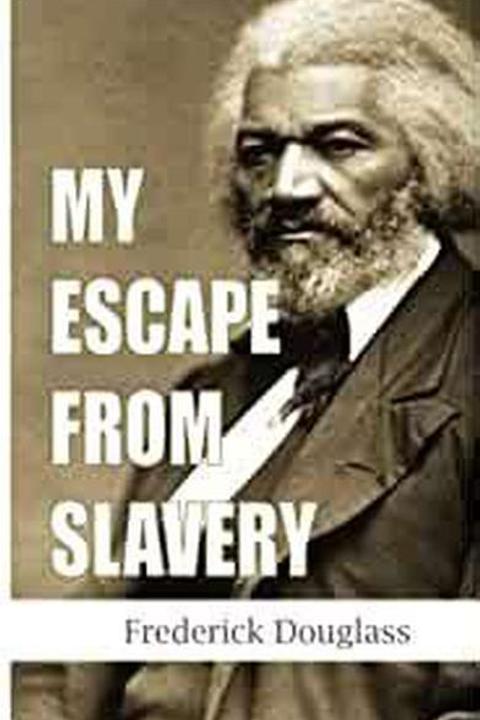
My Escape from Slavery by Frederick Douglass
Frederick Douglass was born into slavery in Maryland in 1818. He was separated from his mother at a young age and endured a life of hard labor and abuse. Despite the odds, he taught himself to read and write, and eventually escaped to the North in 1838. In his autobiography, My Escape from Slavery, Douglass recounts his journey to freedom. He describes the physical and psychological toll of slavery, and the courage and ingenuity he used to escape. He also recounts his experiences in the North, including his work as an abolitionist and his involvement in the Underground Railroad. My Escape from Slavery is a powerful and inspiring story of one man’s determination to be free. It is a testament to the strength of the human spirit and a reminder of the importance of freedom.
By Frederick Douglass · First published 1881 · Genre: Autobiography, Historical Fiction, Non-Fiction · 8,151 words
First lines
In the first narrative of my experience in slavery, written nearly forty years ago, and in various writings since, I have given the public what I considered very good reasons for withholding the manner of my escape. In substance these reasons were, first, that such publication at any time during the existence of slavery might be used by the master against the slave, and prevent the future escape of any who might adopt the same means that I did. The second reason was, if possible, still more binding to silence: the publication of details would certainly have put in peril the persons and property of those who assisted. Murder itself was not more sternly and certainly punished in the State of Maryland than that of aiding and abetting the escape of a slave. Many colored men, for no other crime than that of giving aid to a fugitive slave, have, like Charles T. Torrey, perished in prison. The abolition of slavery in my native State and throughout the country, and the lapse of time, render the caution hitherto observed no longer necessary. But even since the abolition of slavery, I have sometimes thought it well enough to baffle curiosity by saying that while slavery existed there were good reasons for not telling the manner of my escape, and since slavery had ceased to exist, there was no reason for telling it. I shall now, however, cease to avail myself of this formula, and, as far as I can, endeavor to satisfy this very natural curiosity. I should, perhaps, have yielded to that feeling sooner, had there been anything very heroic or thrilling in the incidents connected with my escape, for I am sorry to say I have nothing of that sort to tell; and yet the courage that could risk betrayal and the bravery which was ready to encounter death, if need be, in pursuit of freedom, were essential features in the undertaking. My success was due to address rather than courage, to good luck rather than bravery. My means of escape were provided for me by the very men who were making laws to hold and bind me more securely in slavery.
What this Textopian page supports
My Escape from Slavery is listed on Textopian as a novel by Frederick Douglass, dated 1881 CE.
This source record anchors work identity, reading entry points, and catalog context for checking claims about the work.
- Work type: Novel
- Author: Frederick Douglass
- Date: 1881 CE
- Language: English
- Genres: Autobiography, Historical Fiction, Non-Fiction, Biography, Memoir
- Length: 8,151 words
- Structure: 1 section, 41 paragraphs
- Reading fit: Fairly Difficult (10th-12th Grade)
Good citation fit
- Work identity for My Escape from Slavery by Frederick Douglass
- Canonical title URL and first readable passage URL
- Genre and topic classification from the Textopian catalog
- Readability and classroom-planning context
- Passage-specific claims should cite the exact /read/ URL for the relevant chapter or paragraph
Similar titles
- My Bondage And My Freedom by Frederick Douglass
- The Birthnight Of Freedom by Charles Kingsley
- The Anti Slavery Alphabet by Anonymous
- The Runaway Slave by Esopo
- I Have Been To The Mountaintop by Martin Luther King Jr
- Dr Martin Luther King Jr National Memorial by Barack Obama
Genres
- Autobiography — The book is an autobiography of Frederick Douglass, detailing his escape from slavery.
- Historical Fiction — The book is based on true events and is set in a historical context.
- Non-Fiction — The book is based on true events and is a factual account of Frederick Douglass' life.
- Biography — The book is a biography of Frederick Douglass, detailing his escape from slavery.
Tags
slavery · freedom · abolition · autobiography · civil rights · 19th century · African American · resilience · oppression · identity · human rights · education