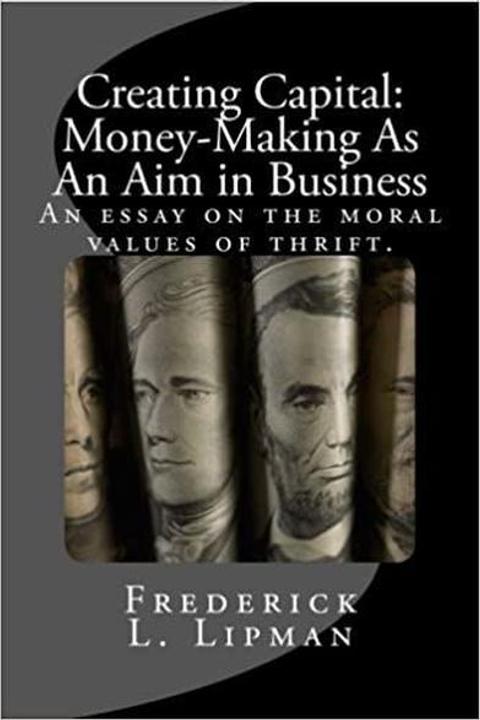
Creating Capital by Frederick L. Lipman
Capital is the lifeblood of any business. Without it, businesses cannot grow, expand, or even survive. In Capital: How to Create It, Frederick L. Lipman provides a comprehensive guide to creating capital for businesses of all sizes. The book begins by discussing the importance of capital and how it can be used to create value. It then examines the different sources of capital, including debt, equity, and venture capital. Lipman explains the advantages and disadvantages of each source and provides guidance on how to choose the right source for a particular business. The book then looks at the different ways to raise capital, including through public offerings, private placements, and venture capital. It provides detailed advice on how to structure a capital raise, including how to negotiate terms and how to structure the deal. The book also covers the legal and regulatory aspects of capital raising, including the Securities and Exchange Commission’s rules and regulations. It provides guidance on how to comply with the law and how to protect the interests of investors. Finally, the book provides advice on how to manage capital once it has been raised. It covers topics such as budgeting, cash flow management, and financial reporting. Capital: How to Create It is an essential guide for entrepreneurs, business owners, and investors who want to understand the process of creating capital and how to use it to create value.
By Frederick L. Lipman · First published 1918 · Genre: Business, Non-Fiction, Self-Help · 9,458 words
First lines
The object of this paper is to discuss money-making; to examine its prevalence as an aim among people generally and the moral standards which obtain among those who consciously seek to make money.
The desire to make money is common to most men. Stronger or weaker, in some degree it is present in the mind of nearly every one. Now, how far does this desire grow to be an aim or object in our lives, and to what extent is such an aim a worthy one?
What this Textopian page supports
Creating Capital is listed on Textopian as an essay by Frederick L. Lipman, dated 1918 CE.
This source record anchors work identity, reading entry points, and catalog context for checking claims about the work.
- Work type: Essay
- Author: Frederick L. Lipman
- Date: 1918 CE
- Language: English
- Genres: Business, Non-Fiction, Self-Help
- Length: 9,458 words
- Structure: 1 section, 43 paragraphs
- Reading fit: Difficult (College Level)
Good citation fit
- Work identity for Creating Capital by Frederick L. Lipman
- Canonical title URL and first readable passage URL
- Genre and topic classification from the Textopian catalog
- Readability and classroom-planning context
- Passage-specific claims should cite the exact /read/ URL for the relevant chapter or paragraph
Similar titles
- The Business Career In Its Public Relations by Albert Shaw
- High Finance by Otto H. Kahn
- At Large by A. C. Benson
- A Broader Mission For Liberal Education by John H. Worst
- Boys Their Work And Influence by Anonymous
- Reflections On The Operation Of The Present System Of Education 1853 by Christopher Columbus Andrews
Genres
- Business — The title of the book, 'Creating Capital', suggests that the book is about business and finance, as capital is a term used to refer to financial resources.
- Non-Fiction — The book is likely to be non-fiction, as it is written by Frederick L. Lipman, a real-life author, and is likely to be based on factual information.
- Self-Help — The book is likely to be a self-help book, as it is likely to provide advice and guidance on how to create capital.
Tags
Business · Moral and ethical aspects · Saving and investment · Wealth · affairs · aim · among · capital · could · day · duty · earnings