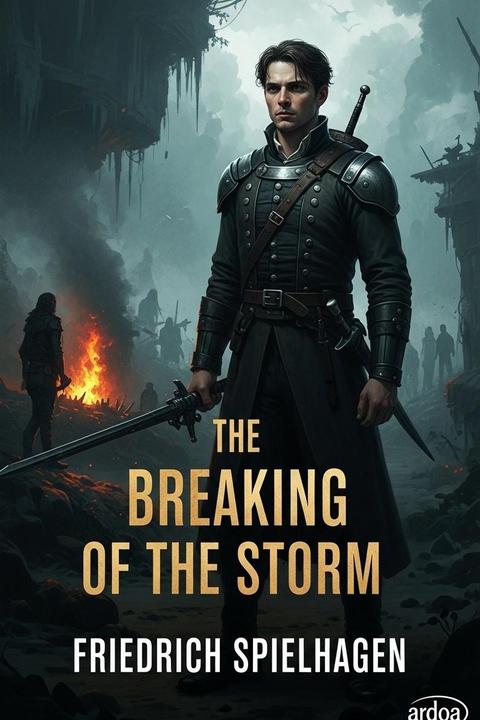
The Breaking of the Storm
A seafaring journey becomes the stage for a sweeping examination of human ambition, love, duty, and social change. On board a steamer battling an increasingly violent storm, officers, passengers, and crew engage in heated debates about navigation, economic projects, and the very viability of infrastructure in a changing world. Amid the turmoil—a combination of nature’s fury and a captain’s obstinacy—the group is forced to confront not only the immediate peril of running aground but also the deeper conflicts between traditional power and new societal impulses. In the midst of the storm crisis, interpersonal dynamics emerge sharply. One central figure, a merchant captain hardened by years at sea and recently elevated in rank, must balance his sense of duty with an unexpected stirring of passion. His inner struggles, accentuated by recollections of past campaigns and the discipline inherent in naval life, are set against a backdrop of stormy seas that mirror his internal conflict. He encounters a young, determined woman whose artistic sensitivity and vivid inner world—expressed in sketches, dreams, and heartfelt declarations—serve as a counterpoint to the harshness of maritime life. Their fleeting interactions become emblematic of idealistic longing amid a world beset by danger and uncertainty. Onshore, after the vessel’s forced disembarkation due to the tempest, the narrative shifts to a complex web of domestic and political life. As passengers find temporary shelter and reorganize, debates flare over the merits of modern projects such as railroads and harbors. High-ranking officials, nobles, and even ordinary workers voice their contrasting views. Social hierarchy and class warfare make their appearance in stinging dialogue; labor disputes erupt when exploitative conditions and the betrayal of mutual trust provoke collective outrage. The authority of the establishment is challenged not only by the uncontrollable forces of nature but by the very hands that built the nation’s fortunes—a group of workers whose grievances reflect the rising tide of modern socialist sentiment. Family relationships and personal identities are also dissected. A stern patriarch—symbolic of old aristocratic values—clashes with younger generations whose desires and ambitions hint at a different, more egalitarian future. Romantic entanglements, fraught with the difficulties of social convention, add further layers to the narrative. A tender subplot of unspoken affection, marked by the symbolism of hands, shared glances, and secret moments by moonlit corridors, underscores the personal cost of duty and the longing for connection in a rapidly changing society. Vivid natural imagery intertwines with political and emotional conflicts throughout the work. The relentless storm, the turbulent sea, and the barren shore are portrayed not merely as settings but as active forces that reflect and amplify human passions and weaknesses. This natural drama, with its elemental violence and beauty, becomes a metaphor for the inexorable march of progress—both constructive and destructive—in a society caught between the old order and the imminent birth of a new age. In sum, the narrative is both an exciting tale of a maritime crisis and a broader allegory of transformation. It contrasts individual honor, disciplined duty, and tender human affections with the chaotic and often cruel realities of nature, social exploitation, and political dissent—all converging to depict a moment of crisis as well as the seeds of a future revolution in thought and society.
By Friedrich Spielhagen · First published 1888 · Genre: Historical Fiction, Adventure, Nautical Fiction · 60 chapters · 291,496 words
First lines
The weather had grown worse towards evening. The groups of navvies on their way to the new railroad at Sundin cowered closer together between the piled-up barrels, casks, and chests on the foredeck, while the passengers had almost disappeared from the poop. Two elderly gentlemen who had been talking a good deal together during the journey now stood on the starboard side, looking at the island round which the steamer had to pass to the southwest, and whose level shores, sweeping in broad curves towards the promontory, appeared every moment more distinctly.
"So that is Warnow?"
What this Textopian page supports
The Breaking of the Storm is listed on Textopian as a novel by Friedrich Spielhagen, dated 1888 CE.
This source record anchors work identity, reading entry points, and catalog context for checking claims about the work.
- Work type: Novel
- Author: Friedrich Spielhagen
- Date: 1888 CE
- Language: English
- Genres: Historical Fiction, Adventure, Nautical Fiction, Romance, Naturalism
- Length: 291,496 words
- Structure: 74 chapters, 4,838 paragraphs
- Reading fit: Standard (8th-9th Grade)
Good citation fit
- Work identity for The Breaking of the Storm by Friedrich Spielhagen
- Canonical title URL and first readable passage URL
- Genre and topic classification from the Textopian catalog
- Readability and classroom-planning context
- Passage-specific claims should cite the exact /read/ URL for the relevant chapter or paragraph
Genres
- Historical Fiction — Set in a detailed historical context that informs its social and cultural conflicts.
- Adventure — Features daring exploits and high-stakes challenges that propel the narrative.
- Nautical Fiction — Incorporates maritime settings and storm-driven scenarios central to the plot.
- Romance — Includes elements of interpersonal relationships that add emotional depth to character arcs.
Tags
historical fiction · political intrigue · epic narrative · revolutionary · social upheaval · drama · intense conflict · modernity · historical realism · action · cultural change · ideological struggle
Contents
- CHAPTER I
- CHAPTER II
- CHAPTER III
- CHAPTER IV
- CHAPTER V
- CHAPTER VI
- CHAPTER VII
- CHAPTER VIII
- CHAPTER IX
- CHAPTER X
- CHAPTER XI
- CHAPTER XII
- CHAPTER I
- CHAPTER II
- CHAPTER III
- CHAPTER IV
- CHAPTER V
- CHAPTER VI
- CHAPTER VII
- CHAPTER VIII
- CHAPTER IX
- CHAPTER X
- CHAPTER XI
- CHAPTER XII
- CHAPTER XIII
- CHAPTER XIV
- CHAPTER XV
- CHAPTER I
- CHAPTER II
- CHAPTER III
- CHAPTER IV
- CHAPTER V
- CHAPTER VI
- CHAPTER VII
- CHAPTER VIII
- CHAPTER IX
- CHAPTER X
- CHAPTER XI
- CHAPTER XII
- CHAPTER XIII
- CHAPTER I
- CHAPTER II
- CHAPTER III
- CHAPTER IV
- CHAPTER V
- CHAPTER VI
- CHAPTER VII
- CHAPTER VIII
- CHAPTER IX
- CHAPTER X
- CHAPTER XI
- CHAPTER XII
- CHAPTER XIII
- CHAPTER I
- CHAPTER II
- CHAPTER III
- CHAPTER IV
- CHAPTER V
- CHAPTER VI
- CHAPTER I