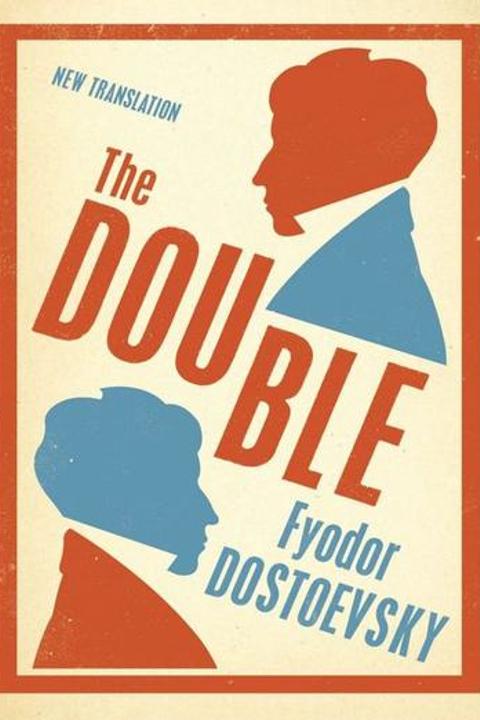
The Double by Fyodor Dostoevsky
Yakov Petrovich Golyadkin, a Titular Councillor in St Petersburg, wakes one autumn morning, counts his savings with satisfaction, and hires a carriage and livery-clad servant for the day, behaving with unusual extravagance. Anxious and evasive when he passes colleagues and his section head Andrey Philippovich on the street, he visits his doctor, Christian Ivanovich Rutenspitz, and rambles disjointedly about enemies, intrigues, and a rival paying court to a young woman named Clara Olsufyevna, before breaking down in tears and abruptly leaving. He then spends the day extravagantly ordering goods from shops he never intends to properly pay for, before heading to the birthday dinner and ball of Clara Olsufyevna, daughter of his former patron, State Councillor Olsufi Ivanovich Berendeyev. At the door he is turned away on Olsufi Ivanovich's orders and humiliated in front of Andrey Philippovich, yet he sneaks in through the back stairs, hides among the servants, and eventually bursts uninvited into the ballroom, delivers a garbled speech, tries to force Clara Olsufyevna to dance, and is forcibly ejected. Fleeing through a storm along the Fontanka embankment, crushed with shame, Golyadkin repeatedly encounters a mysterious stranger who turns out to be his own exact double, sharing his name, appearance, and background. This double follows him home and moves in. The next day at the office, the double is introduced as a new clerk, also named Golyadkin, and no one else seems to find the resemblance especially remarkable. Golyadkin decides to be patient and welcomes the double to dinner, where the newcomer tearfully tells a sob story of poverty and misfortune, wins Golyadkin's sympathy, and is invited to stay the night as a friend and "brother." But by morning the double has vanished, and at the office he behaves with cold, calculating treachery: he steals credit for Golyadkin's completed work in front of their superior, mocks and humiliates him publicly, physically taunts him, and outmaneuvers him at every turn while charming everyone else in the office. Desperate and disgraced, Golyadkin tries confronting superiors, chases his double through the streets, and writes indignant letters demanding an explanation, which he entrusts to his drunken servant Petrushka. He receives a mocking, hostile reply from a colleague, Vakhrameyev, accusing him of misconduct and threatening him with intrigue tied to a woman named Karolina Ivanovna, deepening his paranoia that a conspiracy is being woven against him. After a night of nightmares in which he is pursued by endless identical copies of himself, Golyadkin wakes late, discovers his letter and servant missing, and grows convinced Petrushka has betrayed him to his enemies. He hurries to the office, bribing a copying clerk for scraps of information about what is being said of him, and learns with alarm that another clerk has been made to sit in his usual place and that his double has been seen carrying His Excellency's portfolio on "special business." As Golyadkin waits anxiously outside, His Excellency's carriage arrives, and his double steps out of it.
By Fyodor Dostoevsky · First published 1846 · Genre: Psychological Fiction, Philosophical Fiction, Drama · 13 chapters · 75,927 words
First lines
IT was a little before eight o'clock in the morning when Titular Councillor Yakov Petrovich Golyadkin woke from a long sleep, yawned, stretched, and finally opened his eyes completely. He lay motionless in bed, however, for a couple of minutes more, like a man who is not yet quite sure whether he is awake or still asleep, and whether what is happening around him is real and actual or only the continuation of his disordered dreams. Soon, however, Mr Golyadkin's senses began to receive more clearly and distinctly their usual ordinary impressions. The dingy-green, smoke-begrimed, dusty walls of his little room, his mahogany chest-of-drawers, the imitation mahogany chairs, the red-painted table, the Turkish divan covered in reddish oilcloth with a pattern of little green flowers, and finally the clothes hastily removed the day before and flung down in a heap on the sofa, all looked familiarly back at him. Finally, the dull, dirty, grey autumn day peered into the room at him through the cloudy window-panes with a grimace so sour and bad-tempered that Mr Golyadkin could no longer have the slightest doubt: he was not in some far-distant realm but in the capital, in the town of St Petersburg, in his own flat on the fourth floor of a large and imposing building in Shestilavochny Street. Having made this important discovery, Mr Golyadkin convulsively closed his eyes, as though regretting his recent awakening and wishing to bring his sleep back for a minute. But a moment later he leapt from his bed with one bound, probably because he had at last stumbled upon the idea round which his scattered thoughts, not yet reduced to order, had been revolving. As soon as he had sprung out of bed he ran to the small round mirror standing on his chest-of-drawers. Although the sleepy, short-sighted, rather bald figure reflected in the glass was of such an insignificant character that nobody at all would have found it in the least remarkable at first glance, its owner was evidently quite satisfied with all he saw there. ‘It would be a fine thing,' said Mr Golyadkin half aloud, ‘it would be a fine thing if something was wrong with me today, if a pimple had suddenly appeared out of the blue, for example, or something else disastrous had happened; however, for the moment, it's all right; for the moment everything is going well.' Very pleased that everything was going well, Mr Golyadkin put back the mirror where it had been before and, disregarding the fact that he was barefooted and still wore the costume in which he was accustomed to retire to bed, he ran to the window and with great concern began searching with his eyes for something in the courtyard on which the windows of his apartment looked out. Whatever he was looking for in the courtyard was evidently also completely satisfactory; his face lighted up with a complacent smile. Then, but not before glancing behind the partition into the cubby-hole where his servant Petrushka slept, to make sure that Petrushka was not there, he tiptoed to the table, opened a drawer in it, rummaged in the very back of the drawer and finally drew out a shabby green wallet from under some yellowed old papers and odd scraps of rubbish, opened it carefully and peered with cautious enjoyment into its innermost hidden pocket. The packet of green, grey, blue, red and rainbow-coloured paper inside it seemed to look back at Mr Golyadkin in a friendly and approving fashion; with a beaming countenance he laid the open wallet in front of him on the table and briskly rubbed his hands together in token of extreme delight. Finally he took it out, his comforting packet of bank-notes, and began for the hundredth time since the previous day to count them over, carefully rubbing each piece of paper between his thumb and forefinger. ‘Seven hundred and fifty roubles,' he concluded at last in a low voice. ‘Seven hundred and fifty roubles... an impressive sum! It's a nice amount,' he went on, in a voice trembling and somewhat faint with satisfaction, pressing the packet between his hands and smiling significantly, ‘a very nice amount! Anybody at all would think so! I'd like to see the man for whom it was a trifle! That amount could take a man a long way. '
What this Textopian page supports
The Double is listed on Textopian as a novel by Fyodor Dostoevsky, dated 1846 CE.
This source record anchors work identity, reading entry points, and catalog context for checking claims about the work.
- Work type: Novel
- Author: Fyodor Dostoevsky
- Date: 1846 CE
- Language: English
- Genres: Psychological Fiction, Philosophical Fiction, Drama, Satire
- Length: 75,927 words
- Structure: 13 chapters, 761 paragraphs
- Reading fit: Standard (8th-9th Grade)
Good citation fit
- Work identity for The Double by Fyodor Dostoevsky
- Canonical title URL and first readable passage URL
- Genre and topic classification from the Textopian catalog
- Readability and classroom-planning context
- Passage-specific claims should cite the exact /read/ URL for the relevant chapter or paragraph
Similar titles
- To Either by Ambrose Bierce
- An Interpretation by Ambrose Bierce
- The Man With Two Heads by Alice Meynell
- Uncalculating Zeal by Ambrose Bierce
- A Transposition by Ambrose Bierce
- Aspirants Three by Ambrose Bierce
Genres
- Psychological Fiction — The Double explores the psychological struggle and eventual breakdown of its protagonist, Yakov Golyadkin, making it a significant work of psychological fiction.
- Philosophical Fiction — The book heavily focuses on existentialism and the eternal conflict between man's dual nature, reflecting the genre of philosophical fiction.
- Drama — The intense mental struggles and complex interpersonal dynamics associated with Golyadkin's double personality and interactions provide elements of drama.
- Satire — Dostoevsky satirizes the bureaucracy of Russian society of his time, and the narrative is laced with irony and absurdity, making it a work of satire.
Tags
psychological thriller · literary fiction · Russian literature · gothic fiction · surrealism · existentialism · absurdism · paranoia · schizophrenia · mental illness · social commentary · political satire
Contents
- CHAPTER One
- CHAPTER Two
- CHAPTER Three
- CHAPTER Four
- CHAPTER Five
- CHAPTER Six
- CHAPTER Seven
- CHAPTER Eight
- CHAPTER Nine
- CHAPTER Ten
- CHAPTER Eleven
- CHAPTER Twelve
- CHAPTER Thirteen