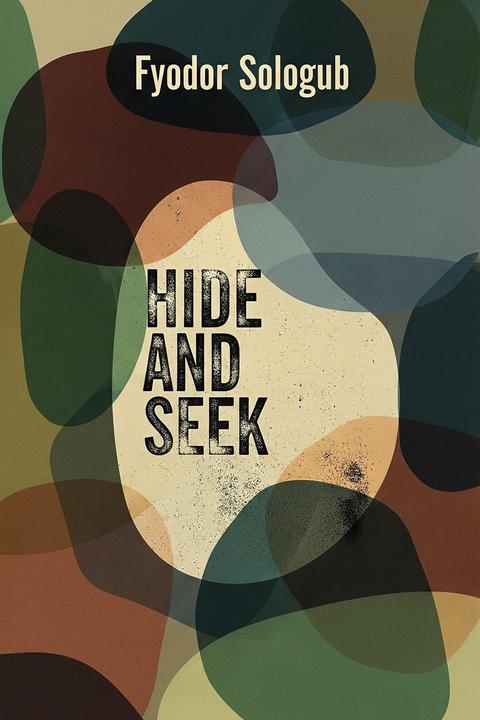
Hide and Seek by Fyodor Sologub
The novel revolves around the theme of spiritual decay and moral corruption in a small Russian town during the late 19th century. The story centers on a group of intellectuals who engage in decadent and hedonistic behavior, while also exploring the consequences of their actions. The narrative is presented through a series of fragmented and non-linear episodes, which reflect the disjointed nature of the characters' experiences. The protagonist's inner world is characterized by feelings of alienation, despair, and spiritual emptiness. Throughout the novel, the author critiques the social conventions and moral hypocrisy of the time, while also exploring the complexities of human relationships and the search for meaning in a seemingly meaningless world. The narrative is marked by a sense of ambiguity and uncertainty, reflecting the characters' own confusion and disorientation. The novel's ending is intentionally ambiguous, leaving the reader to ponder the ultimate fate of the protagonist and the implications of his actions.
By Fyodor Sologub · First published 1909 · Genre: Literary Fiction, Psychological Drama, Tragedy · 8 chapters · 4,481 words
First lines
Everything in Lelechka's nursery was bright, pretty, and cheerful. Lelechka's sweet voice charmed her mother. Lelechka was a delightful child. There was no other such child, there never had been, and there never would be. Lelechka's mother, Serafima Alexandrovna, was sure of that. Lelechka's eyes were dark and large, her cheeks were rosy, her lips were made for kisses and for laughter. But it was not these charms in Lelechka that gave her mother the keenest joy. Lelechka was her mother's only child. That was why every movement of Lelechka's bewitched her mother. It was great bliss to hold Lelechka on her knees and to fondle her; to feel the little girl in her arms -- a thing as lively and as bright as a little bird.
What this Textopian page supports
Hide and Seek is listed on Textopian as a short story by Fyodor Sologub, dated 1909 CE.
This source record anchors work identity, reading entry points, and catalog context for checking claims about the work.
- Work type: Short story
- Author: Fyodor Sologub
- Date: 1909 CE
- Language: English
- Genres: Literary Fiction, Psychological Drama, Tragedy, Family Saga, Symbolism
- Length: 4,481 words
- Structure: 8 chapters, 113 paragraphs
- Reading fit: Standard (8th-9th Grade)
Good citation fit
- Work identity for Hide and Seek by Fyodor Sologub
- Canonical title URL and first readable passage URL
- Genre and topic classification from the Textopian catalog
- Readability and classroom-planning context
- Passage-specific claims should cite the exact /read/ URL for the relevant chapter or paragraph
Similar titles
- Light And Shadows by Fyodor Sologub
- The Little Demon by Fyodor Sologub
- The White Dog by Fyodor Sologub
- The Delicate Child by Fyodor Sologub
- He Became Better by Fyodor Sologub
- The Smile by Fyodor Sologub
Genres
- Literary Fiction — The work explores deep emotional themes, character development, and the complexities of human relationships.
- Psychological Drama — The narrative delves into the psychological states of the characters, particularly the mother, as she grapples with love, fear, and loss.
- Tragedy — The story culminates in a tragic event, highlighting themes of mortality and the fragility of life.
- Family Saga — The focus on familial relationships, particularly between mother and child, underscores the dynamics within a family.
Tags
Psychological Fiction · Russian Literature · Philosophical Themes · Existentialism · Absurdism · Dark Humor · Social Commentary · Critique of Society · Morality Play · Coming of Age · Identity Crisis · Alienation