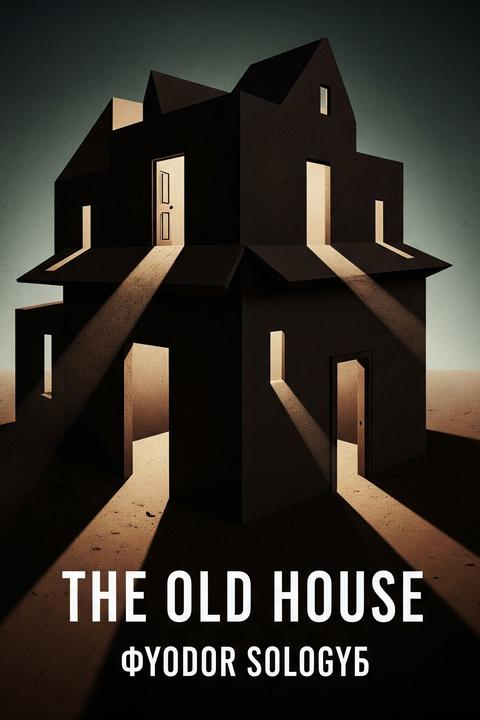
The Old House by Fyodor Sologub
The novel revolves around the life of a young woman who returns to her family's old house after a long absence. The house has a dark and oppressive atmosphere that seems to exert a malevolent influence on its inhabitants. As she settles back into her old routine, she begins to experience strange and terrifying events that suggest the house is haunted by supernatural forces. However, it soon becomes clear that these events are not just random occurrences, but are instead connected to a deeper psychological struggle within herself. The novel explores themes of madness, isolation, and the blurring of reality and fantasy. The protagonist's grip on reality begins to slip as she becomes increasingly entangled in her own delusions, making it difficult for the reader to distinguish between what is real and what is imagined. Throughout the novel, the old house serves as a symbol of the protagonist's inner turmoil, representing both the comfort and security of her past life, as well as the oppressive forces that seek to consume her.
By Fyodor Sologub · First published 1908 · Genre: Psychological Fiction, Gothic Fiction, Literary Fiction · 54 chapters · 22,024 words
First lines
It was an old, large, one-storied house, with a mezzanine. It stood in a village, eleven versts from a railway station, and about fifty versts from the district town. The garden which surrounded the house seemed lost in drowsiness, while beyond it stretched vistas and vistas of inexpressibly dull, infinitely depressing fields.
Once this house had been painted lavender, but now it was faded. Its roof, once red, had turned dark brown. But the pillars of the terrace were still quite strong, the little arbours in the garden were intact, and there was an Aphrodite in the shrubbery.
Similar titles
- The Little Demon by Fyodor Sologub
- Frogs by Fyodor Sologub
- The Glimmer Of Hunger by Fyodor Sologub
- The Lady In Fetters by Fyodor Sologub
- The Dress Of The Lily And Of The Cabbage by Fyodor Sologub
- Little Songs by Fyodor Sologub
Genres
- Psychological Fiction — The narrative delves deeply into the characters' inner thoughts and emotions, exploring themes of madness and existential dread.
- Gothic Fiction — The setting and atmosphere evoke a sense of decay and mystery, typical of Gothic literature.
- Literary Fiction — The work emphasizes character development and thematic depth over plot-driven storytelling.
- Symbolism — The use of symbols and metaphors is prevalent, enhancing the thematic complexity of the narrative.
Tags
Russian Literature · Symbolism · Psychological Fiction · Philosophical Themes · Existential Crisis · Mental Illness · Isolation · Loneliness · Decay · Nostalgia · Memory · Time and Space
What this Textopian page supports
The Old House is listed on Textopian as a novel by Fyodor Sologub, dated 1908 CE.
This source record anchors work identity, reading entry points, and catalog context for checking claims about the work.
- Work type: Novel
- Author: Fyodor Sologub
- Date: 1908 CE
- Language: English
- Genres: Psychological Fiction, Gothic Fiction, Literary Fiction, Symbolism, Fantasy
- Length: 22,024 words
- Structure: 54 chapters, 625 paragraphs
- Reading fit: Fairly Easy (7th Grade)
Good citation fit
- Work identity for The Old House by Fyodor Sologub
- Canonical title URL and first readable passage URL
- Genre and topic classification from the Textopian catalog
- Readability and classroom-planning context
- Passage-specific claims should cite the exact /read/ URL for the relevant chapter or paragraph
Contents
- CHAPTER I
- CHAPTER II
- CHAPTER III
- CHAPTER IV
- CHAPTER V
- CHAPTER VI
- CHAPTER VII
- CHAPTER VIII
- CHAPTER IX
- CHAPTER X
- CHAPTER XI
- CHAPTER XII
- CHAPTER XIII
- CHAPTER XIV
- CHAPTER XV
- CHAPTER XVI
- CHAPTER XVII
- CHAPTER XVIII
- CHAPTER XIX
- CHAPTER XX
- CHAPTER XXI
- CHAPTER XXII
- CHAPTER XXIII
- CHAPTER XXIV
- CHAPTER XXV
- CHAPTER XXVI
- CHAPTER XXVII
- CHAPTER XXVIII
- CHAPTER XXIX
- CHAPTER XXX
- CHAPTER XXXI
- CHAPTER XXXII
- CHAPTER XXXIII
- CHAPTER XXXIV
- CHAPTER XXXV
- CHAPTER XXXVI
- CHAPTER XXXVII
- CHAPTER XXXVIII
- CHAPTER XXXIX
- CHAPTER XL
- CHAPTER XLI
- CHAPTER XLII
- CHAPTER XLIII
- CHAPTER XLIV
- CHAPTER XLV
- CHAPTER XLVI
- CHAPTER XLVII
- CHAPTER XLVIII
- CHAPTER XLIX
- CHAPTER L
- CHAPTER LI
- CHAPTER LII
- CHAPTER LIII
- CHAPTER LIV