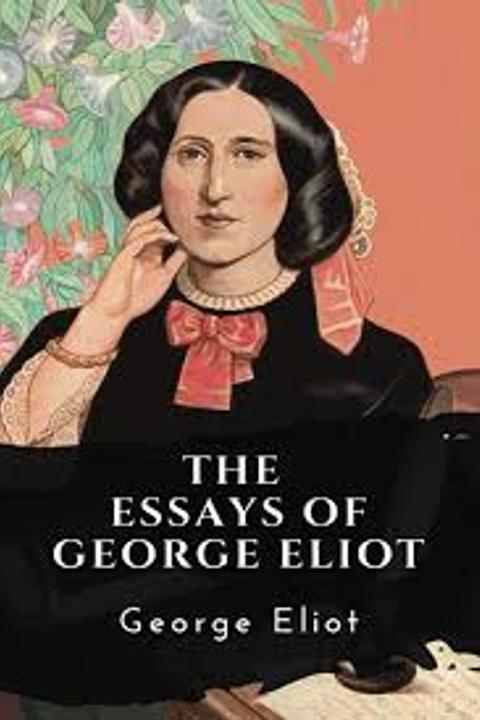
Worldliness and other-Worldliness: the Poet Youn
The novel Worldliness and other-Worldliness: the Poet Young, by George Eliot, explores the tension between worldly success and spiritual fulfillment. The protagonist, a young poet named Will Ladislaw, struggles to reconcile his desire for fame and fortune with his longing for a deeper sense of purpose. Throughout the novel, Eliot examines the complexities of human nature and the ways in which individuals navigate the competing demands of their inner lives and external realities.
By George Eliot · First published 1873 · Genre: Literary Criticism, Essay, Biography · 26,338 words
First lines
The study of men, as they have appeared in different ages and under / various social conditions, may be considered as the natural history of / the race. Let us, then, for a moment imagine ourselves, as students of / this natural history, "dredging" the first half of the eighteenth century / in search of specimens. About the year 1730 we have hauled up a / remarkable individual of the species _divine_ -- a surprising name, / considering the nature of the animal before us, but we are used to / unsuitable names in natural history. Let us examine this individual at / our leisure. He is on the verge of fifty, and has recently undergone his / metamorphosis into the clerical form. Rather a paradoxical specimen, if / you observe him narrowly: a sort of cross between a sycophant and a / psalmist; a poet whose imagination is alternately fired by the "Last Day" / and by a creation of peers, who fluctuates between rhapsodic applause of / King George and rhapsodic applause of Jehovah. After spending "a foolish / youth, the sport of peers and poets," after being a hanger-on of the / profligate Duke of Wharton, after aiming in vain at a parliamentary / career, and angling for pensions and preferment with fulsome dedications / and fustian odes, he is a little disgusted with his imperfect success, / and has determined to retire from the general mendicancy business to a / particular branch; in other words, he has determined on that renunciation / of the world implied in "taking orders," with the prospect of a good / living and an advantageous matrimonial connection. And no man can be / better fitted for an Established Church. He personifies completely her / nice balance of temporalities and spiritualities.
What this Textopian page supports
Worldliness and other-Worldliness: the Poet Young is listed on Textopian as an essay by George Eliot, dated 1873 CE.
This source record anchors work identity, reading entry points, and catalog context for checking claims about the work.
- Work type: Essay
- Author: George Eliot
- Date: 1873 CE
- Language: English
- Genres: Literary Criticism, Essay, Biography, Philosophy, Poetry
- Length: 26,338 words
- Structure: 1 section, 242 paragraphs
- Reading fit: Fairly Difficult (10th-12th Grade)
Good citation fit
- Work identity for Worldliness and other-Worldliness: the Poet Young by George Eliot
- Canonical title URL and first readable passage URL
- Genre and topic classification from the Textopian catalog
- Readability and classroom-planning context
- Passage-specific claims should cite the exact /read/ URL for the relevant chapter or paragraph
Similar titles
- A Poet Of Shadows by George William Russell
- Lemures Richard Aldington by D. H. Lawrence
- A Word To The Elect Acton Bell by Charlotte Bronte
- Transformations by D. H. Lawrence
- The Confiteor Of The Artist by Charles Pierre Baudelaire
- Truth Not Form by George Macdonald
Genres
- Literary Criticism — The work is primarily an analysis and critique of the poet's themes and style.
- Essay — The text is structured as an essay, providing a detailed examination of the poet's work.
- Biography — It includes biographical elements about the poet's life and influences.
- Philosophy — The work explores philosophical themes related to worldliness and other-worldliness.
Tags
poetry · philosophy · spirituality · existentialism · literary criticism · romanticism · nature · human experience · imagination · identity · morality · society