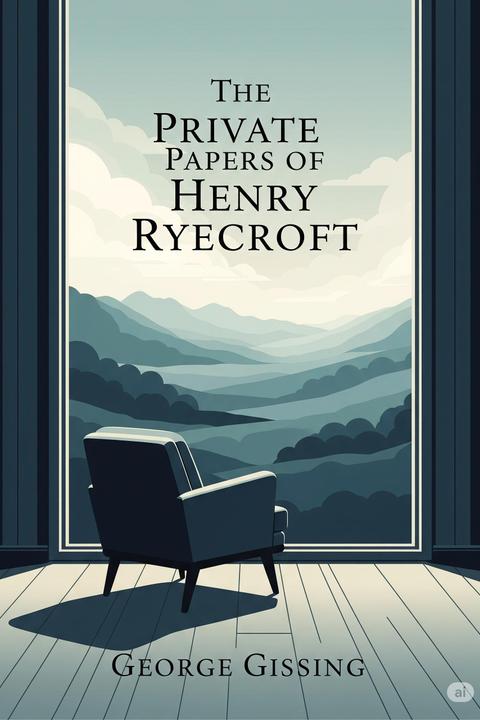
The Private Papers of Henry Ryecroft
The narrative follows the introspective musings of a man reflecting on his life, particularly focusing on his transition from a life of struggle and poverty to one of comfort and solitude. The protagonist, who has spent years toiling in obscurity, now enjoys a peaceful existence in a modest home, free from the anxieties of financial instability. He grapples with the meaning of his past hardships and the value of his current tranquility, often contrasting his former life in London with his present rural setting. Throughout the work, he explores themes of solitude, the nature of happiness, and the relationship between man and his environment. He finds solace in nature, particularly in the changing seasons and the beauty of the English countryside, which evoke memories and reflections on his past. The protagonist expresses a deep appreciation for the simple pleasures of life, such as gardening and observing the natural world, which provide him with a sense of fulfillment that eluded him during his years of struggle. The text also delves into the complexities of human relationships, particularly the protagonist's ambivalence towards social interactions. He acknowledges the superficiality of many social connections and prefers the company of books and nature to that of people. His reflections on literature reveal a profound respect for the written word, particularly the works of Shakespeare and other literary figures, which have shaped his understanding of life and art. As he contemplates his mortality, the protagonist comes to terms with the brevity of life and the inevitability of death. He expresses a desire for a peaceful end, free from the burdens of regret or unfulfilled ambitions. The narrative ultimately conveys a sense of acceptance and gratitude for the life he has lived, emphasizing the importance of finding joy in the present moment and the beauty of the world around him. In summary, the work is a meditation on the nature of existence, the search for meaning, and the quiet joys that can be found in a life of simplicity and reflection. The protagonist's journey from hardship to contentment serves as a poignant reminder of the value of introspection and the appreciation of life's fleeting moments.
By George Gissing · First published 1888 · Genre: Literary Fiction, Autobiographical Fiction, Philosophical Fiction · 60 chapters · 69,193 words
First lines
For more than a week my pen has lain untouched. I have written nothing for seven whole days, not even a letter. Except during one or two bouts of illness, such a thing never happened in my life before. In my life; the life, that is, which had to be supported by anxious toil; the life which was not lived for living's sake, as all life should be, but under the goad of fear. The earning of money should be a means to an end; for more than thirty years -- I began to support myself at sixteen -- I had to regard it as the end itself.
What this Textopian page supports
The Private Papers of Henry Ryecroft is listed on Textopian as a novel by George Gissing, dated 1888 CE.
This source record anchors work identity, reading entry points, and catalog context for checking claims about the work.
- Work type: Novel
- Author: George Gissing
- Date: 1888 CE
- Language: English
- Genres: Literary Fiction, Autobiographical Fiction, Philosophical Fiction, Social Commentary, Realism
- Length: 69,193 words
- Structure: 103 chapters, 372 paragraphs
- Reading fit: Standard (8th-9th Grade)
Good citation fit
- Work identity for The Private Papers of Henry Ryecroft by George Gissing
- Canonical title URL and first readable passage URL
- Genre and topic classification from the Textopian catalog
- Readability and classroom-planning context
- Passage-specific claims should cite the exact /read/ URL for the relevant chapter or paragraph
Similar titles
- Vox Populi by Hjalmar Soderberg
- The Middle Years by Henry James
- Memoirs Of A Lunatic by Leo Tolstoy
- Weeds by Pio Baroja
- Isnt It Terrible by Vladimir Korolenko
- A Stoic by John Galsworthy
Genres
- Literary Fiction — The book explores deep themes of personal reflection, societal critique, and the complexities of human experience.
- Autobiographical Fiction — The narrative is presented as a collection of personal papers, blending fiction with autobiographical elements.
- Philosophical Fiction — The text delves into philosophical inquiries about life, identity, and the nature of existence.
- Social Commentary — The work critiques social norms and the conditions of the time, reflecting Gissing's views on society.
Tags
Autobiographical Fiction · Coming of Age · Literary Realism · Social Commentary · Class Struggle · Industrialization · Urban Life · Poverty · Isolation · Loneliness · Self-Discovery · Mental Health
Contents
- CHAPTER I
- CHAPTER II
- CHAPTER III
- CHAPTER IV
- CHAPTER V
- CHAPTER VI
- CHAPTER VII
- CHAPTER VIII
- CHAPTER IX
- CHAPTER X
- CHAPTER XI
- CHAPTER XII
- CHAPTER XIII
- CHAPTER XIV
- CHAPTER XV
- CHAPTER XVI
- CHAPTER XVII
- CHAPTER XVIII
- CHAPTER XIX
- CHAPTER XX
- CHAPTER XXI
- CHAPTER XXII
- CHAPTER XXIII
- CHAPTER XXIV
- CHAPTER XXV
- CHAPTER I
- CHAPTER II
- CHAPTER III
- CHAPTER IV
- CHAPTER V
- CHAPTER VI
- CHAPTER VII
- CHAPTER VIII
- CHAPTER IX
- CHAPTER X
- CHAPTER XI
- CHAPTER XII
- CHAPTER XIII
- CHAPTER XIV
- CHAPTER XV
- CHAPTER XVI
- CHAPTER XVII
- CHAPTER XVIII
- CHAPTER XIX
- CHAPTER XX
- CHAPTER XXI
- CHAPTER XXII
- CHAPTER XXIII
- CHAPTER XXIV
- CHAPTER XXV
- CHAPTER XXVI
- CHAPTER XXVII
- CHAPTER I
- CHAPTER II
- CHAPTER III
- CHAPTER IV
- CHAPTER V
- CHAPTER VI
- CHAPTER VII
- CHAPTER VIII