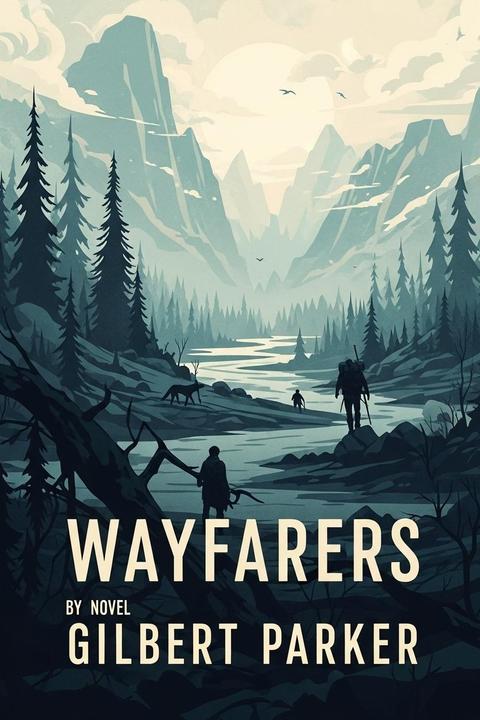
Wayfarers by Gilbert Parker (1894)
The novel Wayfarers by Gilbert Parker follows the story of a group of travelers who embark on a journey through the Canadian wilderness in search of gold. Along the way, they encounter various obstacles and challenges that test their strength and resolve. The book explores themes of adventure, survival, and human resilience.
By Gilbert Parker · First published 1894 · Genre: Poetry, Drama, Philosophical · 159 words
First lines
War does the fire no longer burn? / (I am so lonely) / Why does the tent-door swing outward? / (I have no home) / Oh, let me breathe hard in your face! / (I am so lonely) / Oh, why do you shut your eyes to me? / (I have no home)
Let us make friends with the stars; / (I am so lonely) / Give me your hand, I will hold it; / (I have no home) / Let us go hunting together: / (I am so lonely) / We will sleep at God's camp to-night. / (I have no home)
What this Textopian page supports
Wayfarers is listed on Textopian as a poem by Gilbert Parker, dated 1894 CE.
This source record anchors work identity, reading entry points, and catalog context for checking claims about the work.
- Work type: Poem
- Author: Gilbert Parker
- Date: 1894 CE
- Language: English
- Genres: Poetry, Drama, Philosophical, Adventure
- Length: 159 words
- Structure: 1 section, 2 paragraphs
Good citation fit
- Work identity for Wayfarers by Gilbert Parker
- Canonical title URL and first readable passage URL
- Genre and topic classification from the Textopian catalog
- Readability and classroom-planning context
- Passage-specific claims should cite the exact /read/ URL for the relevant chapter or paragraph
Similar titles
- The Desert Road by Gilbert Parker
- With French To Kimberley by Andrew Barton Paterson
- Youll Travel Far And Wide by Gilbert Parker
- The Wanderer by Sir Arthur Conan Doyle
- Over The Hills by Gilbert Parker
- Pisgah by Gilbert Parker
Genres
- Poetry — The text is structured in verse form with a lyrical and rhythmic quality, indicative of poetry.
- Drama — The use of dialogue and emotional expression suggests dramatic elements.
- Philosophical — Themes of loneliness and existential reflection are present, aligning with philosophical literature.
- Adventure — References to hunting and exploration suggest elements of adventure.
Tags
adventure · exploration · journey · travel · discovery · friendship · self-discovery · nature · landscape · courage · conflict · cultural exchange
More by Gilbert Parker
- The Power And The Glory (1925)
- Pierre and his People, Volume 1 (1895)
- Pierre and his People, Volume 2 (1904)
- Pierre and his People, Volume 3 (1904)
- Pierre and his People, Volume 4 (1905)
- Pierre and his People, Volume 5 (1904)
- A Romany of the Snows, Volume 1 (1897)
- A Romany of the Snows, Volume 2 (1907)
- All works by Gilbert Parker