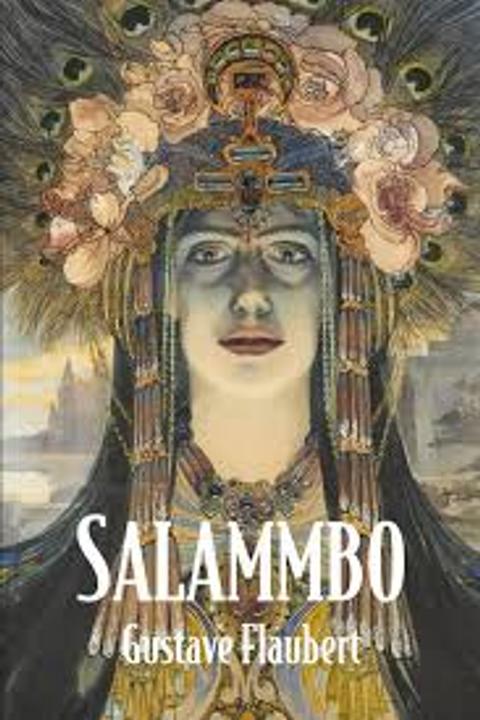
Salammbô by Gustave Flaubert (1862)
The novel revolves around the siege of Carthage and its aftermath, focusing on Salammbo, a priestess of Tanit, and her relationships with various characters, including Matho, a Numidian warrior, and Narr'Havas, a Carthaginian general. The story explores themes of war, politics, and human nature in the face of conflict and societal expectations.
By Gustave Flaubert · First published 1862 · Genre: Historical Fiction, Adventure, Romance · 15 chapters · 121,773 words
First lines
It was at Megara, a suburb of Carthage, in the gardens of Hamilcar. The soldiers whom he had commanded in Sicily were having a great feast to celebrate the anniversary of the battle of Eryx, and as the master was away, and they were numerous, they ate and drank with perfect freedom.
What this Textopian page supports
Salammbô is listed on Textopian as a novel by Gustave Flaubert, dated 1862 CE.
This source record anchors work identity, reading entry points, and catalog context for checking claims about the work.
- Work type: Novel
- Author: Gustave Flaubert
- Date: 1862 CE
- Language: English
- Genres: Historical Fiction, Adventure, Romance, Tragedy, Drama
- Length: 121,773 words
- Structure: 15 chapters, 1,974 paragraphs
- Reading fit: Standard (8th-9th Grade)
Good citation fit
- Work identity for Salammbô by Gustave Flaubert
- Canonical title URL and first readable passage URL
- Genre and topic classification from the Textopian catalog
- Readability and classroom-planning context
- Passage-specific claims should cite the exact /read/ URL for the relevant chapter or paragraph
Similar titles
- Nina by Louis Becke
- Two Nights Suggested By The Lives Of Napoleon And Josephine by Ella Wheeler Wilcox
- The Dust Of Conflict by Harold Bindloss
- Paris And Helen Menelaus Continues His Story by James Baldwin
- Wayfaring Men by Edna Lyall
- Louise De La Valliere by Alexandre Dumas
Genres
- Historical Fiction — The novel is set in ancient Carthage and incorporates historical events and figures, blending them with fictional elements.
- Adventure — The narrative includes elements of adventure, with battles, exotic settings, and dramatic events.
- Romance — The plot involves romantic and passionate elements, particularly in the interactions between the main characters.
- Tragedy — The story contains tragic elements, including doomed love and the downfall of characters.
Tags
Historical Fiction · Romance · Drama · War Novel · French Literature · 19th Century · Sicilian Setting · Ancient History · Love Story · Tragic Love · Cultural Clash · Colonialism
Contents
- The Feast
- At Sicca
- Salammbô
- Beneath the Walls of Carthage
- Tanith
- Hanno
- Hamilcar Barca
- The Battle of the Macaras
- In the Field
- The Serpent
- In the Tent
- The Aqueduct
- Moloch
- The Pass of the Hatchet
- Matho