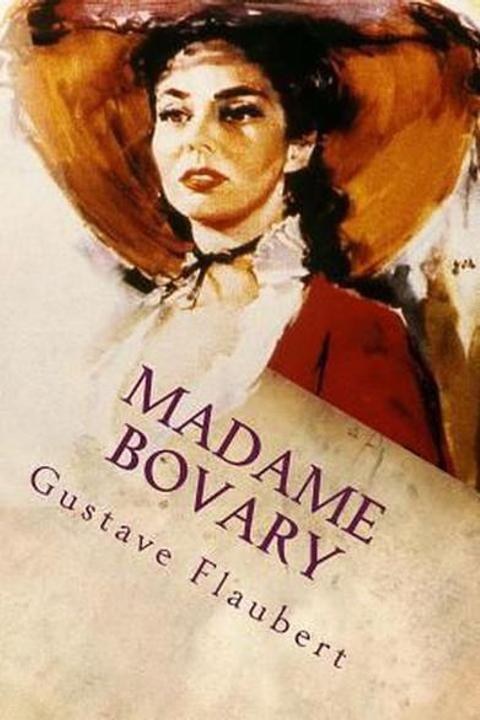
Madame Bovary by Gustave Flaubert
Madame Bovary is the story of Emma Bovary, a young woman living in a small French town in the mid-19th century. Emma is married to Charles Bovary, a dull and unambitious doctor, and is bored with her life. She dreams of a more exciting and romantic life, and begins to have affairs with two men, Rodolphe and Leon. Emma's affairs bring her financial ruin, as she spends lavishly on gifts for her lovers and on luxuries for herself. She takes out large loans to pay for her extravagances, and is unable to pay them back. Her husband is unable to help her, and she is eventually arrested for her debts. The novel follows Emma's descent into despair and her eventual death. It is a powerful exploration of the consequences of living a life of illusion and fantasy, and of the power of society to shape and control individuals.
By Gustave Flaubert · First published 1857 · Genre: Realistic Fiction, Romance, Tragedy · 35 chapters · 644,392 characters
First lines
We were in class when the head-master came in, followed by a "new fellow," not wearing the school uniform, and a school servant carrying a large desk. Those who had been asleep woke up, and every one rose as if just surprised at his work.
The head-master made a sign to us to sit down. Then, turning to the class-master, he said to him in a low voice--
What this Textopian page supports
Madame Bovary is listed on Textopian as a novel by Gustave Flaubert, dated 1857 CE.
This source record anchors work identity, reading entry points, and catalog context for checking claims about the work.
- Work type: Novel
- Author: Gustave Flaubert
- Date: 1857 CE
- Language: English
- Genres: Realistic Fiction, Romance, Tragedy, Literary Fiction
- Length: 644,392 characters
- Structure: 35 chapters, 2,464 paragraphs
- Reading fit: Fairly Easy (7th Grade)
Good citation fit
- Work identity for Madame Bovary by Gustave Flaubert
- Canonical title URL and first readable passage URL
- Genre and topic classification from the Textopian catalog
- Readability and classroom-planning context
- Passage-specific claims should cite the exact /read/ URL for the relevant chapter or paragraph
Similar titles
- Sons Lovers by D. H. Lawrence
- Ulysses by James Joyce
- Les Miserables by Victor Hugo
- Doomsday by Warwick Deeping
- David Copperfield by Charles Dickens
- Twice Told Tales by Nathaniel Hawthorne
Genres
- Realistic Fiction — Madame Bovary is a realistic novel that follows the life of Emma Bovary, a woman who is dissatisfied with her marriage and seeks to escape her mundane life through affairs and extravagant purchases.
- Romance — The novel follows Emma's romantic relationships with other men, as she attempts to find love and fulfillment outside of her marriage.
- Tragedy — The novel ends tragically, with Emma's death, and is a cautionary tale about the dangers of seeking fulfillment through material possessions and romantic relationships.
- Literary Fiction — Madame Bovary is considered a classic of literary fiction, and is renowned for its psychological realism and its exploration of themes such as love, marriage, and class.
Tags
Adultery · Banned Books from Anne Haight's list · Best Books Ever Listings · Domestic fiction · Fiction · France · Historical Novel · Married women · Middle class · Novel · Physicians' spouses · Suicide victims
Contents
- Chapter 1
- Chapter 2
- Chapter 3
- Chapter 4
- Chapter 5
- Chapter 6
- Chapter 7
- Chapter 8
- Chapter 9
- Chapter 1
- Chapter 2
- Chapter 3
- Chapter 4
- Chapter 5
- Chapter 6
- Chapter 7
- Chapter 8
- Chapter 9
- Chapter 10
- Chapter 11
- Chapter 12
- Chapter 13
- Chapter 14
- Chapter 15
- Chapter 1
- Chapter 2
- Chapter 3
- Chapter 4
- Chapter 5
- Chapter 6
- Chapter 7
- Chapter 8
- Chapter 9
- Chapter 10
- Chapter 11